Content Menu
● Understanding Distilled And Vapor Distilled Water
● Why CPAP Manufacturers Prefer Distilled Water
● Is Vapor Distilled Water Safe For CPAP Use?
● Distilled Water vs Purified And Tap Water in CPAP
● How Multi Function Distillation Water Machines Work
● Benefits of Multi Function Distillation Water Machines for CPAP Ecosystems
● Clinical And Safety Considerations When Selecting CPAP Water
● Practical Tips For CPAP Users Using Vapor Distilled Water
● Designing Central CPAP Water Supply Systems With Multi Function Distillation Water Machines
● Everheal's Role in High‑Purity Water For CPAP‑Related Applications
● Maintenance And Quality Assurance in Distilled Water Systems
● Summary of Key Points About Vapor Distilled Water in CPAP Machines
● Conclusion
● FAQ
>> 1. Is vapor distilled water different from regular distilled water for CPAP use?
>> 2. What happens if I accidentally use tap water in my CPAP humidifier?
>> 3. Can purified or filtered water replace vapor distilled water long‑term?
>> 4. Why are Multi Function Distillation Water Machines important for hospitals and CPAP suppliers?
>> 5. How often should I change the water in my CPAP humidifier?
● Citations:
CPAP therapy depends heavily on stable airflow and adequate humidification, and the quality of water in the humidifier plays a bigger role than most users realize. Vapor distilled water, when truly free of added minerals or chemicals, is fully suitable for CPAP humidifiers and is actually the type of water recommended by device manufacturers and clinical guidelines. For healthcare facilities, sleep centers, and OEM suppliers, using a professionally engineered Multi Function Distillation Water Machine is an efficient way to produce consistent, CPAP‑grade vapor‑distilled water at scale.[2][3]
Understanding Distilled And Vapor Distilled Water
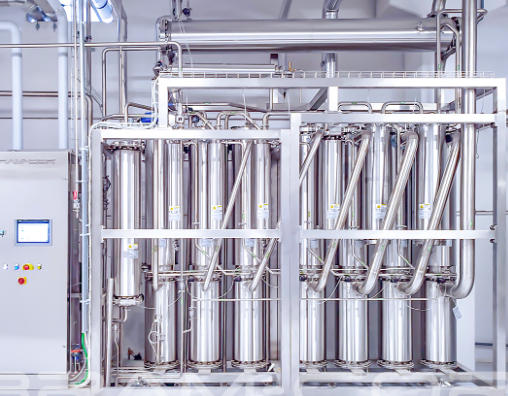
Distilled water is created by boiling feed water, collecting the steam, and condensing it back into liquid so that dissolved minerals, inorganic salts, and many contaminants remain behind in the boiling vessel. The result is very low‑conductivity water that does not deposit visible scale when heated, which is why hospitals, laboratories, and pharmaceutical factories use distilled water in sensitive equipment.[5][2]
“Vapor distilled” is essentially the same process: the product description emphasizes the phase‑change step (liquid to vapor and back), but it still refers to distilled water if no minerals, salts, or flavoring agents are added after condensation. In practice, this is the same principle used in a Multi Function Distillation Water Machine, where multiple evaporation‑condensation stages and polishing steps ensure a stable, high‑purity water quality for medical use.[2]
Why CPAP Manufacturers Prefer Distilled Water
Most CPAP manufacturers and sleep‑medicine organizations explicitly recommend distilled water for the humidifier chamber rather than tap or standard bottled water. The primary reason is to prevent inorganic mineral deposits on the heating plate and plastic surfaces, which can reduce heating efficiency, damage the chamber, and shorten device service life.[3][5]
In addition, water that carries dissolved minerals and organic contaminants can leave residues that support microbial growth, especially in a warm, humid environment. Distilled water, especially when produced by a medical‑grade Multi Function Distillation Water Machine, has very low microbial content at the point of production and does not transport minerals that promote hard scale formation in the CPAP humidifier.[7][3]
Is Vapor Distilled Water Safe For CPAP Use?
If a product is labeled “vapor distilled water” and contains no added minerals, flavors, or disinfectants, it can be treated as standard distilled water and is safe for use in CPAP humidifiers. The key is reading the ingredients: pure distilled water should list only “water” without electrolytes such as calcium, magnesium, potassium, or sodium.[9][2]
A common source of confusion is that some premium drinking waters are both “vapor distilled” and “enhanced with electrolytes for taste.” These additives, while acceptable as beverages, make the water unsuitable for CPAP machines because the minerals will be left behind as white scale when the water evaporates from the humidifier chamber.[2]
Distilled Water vs Purified And Tap Water in CPAP
Purified water, including reverse‑osmosis (RO) or deionized water, removes many impurities and can be safer than untreated tap water for short‑term use, but it may still contain trace minerals. Over time, these minerals can still accumulate on the CPAP heating plate, although the rate of scaling will generally be slower than with hard tap water.[9][2]
Tap water, even when safe to drink, usually contains dissolved calcium, magnesium, and other ions, and may also include disinfectants such as chlorine or chloramine. In a CPAP humidifier, this can lead to limescale buildup, discoloration of the chamber, unpleasant odors, and an increased requirement for deep cleaning; for users with compromised immunity, inhaled aerosols from contaminated water can pose additional risk.[6][3][5][2]
How Multi Function Distillation Water Machines Work
A Multi Function Distillation Water Machine is designed to produce high‑purity water and often pure steam from ordinary feed water using a series of controlled thermal steps. In a typical configuration, incoming water is pre‑treated, heated to generate vapor, separated from non‑volatile impurities, and condensed in a clean, temperature‑controlled condenser to produce distilled water. Multiple columns or stages can be included to further polish the water and achieve very low conductivity and low total organic carbon levels required by pharmaceutical and medical standards.[5][2]
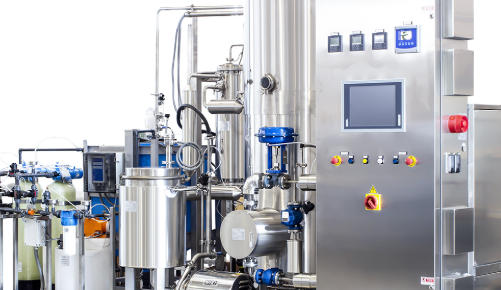
Because a Multi Function Distillation Water Machine integrates several operations in one skid or line—pretreatment, evaporation, condensation, storage, and sometimes pure steam generation—it is especially attractive for medical centers and pharmaceutical factories that need both distilled water and clean steam. For CPAP‑related applications, the same system can feed an automatic bottling or bag‑filling line to produce sealed CPAP water packs in a controlled environment.
Benefits of Multi Function Distillation Water Machines for CPAP Ecosystems
Using a centralized Multi Function Distillation Water Machine for CPAP water production offers several technical and economic advantages. First, the system gives hospitals, sleep labs, and OEM water brands precise control over temperature, pressure, and distillation stages, which helps ensure that every batch of vapor‑distilled water consistently meets internal quality specifications. Second, the integrated design allows continuous or semi‑continuous operation, reducing labor intensity and lowering the per‑liter cost of high‑purity water in high‑volume applications.[5][2]
At the same time, a Multi Function Distillation Water Machine simplifies documentation and validation because the entire water‑generation process is monitored from a single control platform. For organizations that must comply with Good Manufacturing Practice (GMP) and medical‑device regulations, this unified approach makes it easier to prove that CPAP‑grade vapor‑distilled water is produced under controlled, auditable conditions.
Clinical And Safety Considerations When Selecting CPAP Water
Clinicians typically emphasize two parallel goals when advising patients about CPAP water: protecting the device and protecting the patient's airways. Distilled or vapor‑distilled water supports both goals by minimizing mineral deposits and reducing the introduction of unwanted microorganisms compared with untreated tap water.[3][7]
However, safety also depends on how the water is handled after production. Even water produced by a high‑grade Multi Function Distillation Water Machine can be contaminated if stored in unclean containers, exposed to air for long periods, or repeatedly topped up rather than replaced. That is why hygiene guidelines recommend using fresh water daily, emptying the humidifier each morning, and regularly cleaning internal surfaces and tubing.[1]
Practical Tips For CPAP Users Using Vapor Distilled Water
CPAP users can follow a few simple best practices to get the most from vapor distilled water. Each night, fill the humidifier chamber using only pure vapor‑distilled or distilled water, staying within the maximum level mark to prevent spills. In the morning, discard remaining water, rinse if recommended by the device instructions, and allow the chamber to dry fully before re‑assembly.[3][5]
If vapor‑distilled water is temporarily unavailable, purified bottled water may be used as a short‑term substitute, but users should expect more frequent cleaning and be alert for signs of scaling or discoloration. Once proper distilled water is available again, switch back immediately and, if necessary, descale the chamber with agents approved by the manufacturer to restore a clean surface.[9][3]
Designing Central CPAP Water Supply Systems With Multi Function Distillation Water Machines
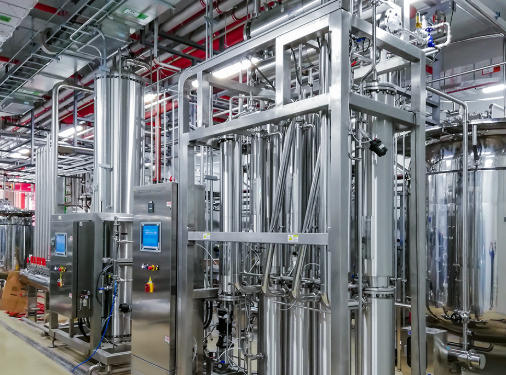
For hospitals operating dozens of CPAP and BiPAP devices, managing distilled‑water logistics can become a daily operational challenge. Installing a Multi Function Distillation Water Machine as a central pure‑water source allows the institution to pipe distilled water to multiple points of use or to a small bottling line that produces sealed 500–1000 ml containers for ward‑level distribution. This approach minimizes reliance on external bottle suppliers, reduces packaging waste, and gives biomedical engineering teams full visibility over water quality.[2][5]
In a sleep center or respiratory clinic, a compact Multi Function Distillation Water Machine can support overnight study rooms, test benches, and device‑demo areas with a stable supply of vapor‑distilled water, simplifying training and maintenance. For OEM brand owners, integrated lines that combine a Multi Function Distillation Water Machine, pure‑steam sterilization, and automatic filling and sealing equipment enable private‑label CPAP water products that comply with international expectations for purity and packaging hygiene.
Everheal's Role in High‑Purity Water For CPAP‑Related Applications
Everheal focuses on pharmaceutical‑grade pure‑water systems, pure steam generators, multi‑effect distillation units, and sterilization solutions, which naturally align with the quality needs of CPAP humidifier water. By customizing a Multi Function Distillation Water Machine for local feed‑water conditions and regulatory frameworks, Everheal can help global partners build stable, compliant production bases for CPAP‑grade vapor‑distilled water and other medical waters.
Beyond equipment delivery, Everheal's engineering teams provide factory layout planning, piping design, automation integration, and commissioning support to ensure that the Multi Function Distillation Water Machine works seamlessly with existing utilities and packaging lines. For customers expanding from pharmaceutical products into home‑care consumables, this offers a one‑stop path from concept to validated, production‑ready CPAP water lines.
Maintenance And Quality Assurance in Distilled Water Systems
While CPAP users mainly see the bottle in their hand, the reliability of a Multi Function Distillation Water Machine depends on systematic maintenance and quality assurance. Feed‑water pre‑treatment filters, heat exchangers, and condensers must be inspected regularly to prevent fouling and maintain energy efficiency. Monitoring conductivity, temperature, and microbial counts at critical control points helps operators confirm that water destined for CPAP use remains within the specified limits.[1]
Healthcare and industrial users often set internal standard operating procedures (SOPs) that define sampling intervals, cleaning and sterilization cycles, and alarm responses for the Multi Function Distillation Water Machine. By combining this structured approach with electronic recordkeeping, facilities can demonstrate to auditors and customers that each batch of vapor‑distilled water used for CPAP humidifiers has a documented production and quality history.
Summary of Key Points About Vapor Distilled Water in CPAP Machines
For everyday CPAP users, the answer is straightforward: vapor distilled water without additives is appropriate and recommended for humidifier use. It protects the device, reduces cleaning load, and lowers the risk of unwanted mineral or microbial contamination compared with tap water or typical bottled waters.[3][2]
Behind the scenes, professional‑grade water generation systems such as a Multi Function Distillation Water Machine enable hospitals, sleep labs, and OEM suppliers to deliver this high‑purity water reliably and efficiently. By combining thermal distillation, robust engineering, and strict quality control, these systems form the backbone of safe CPAP water supply chains, from production lines to bedside use.[5][2]
Conclusion
Vapor distilled water is suitable and recommended for CPAP machines as long as it is true distilled water with no added minerals, disinfectants, or flavoring agents. Using this kind of water minimizes mineral scaling, supports better hygiene in the humidifier, and helps maintain consistent humidification performance over the lifetime of the device.[2][3]
For healthcare institutions, brands, and distributors that need large volumes of CPAP‑grade water, a Multi Function Distillation Water Machine offers a reliable, controllable method of producing vapor‑distilled water that meets demanding medical and pharmaceutical expectations. Combined with good storage practices and routine CPAP cleaning, this approach protects both equipment and patients, providing a strong technical foundation for high‑quality sleep‑apnea care.[5][2]
FAQ
1. Is vapor distilled water different from regular distilled water for CPAP use?
In practical terms, there is no difference for CPAP use as long as the product is pure distilled water with no added minerals or chemicals. The term “vapor distilled” simply emphasizes that the water has been boiled and condensed, which is the same principle used in a Multi Function Distillation Water Machine and other distillation systems.[2][5]
2. What happens if I accidentally use tap water in my CPAP humidifier?
Short‑term use of tap water is unlikely to cause immediate harm, but over time it can leave mineral deposits, discolor the chamber, and support microbial growth. If you have used tap water, empty and clean the humidifier thoroughly, inspect for scale, and return to using distilled or vapor‑distilled water as soon as possible.[6][3]
3. Can purified or filtered water replace vapor distilled water long‑term?
Purified or filtered water may be used in emergencies, but experts and manufacturers still recommend distilled water as the long‑term standard because purification methods can leave residual minerals. Using purified water continuously may require more frequent cleaning, while vapor‑distilled or distilled water—especially from a Multi Function Distillation Water Machine—minimizes these deposits.[3][2]
4. Why are Multi Function Distillation Water Machines important for hospitals and CPAP suppliers?
Hospitals and CPAP water brands need a stable, validated source of high‑purity water that can be produced at scale with traceable quality records. A Multi Function Distillation Water Machine provides this by integrating evaporation, condensation, monitoring, and sometimes pure‑steam generation in one system, enabling continuous production of CPAP‑grade vapor‑distilled water.[5][2]
5. How often should I change the water in my CPAP humidifier?
Most clinical and manufacturer guidelines recommend emptying and refilling the humidifier daily with fresh distilled or vapor‑distilled water. This routine, combined with regular cleaning and periodic disinfection according to the user manual, helps prevent biofilm formation and ensures consistent humidifier performance over time.[7][3]
Citations:
[1](https://www.who.int/docs/default-source/coronaviruse/checklists-3_2022.pdf)
[2](https://www.sleepfoundation.org/cpap/should-you-use-distilled-water-for-a-cpap-machine)
[3](https://www.sleepapnea.org/cpap/should-you-use-distilled-water-for-a-cpap-machine/)
[4](https://wwwnc.cdc.gov/eid/article/29/2/22-1205_article)
[5](https://sleepdoctor.com/pages/cpap/why-use-distilled-water-for-cpap)
[6](https://www.healthline.com/health-news/sleep-apnea-tap-water-can-be-dangerous-to-use-in-cpap-machines)
[7](https://www.verywellhealth.com/do-you-need-distilled-water-for-the-cpap-humidifier-3015017)
[8](https://health.osu.edu/wellness/prevention/using-tap-water-in-medical-devices)
[9](https://careicahealth.com/can-i-use-non-distilled-water-in-my-cpap-humidifier/)
[10](https://breathefreely.com/traveling-with-a-cpap-machine/)


