Content Menu
● Understanding What a HEPA Air Filter Does
● The Science Behind Blueair's HEPASilent™ Technology
>> How It Works
● What Makes Blueair Different from Traditional HEPA Systems
>> Key Advantages
● Why HEPA Air Filters Are Essential for Health and Industry
>> Core Benefits of HEPA Air Filtration
● Blueair Product Lines and Their Filtration Designs
>> Blue Pure Series
>> Blueair Classic Series
>> Blueair HealthProtect™ Series
● Applications Beyond Home Environments
● Maintenance and Longevity of Blueair HEPA Air Filters
>> Recommended Maintenance Steps
● Common Misunderstandings About HEPA Air Filters
>> Typical Misconceptions
● The Role of HEPA Air Filters in Sustainability and Energy Efficiency
● Guidance for Choosing the Right Air Purifier
>> Key Selection Factors
● Advanced Air Filtration and Pharmaceutical Cleanrooms
● Conclusion
● FAQs About Blueair and HEPA Air Filters
>> 1. Does every Blueair model use a HEPA Air Filter?
>> 2. Can Blueair filters remove viruses and bacteria?
>> 3. How often should Blueair filters be replaced?
>> 4. Are Blueair filters certified as true HEPA?
>> 5. Are Blueair systems suitable for industrial or pharmaceutical uses?
Indoor air pollution has become one of the most concerning environmental health issues in modern society. Between allergens, fine dust, bacteria, and industrial emissions, the air we breathe indoors can often be more polluted than the air outside. As awareness of air quality grows, consumers and industries are turning to advanced purification systems to safeguard their environments. Among the top brands in this space, Blueair stands out as a market leader.
One common question people have is: Does Blueair have a HEPA filter? The short answer is yes—Blueair uses HEPA-grade filtration technology. However, Blueair's approach goes beyond traditional filters by incorporating an advanced system known as HEPASilent™ technology. This hybrid method combines the mechanical power of a high-quality HEPA Air Filter with electrostatic ionization to achieve even greater performance, efficiency, and silence.
In this detailed article, we'll explore what makes Blueair unique, how its filtration system compares to standard HEPA filters, and why the company's products are trusted in both households and controlled industrial environments.
Understanding What a HEPA Air Filter Does
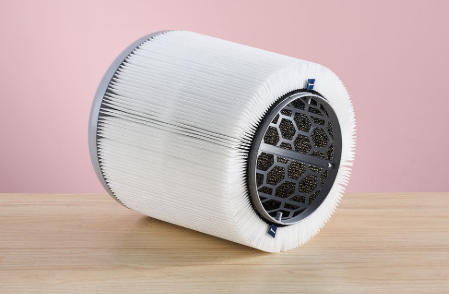
A HEPA Air Filter—or High-Efficiency Particulate Air filter—is specifically designed to trap the smallest airborne particles. For a filter to qualify as "true HEPA," it must capture 99.97% of all airborne particles that are 0.3 microns in diameter. These tiny particles can include pollen, smoke, bacterial spores, and certain viruses, making HEPA filters essential in environments that require sterile or contaminant-free air.
The effectiveness of a HEPA Air Filter lies in its dense fiber mesh. As air passes through, particles are trapped using three physical mechanisms:
1. Interception – Particles stick to fibers when they come close to them.
2. Impaction – Larger particles collide directly with the fibers.
3. Diffusion – Smaller particles zigzag randomly and eventually collide with a fiber.
This combination allows HEPA filters to handle a wide range of particle sizes, from visible dust to microscopic aerosols. They're widely used in pharmaceutical manufacturing, hospital cleanrooms, and laboratories, as well as in consumer-grade air purifiers for homes and offices.
The Science Behind Blueair's HEPASilent™ Technology
Blueair revolutionized air purification by developing HEPASilent™ technology, a patented filtration method that merges traditional mechanical filtration with electrostatic particle charging. While most air purifiers solely rely on mechanical trapping, Blueair's system adds a layer of electrical science to make the process twice as effective.
How It Works
HEPASilent™ uses a two-step purification mechanism:
1. Ionization stage – Airborne particles are electrically charged as they enter the unit.
2. Filtration stage – These charged particles are drawn to oppositely charged fibers in the HEPA filter media, allowing for superior capture without increasing filter density.
Because of this, Blueair can use thinner filters that still achieve 99.97% filtration efficiency at 0.1 microns, surpassing the traditional HEPA threshold. This enables higher airflow and quieter operation, two key performance factors for any environment where constant filtration is required.
What Makes Blueair Different from Traditional HEPA Systems
While both Blueair and standard HEPA purifiers serve the same purpose—to purify indoor air—their operational methods differ significantly. Blueair's hybrid approach provides clear benefits compared to conventional HEPA air purifiers:
Key Advantages
- Higher particle capture rate – Capable of removing particles smaller than the 0.3-micron HEPA benchmark.
- Lower noise levels – The lower density filter structure allows quieter airflow.
- Reduced energy use – Less airflow resistance means smaller fan power requirements.
- Longer filter lifespan – The electrostatic mechanism prevents premature fiber clogging.
- Improved room coverage – Faster air delivery results in broader purification areas.
In essence, Blueair delivers true HEPA Air Filter performance and enhances it through smart engineering. Users experience fresh, contaminant-free air with minimal disruption and energy cost.
Why HEPA Air Filters Are Essential for Health and Industry
For homes, offices, or industrial facilities, clean air means protection from both allergens and airborne contaminants. But for sectors such as pharmaceutical manufacturing, medical equipment production, and sterile packaging, air purification plays an even more critical role.
Companies like Everheal, for example, which specialize in pure water preparation systems, steam generators, liquid filling and sealing machines, and sterilization systems, depend on HEPA-grade air purity for maintaining compliance and quality in production. The same principles that guide Blueair's air purification technology align with the strict environmental standards required in pharmaceutical and biotech processes.
Core Benefits of HEPA Air Filtration
- Eliminates fine particulate matter (PM2.5) that contributes to respiratory issues.
- Reduces allergens and microbes, creating safer living and working spaces.
- Prevents contamination in cleanrooms and sterile production facilities.
- Ensures product safety and compliance under GMP and ISO standards.
Whether in a family living space or a high-tech production line, a reliable HEPA Air Filter forms the foundation of environmental control and occupational health.
Blueair Product Lines and Their Filtration Designs
To meet diverse customer needs, Blueair offers a range of purifier models tailored for different environments—from small rooms to industrial spaces.
Blue Pure Series
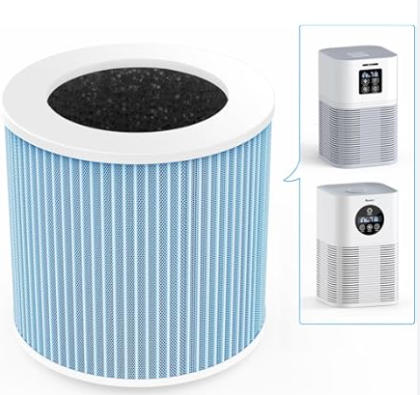
The Blue Pure Series is designed for simplicity and daily use. It combines particle filtration with activated carbon to remove dust, dander, and odors. The pre-filters are washable and colorful, making them aesthetically flexible while maintaining effective HEPA filtration.
Blueair Classic Series
The Classic Series brings smart connectivity into air purification. Users can monitor filter life, air quality, and operation speed directly through mobile apps. These purifiers use HEPASilent™ technology with advanced carbon filters to tackle both particles and volatile organic compounds (VOCs).
Blueair HealthProtect™ Series
At the top of the line sits the HealthProtect™ Series, a high-tech solution for those seeking medical-grade air purification. Equipped with GermShield™ technology, it not only captures but also neutralizes pathogens on the filter surface. These models are often recommended for healthcare environments or areas requiring continuous sterilization support.
Applications Beyond Home Environments
Although Blueair purifiers are widely recognized as consumer devices, their HEPA Air Filter systems share core principles with professional-grade filtration used in cleanrooms, pharmaceutical facilities, and laboratories.
For pharmaceutical manufacturers, maintaining a clean air environment is directly tied to product quality and regulatory compliance. Blueair's technological approach—quiet yet highly efficient—mirrors the same objectives that Everheal achieves in building turnkey production lines for sterile liquids, purified water systems, and autoclave sterilization setups.
These parallels illustrate that air quality management is a universal concern—whether protecting patient health at home or ensuring product purity in industrial manufacturing.
Maintenance and Longevity of Blueair HEPA Air Filters
A well-performing air purifier is only as good as its filter maintenance. Even with advanced systems like Blueair's, users must replace filters regularly to guarantee consistent efficiency.
Recommended Maintenance Steps
- Replace filters every 6–12 months, depending on conditions and usage.
- Vacuum or wash pre-filters monthly to prevent dust accumulation.
- Use original Blueair filters for best fit and filtration performance.
- Monitor indicator lights—modern Blueair models signal when it's time for replacement.
Regular maintenance ensures not only cleaner air but also helps preserve the low energy consumption and quiet performance that distinguish Blueair purifiers.
Common Misunderstandings About HEPA Air Filters
Consumers often misunderstand what HEPA Air Filters can and cannot do. While they are powerful, HEPA filters are not a universal solution for every contaminant type.
Typical Misconceptions
- “All HEPA filters are identical.” The truth is that filters differ in fiber material, design quality, and air seal integrity.
- “HEPA filters remove odors and gases.” They mainly capture particles, not chemicals or fumes—activated carbon handles those.
- “HEPA filters never need replacement.” All filters eventually fill up with trapped particles and must be changed.
- “Bigger filters always mean better air.” Efficiency depends on filter quality, layer composition, and flow rate, not just size.
Blueair addresses these issues through transparency, third-party testing, and clear labeling so users know exactly what performance to expect from their purifiers.
The Role of HEPA Air Filters in Sustainability and Energy Efficiency
Energy efficiency has become an equally important factor in air filtration. Blueair integrates sustainability into both design and materials. The HEPASilent™ process allows the purifier's fan to operate at lower speeds while still delivering a high Clean Air Delivery Rate (CADR).
Moreover, the filter fibers are made from recyclable polypropylene, eliminating the need for fiberglass—commonly used in cheap HEPA filters—and reducing environmental impact. This sustainable approach complements industrial efforts to make purification systems energy-responsible while maintaining performance.
Guidance for Choosing the Right Air Purifier
Selecting an air purifier isn't just about brand preference—it's about matching performance to the environment's needs. For environments that require continuous air cleanliness, such as pharmaceutical plants, food production lines, or medical laboratories, choosing the right HEPA Air Filter system is paramount.
Key Selection Factors
1. Room size compatibility – The purifier's CADR should match the room volume.
2. Filter type – Combine HEPA and activated carbon for full-spectrum purification.
3. Noise considerations – For laboratories or bedrooms, silent systems are crucial.
4. Maintenance accessibility – Look for filters that are easy to replace or wash.
5. Compliance needs – In industrial environments, align with ISO or GMP standards.
For residential users, Blueair's product range provides flexibility to meet any space size or air quality requirement, while professionals in controlled industries can draw from the same design principles for large-scale environmental systems.
Advanced Air Filtration and Pharmaceutical Cleanrooms
In the pharmaceutical field, air purity directly affects product stability and safety. Whether it's a pure steam generator, distillation unit, or sterilization chamber, these processes all depend on ultraclean air and steam.
Companies like Everheal incorporate HEPA Air Filters into facility designs to prevent microbial and particulate contamination. Similarly, Blueair's filtration standard meets parallel goals—providing ultra-clean air by combining high mechanical efficiency with electrostatic innovation.
When applied in production zones, these technologies ensure that processes remain compliant with GMP, ISO 9001, and pharmaceutical validation frameworks.
Conclusion
To revisit our central question—Does Blueair have a HEPA filter?
Yes, Blueair purifiers use advanced HEPA Air Filters backed by the proprietary HEPASilent™ technology. This combination delivers efficiency equal to or greater than traditional HEPA filters, while offering quieter performance, increased energy efficiency, and extended filter life.
For everyday users, this means cleaner indoor air, free from allergens, dust, and pollutants. For professionals in sensitive industries—like pharmaceutical manufacturing—it demonstrates how advanced consumer technologies can parallel industrial filtration standards.
Ultimately, Blueair's research-driven innovation proves that cleaner air doesn't require trade-offs between performance, silence, and sustainability. A HEPA-grade filter, whether in your living room or production room, remains an irreplaceable cornerstone of health and environmental safety.
FAQs About Blueair and HEPA Air Filters
1. Does every Blueair model use a HEPA Air Filter?
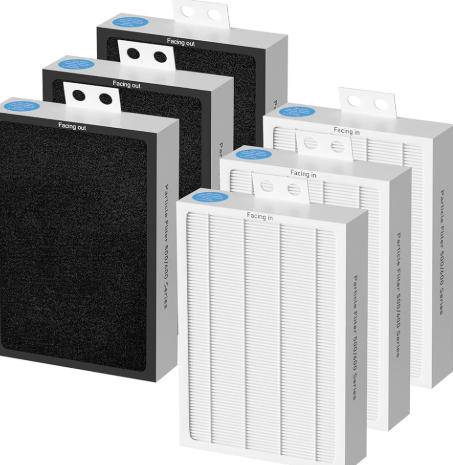
Yes. Every Blueair product uses HEPA-grade technology, whether referred to as HEPA or HEPASilent™. This ensures high particle removal across the entire range.
2. Can Blueair filters remove viruses and bacteria?
Absolutely. Blueair's HEPASilent™ technology captures particles as small as 0.1 microns, including many bacteria and viruses. Models with GermShield™ further neutralize pathogens.
3. How often should Blueair filters be replaced?
Most filters should be replaced every 6 to 12 months, depending on environmental conditions and usage intensity. Smart indicators help track optimal timing.
4. Are Blueair filters certified as true HEPA?
They are HEPA-grade, meaning they meet or exceed HEPA efficiency standards. The “HEPASilent™” label reflects the hybrid nature of the technology combining mechanical and electrostatic systems.
5. Are Blueair systems suitable for industrial or pharmaceutical uses?
Yes, the filtration principles align with those used in cleanrooms and production facilities. While Blueair purifiers are primarily for residential and office use, the same HEPA-grade foundation can support controlled manufacturing environments.


