Content Menu
● What Is A HEPA Air Filter?
● How A HEPA Air Filter Works Inside A Purifier
● HEPA Air Filter Efficiency Standards You Should Know
● Key Features Of The Best HEPA Filter Air Purifier
● How To Match HEPA Air Filter Purifiers To Your Needs
● HEPA Air Filter Purifiers And Cleanroom‑Level Control
● Designing Airflow Around Pharmaceutical Equipment
● HEPA Air Filter Purifier Comparison By Use Case
● How To Choose The Best HEPA Air Filter Purifier Step‑By‑Step
>> 1. Define Air‑Quality Goals
>> 2. Calculate Required Airflow
>> 3. Verify HEPA Air Filter Credentials
>> 4. Examine Housing, Sealing, And Pre‑Filtration
>> 5. Evaluate Lifecycle Cost
>> 6. Plan Validation And Maintenance
● Where HEPA Air Filter Technology Fits In A Pharmaceutical Line
● Everheal's Approach To HEPA Air Filter Integration
● Conclusion
● FAQ
>> 1. What does “True HEPA Air Filter” really mean?
>> 2. How often should a HEPA Air Filter be replaced?
>> 3. Can a HEPA Air Filter remove viruses from the air?
>> 4. What is the difference between HEPA and ULPA filters?
>> 5. Why is airflow design important when using HEPA Air Filter systems?
● Citations:
Choosing the best HEPA filter air purifier means matching HEPA Air Filter performance, room size, noise level, and long‑term costs to your real environment and health needs rather than chasing a single “perfect” model. For pharmaceutical and high‑purity applications, the best option is a True or medical‑grade HEPA Air Filter purifier that meets international efficiency standards (≥99.97% at 0.3 μm) and is properly sized and maintained.
Everheal, a Chinese pharmaceutical equipment specialist, can integrate HEPA Air Filter technology into complete plant layouts, combining pure water preparation systems, pure steam generators, multi‑effect distillation machines, liquid filling and sealing machines, and sterilization systems to provide turnkey solutions for global clients. In this article, the focus is on how HEPA Air Filter technology works, how to choose the best HEPA filter air purifier, and how to fit these systems into high‑demand environments such as cleanrooms and pharmaceutical production lines.
What Is A HEPA Air Filter?
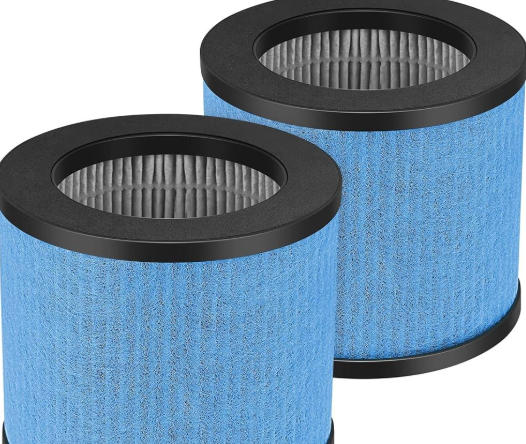
A HEPA Air Filter is a high‑efficiency particulate air filter that captures at least 99.97% of particles with a diameter of 0.3 micrometers according to widely adopted standards. This performance makes a HEPA Air Filter particularly effective against common airborne pollutants such as dust, pollen, mold spores, pet dander, and many bacteria and aerosols.
The HEPA Air Filter media is a dense mat of fibers—often polypropylene or fiberglass—arranged randomly to create a tortuous path that forces particles to collide with and adhere to the fibers. Because of this structure, a HEPA Air Filter does not work like a simple mesh screen; it relies on several physical capture mechanisms that cover a wide range of particle sizes and types, from coarse dust to ultrafine aerosols.
How A HEPA Air Filter Works Inside A Purifier
Inside an air purifier, a fan pulls room air through the HEPA Air Filter so that contaminants are trapped while cleaner air is pushed back into the space. As the air passes through the HEPA Air Filter, particles interact with the fibers through three main mechanisms: interception, impaction, and diffusion.
Larger particles such as coarse dust and pollen are mainly captured by impaction, where their inertia causes them to crash into the HEPA Air Filter fibers rather than flowing around them. Medium‑sized particles are often captured by interception, when they follow airflow streamlines but still come close enough to the fibers to be snagged. Very fine particles below about 0.1 micrometers move irregularly due to Brownian motion and are captured by diffusion as they bounce into the HEPA Air Filter fibers instead of passing straight through.
Because of these combined mechanisms, a properly designed HEPA Air Filter can capture a wide spectrum of particle sizes more effectively than many people expect, even though the 0.3‑micrometer value is often highlighted as the most penetrating particle size. In real‑world use, a high‑quality HEPA Air Filter often performs even better for particles both smaller and larger than 0.3 micrometers.
HEPA Air Filter Efficiency Standards You Should Know
Most consumer “True HEPA” products are designed to meet the classic requirement of removing at least 99.97% of particles of 0.3 micrometers in diameter. For residential and office use, this True HEPA Air Filter specification is typically enough to provide meaningful relief from allergies and general airborne pollutants.
In professional and pharmaceutical environments, additional classification systems are used to describe HEPA Air Filter performance more precisely. European standards such as EN 1822 and related ISO classifications define filter classes like H13 and H14, which provide stricter levels of efficiency and require documented testing. These classifications help ensure that each HEPA Air Filter used in a critical environment has traceable performance data and has been tested at the most penetrating particle size.
For cleanroom‑level control, HEPA Air Filter systems are integrated into ceilings, terminal housings, or fan‑filter units to help achieve ISO Class 5–8 air cleanliness, depending on the process. ULPA filters with even higher efficiency may be used for the most critical sterile applications, but in many pharmaceutical, packaging, and healthcare spaces, HEPA Air Filter technology provides an optimal balance between performance and energy consumption.
Key Features Of The Best HEPA Filter Air Purifier
The best HEPA filter air purifier combines a certified HEPA Air Filter with an appropriately powerful fan, tightly sealed housing, and intelligent control features. When evaluating models, it is important to look beyond marketing claims and examine the real performance data that show how well the HEPA Air Filter system will perform in your environment.
Important features include:
- True HEPA or medical‑grade HEPA Air Filter (H13–H14 where needed), rather than vague “HEPA‑like” labels.
- High Clean Air Delivery Rate (CADR) appropriate for your room size and ceiling height.
- Fully sealed air path so air cannot bypass the HEPA Air Filter and leak around the edges.
- Multi‑stage filtration where a pre‑filter and activated carbon filter protect and complement the HEPA Air Filter for dust and gas control.
- Sensors and auto modes that adjust fan speed based on real‑time particle levels and air‑quality indicators.
- Clear information on HEPA Air Filter replacement intervals and costs, so long‑term ownership remains economical.
For users in pharmaceutical, biotech, or medical device facilities, the best purifier may also integrate with central HVAC and follow Good Manufacturing Practice (GMP) principles for airflow direction, pressure differentials, and HEPA Air Filter integrity testing. In such settings, a high‑quality HEPA Air Filter purifier is treated as a critical piece of process equipment rather than a simple comfort device.
How To Match HEPA Air Filter Purifiers To Your Needs
The “best” HEPA filter air purifier always depends on the application, so it is essential to clarify where and how the HEPA Air Filter system will be used. A compact purifier with a single HEPA Air Filter may be ideal for a bedroom or small office, while a networked, ducted system with multiple HEPA Air Filter modules is necessary for an aseptic filling suite or sterile manufacturing area.
Consider these typical scenarios:
- Homes and offices: Focus on a True HEPA Air Filter purifier with strong CADR, quiet operation, and a reliable carbon stage for odors and VOCs. Portability, night modes, and low running costs also matter.
- Healthcare clinics: Choose systems with medical‑grade HEPA Air Filter cartridges, easy validation, and continuous air‑quality monitoring. Purifiers may be used to support isolation rooms or waiting areas.
- Pharmaceutical production lines: Implement ceiling or terminal HEPA Air Filter units designed for laminar flow, pressure control, and compliance with ISO 14644 and GMP requirements. These systems are often integrated into the building's HVAC and controlled through central monitoring.
In complex industrial or pharmaceutical projects, Everheal can integrate HEPA Air Filter purification into complete plant layouts, combining pure water systems, pure steam generators, multi‑effect distillation, filling‑sealing machines, and sterilization equipment into a validated production environment. This integrated approach ensures that air purity is not treated in isolation but is aligned with utility systems and process equipment.
HEPA Air Filter Purifiers And Cleanroom‑Level Control
Cleanrooms depend on HEPA Air Filter systems to maintain specified particle concentrations and protect products from contamination. For example, ISO Class 5 cleanrooms typically use H13–H14 HEPA Air Filter units in ceiling grids to maintain extremely low particle counts during critical operations such as aseptic filling, filtration, and final product handling.
In pharmaceutical cleanrooms, gel‑sealed HEPA Air Filter modules and regular leak‑testing help ensure that no unfiltered air bypasses the filter media. Airflow is often carefully balanced to create directional or laminar flow zones that push particles away from critical product contact areas and toward exhaust or return grilles. Replacement criteria for HEPA Air Filter units may include reduced air velocity, doubled pressure drop, or unrepairable leakage, all designed to maintain stable performance over time.
Everheal's turnkey production line solutions incorporate HEPA Air Filter design from the early layout stage, coordinating airflow patterns with equipment such as sterilization systems and liquid filling and sealing machines to maintain controlled environments around critical product contact areas. This includes planning the locations of supply diffusers, HEPA Air Filter modules, return air points, and personnel and material flows to reduce contamination risk.
Designing Airflow Around Pharmaceutical Equipment
In pharmaceutical and biotech plants, selecting a HEPA Air Filter is only one part of the challenge; designing the airflow system around complex equipment is equally important. A high‑performance HEPA Air Filter can fail to protect product quality if airflow is short‑circuited, stagnant, or disrupted by poorly placed machines and obstacles.
For example, filling lines, capping machines, and inspection stations may need local unidirectional airflow supplied through HEPA Air Filter modules positioned directly above the open product path. Downward flow sweeps away particles generated by operators, machinery, or packaging materials. Background areas, where products are closed or protected, may rely on turbulent mixed airflow supplied by HEPA Air Filter terminals at lower air change rates.
Everheal's engineering team can study plant layouts and production processes, then position HEPA Air Filter units to support critical operations such as sterile filling, lyophilization loading, or final product packaging. Combining HEPA Air Filter design with pure water distribution, pure steam lines, and sterilization chambers ensures that environmental control and process technology work together rather than in conflict.
HEPA Air Filter Purifier Comparison By Use Case
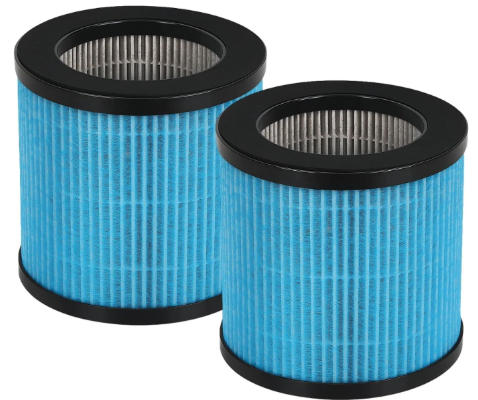
Different segments prioritize different strengths in a HEPA Air Filter purifier. The following comparison highlights typical priorities for three major user groups and illustrates why a single “best” product does not exist for every situation.
| User scenario | HEPA Air Filter priority | Key performance focus |
| Home / office allergy relief | True HEPA Air Filter + quiet operation | CADR vs. room size, low noise at night, low running cost |
| Healthcare and clinics | Medical‑grade HEPA Air Filter, validated | Infection control, continuous uptime, easy service and monitoring |
| Pharmaceutical & sterile production | Networked HEPA Air Filter cleanroom system | ISO/GMP compliance, airflow design, pressure and particle control |
For home users, a compact HEPA Air Filter purifier that is silent on low speed and affordable to run can dramatically improve comfort and sleep. For clinics, portable HEPA Air Filter units may support isolation rooms or treatment spaces when central HVAC upgrades are difficult. For pharmaceutical manufacturers, ceiling‑mounted HEPA Air Filter systems combined with pressure cascades and defined air change rates are part of the core quality‑by‑design concept.
Everheal can support the latter two categories by integrating HEPA Air Filter technology into complete pharmaceutical equipment packages, ensuring that air purity aligns with water, steam, sterilization, and filling line design.
How To Choose The Best HEPA Air Filter Purifier Step‑By‑Step
To identify the best HEPA filter air purifier for your situation, a structured selection process helps avoid common mistakes and ensures that the chosen HEPA Air Filter system provides real benefits.
1. Define Air‑Quality Goals
First, clarify whether the main concern is allergies, infection control, product protection, or regulatory compliance. A family suffering from seasonal allergies will have different HEPA Air Filter requirements from a pharmaceutical company manufacturing sterile injectables.
For pharmaceutical or medical environments, translate these goals into required ISO class, GMP grade, or local regulatory standards where HEPA Air Filter performance is critical. Air cleanliness targets, microbial limits, and temperature and humidity constraints should be considered together when specifying the HEPA Air Filter system.
2. Calculate Required Airflow
Measure room volume (length × width × height) and select a purifier whose HEPA Air Filter system can deliver enough CADR to provide sufficient air changes per hour. For typical homes, 4–6 air changes per hour may be acceptable; for healthcare or high‑risk spaces, 6–12 air changes per hour or more may be recommended, depending on local guidelines.
In cleanrooms, airflow patterns are designed so that HEPA Air Filter outlets sweep contamination away from critical zones and toward return grilles. Airflow rates, supply positions, and return locations all affect the performance of the HEPA Air Filter system and must be coordinated with walls, doors, equipment, and operator positions.
3. Verify HEPA Air Filter Credentials
Look for True HEPA or EN 1822‑classified HEPA Air Filter cartridges with documented efficiency at the most penetrating particle size. Avoid vague marketing terms that do not state filter efficiency, test methods, or particle sizes.
For high‑risk applications, confirm factory testing, serial numbers, and certificates for each HEPA Air Filter. Plan for on‑site leak‑testing after installation or maintenance. These steps give confidence that each HEPA Air Filter in the system has been properly manufactured, installed, and verified.
4. Examine Housing, Sealing, And Pre‑Filtration
A good HEPA Air Filter is ineffective if the housing leaks or if air can bypass the filter media. Choose fully sealed purifiers or cleanroom terminals with gasket or gel seals that compress reliably when installed. Small bypass leaks can severely reduce effective HEPA Air Filter efficiency at the room level.
Use pre‑filters to intercept larger particles and protect the HEPA Air Filter media from premature loading. A simple pre‑filter can extend HEPA Air Filter life, reduce pressure drop, and maintain stable airflow. In environments with high dust or fiber loads, multistage pre‑filtration upstream of the HEPA Air Filter can dramatically improve overall system performance and reduce maintenance costs.
5. Evaluate Lifecycle Cost
Consider not only the upfront price but also HEPA Air Filter replacement intervals, pre‑filter costs, and energy consumption at typical fan speeds. A cheaper purifier with small, expensive HEPA Air Filter cartridges that require frequent replacement may cost more over a few years than a larger unit with long‑life filters.
In large facilities, optimizing HEPA Air Filter selection and fan efficiency can significantly reduce total cost of ownership. Carefully designed HEPA Air Filter systems minimize pressure drop while still achieving the required air changes and cleanliness levels, providing both energy savings and reliable air quality.
6. Plan Validation And Maintenance
Schedule regular inspections of HEPA Air Filter seals, pressure drop, and airflow, and follow industry replacement guidelines such as changes at 1.5–2 times the initial resistance or when velocity falls below specified limits. Visual checks of filter frames, housings, and gaskets help detect damage or installation issues that could compromise performance.
In regulated environments, document all HEPA Air Filter qualification, testing, and replacement activities as part of the quality system. Records of filter serial numbers, test results, and maintenance actions are often required during audits and inspections. Long‑term performance of the HEPA Air Filter system is not only a technical issue but also a compliance matter.
Where HEPA Air Filter Technology Fits In A Pharmaceutical Line
In a typical pharmaceutical production line, HEPA Air Filter systems play multiple roles across different areas of the plant. Compounding rooms, filtration and filling areas, preparation zones for containers and closures, and sterilization or depyrogenation tunnels all rely on HEPA Air Filter units to keep airborne contamination within specified limits.
Everheal can design layouts where HEPA Air Filter modules above filling and sealing machines create controlled zones that protect open product during critical exposure periods. Separate HEPA Air Filter systems in supporting spaces maintain background cleanliness around pure water systems, pure steam generators, and multi‑effect distillation units. The goal is to create logical cleanliness zones, with HEPA Air Filter technology tailored to each area's risk level and operational needs.
By integrating HEPA Air Filter systems with clean steam sterilizers, autoclaves, and other sterilization equipment, Everheal helps ensure that products remain protected both during and after thermal or chemical sterilization steps. Cleanroom construction, HEPA Air Filter layouts, equipment placement, and material and personnel flows all work together to support stable, high‑quality production.
Everheal's Approach To HEPA Air Filter Integration
As a provider of pharmaceutical equipment and production line solutions, Everheal treats HEPA Air Filter systems as a core part of overall plant design. Rather than offering standalone purifiers, Everheal integrates HEPA Air Filter technology into complete project solutions, including:
- Pure water preparation and distribution systems.
- Pure steam generators and multi‑effect distillation units.
- Liquid filling and sealing machines for vials, ampoules, or bottles.
- Sterilization systems such as autoclaves and dry‑heat sterilizers.
- Layout planning for cleanrooms and controlled environments.
By coordinating HEPA Air Filter selection with these systems, Everheal helps customers achieve consistent product quality, regulatory compliance, and efficient operation. From feasibility study to design, installation, and validation, HEPA Air Filter performance is woven into every stage of the project.
Conclusion
The best HEPA filter air purifier is not a single universal product but a carefully selected system that matches HEPA Air Filter performance, room size, regulatory demands, and long‑term operating cost to your specific application. Home users may prioritize a compact purifier with a True HEPA Air Filter and quiet, efficient operation, while pharmaceutical and healthcare facilities need validated HEPA Air Filter systems integrated with HVAC, monitoring, and GMP‑compliant process layouts.
For pharmaceutical manufacturers and high‑risk environments, working with an equipment partner such as Everheal makes it possible to embed HEPA Air Filter air management into the overall plant design—alongside pure water, pure steam, distillation, filling‑sealing, and sterilization solutions. By treating the HEPA Air Filter system as part of a complete production concept, you can create a coherent, compliant, and future‑ready environment that protects both products and people.
FAQ
1. What does “True HEPA Air Filter” really mean?
A True HEPA Air Filter is tested and certified to capture at least 99.97% of particles 0.3 micrometers in diameter, which is often considered the most penetrating particle size. Filters or purifiers labeled only “HEPA‑type” or “HEPA‑like” may not reach this level of performance and should not be treated as equivalent to a True HEPA Air Filter.
2. How often should a HEPA Air Filter be replaced?
In homes and offices, a HEPA Air Filter often lasts 6–18 months depending on dust levels, fan speed, and pre‑filter performance. In pharmaceutical cleanrooms and regulated environments, HEPA Air Filter replacement is typically based on airflow and pressure‑drop criteria—such as resistance rising to around 1.5–2 times the initial value or air velocity falling below specified limits—and on results of regular leak‑testing and inspections.
3. Can a HEPA Air Filter remove viruses from the air?
A high‑quality HEPA Air Filter can capture a large proportion of virus‑laden aerosols because many respiratory droplets and droplet nuclei fall within the particle size range where HEPA efficiency is very high. While no air purifier can guarantee complete infection prevention, a HEPA Air Filter system is a powerful tool when combined with adequate ventilation, masking policies, hygiene measures, and sensible occupancy control.
4. What is the difference between HEPA and ULPA filters?
Both HEPA and ULPA filters are mechanical filters designed to remove particles from the air, but ULPA filters achieve higher efficiency than a typical HEPA Air Filter and are therefore used in the most critical cleanroom operations. This extra performance comes with higher pressure drop and energy consumption, so a HEPA Air Filter is usually preferred where its 99.97% efficiency provides adequate protection at a lower overall cost and with simpler system design.
5. Why is airflow design important when using HEPA Air Filter systems?
Even the best HEPA Air Filter purifier cannot compensate for poor airflow patterns that recirculate contaminants across sensitive areas. Good design directs HEPA Air Filter supply air so that clean air sweeps from cleaner zones toward less critical areas and into exhaust or returns, minimizing the chance that particles will settle on products, equipment, or occupants. In cleanrooms and pharmaceutical production lines, airflow design and HEPA Air Filter placement are planned together to maintain consistent protection.
Citations:
1. https://www.epa.gov/indoor-air-quality-iaq/what-hepa-filter
2. https://en.wikipedia.org/wiki/HEPA
3. https://www.iso-aire.com/blog/what-is-a-hepa-filter-and-how-does-it-work
4. https://cleanair.camfil.us/2022/12/30/hepa-filters-explained-how-do-hepa-filters-work
5. https://www.dreametech.com/blogs/blog/what-is-a-hepa-filter-guide
6. https://www.market.com/heating-cooling-air-quality/air-purifiers/hepa/
7. https://www.sctcleanroom.com/news/application-replacement-time-and-standards-of-hepa-filter-in-pharmaceutical-clean-room/
8. https://www.wyndly.com/blogs/learn/hepa-filter
9. https://optimalhealth.co/resources/air-purifiers/buying-guide
10. https://csitesting.com/cleanroom-hepa-filters/
11. https://www.trusens.com/news/blog/hepa-filter-guide-what-they-are-and-how-they-work/
12. https://youthfilter.com/news/pharmaceutical-cleanroom-air-filters-gmp-manufacturing-standards/
13. https://trchealthcare.com/the-compounding-chronicles-almost-everything-you-need-to-know-about-hepa-filters/
14. https://www.fortress.com.hk/en/promotion/buying-guides/air-purifier


