Content Menu
● What Makes A HEPA Air Filter “Best”?
● HEPA Air Filter Definitions And Standards
● H13 vs H14 HEPA Air Filter: Which Is Better?
● HEPA Air Filter vs MERV Filters
● Where Is The Best HEPA Air Filter Used?
● Key Selection Criteria For The Best HEPA Air Filter
● HEPA Air Filter And Airflow, Energy, And Noise
● How Long Does A HEPA Air Filter Last?
● HEPA Air Filter Applications In Pharmaceutical And Life Sciences
● Common Myths About The Best HEPA Air Filter
● How Everheal Can Help Select The Best HEPA Air Filter
● Conclusion
● FAQ About The Best HEPA Air Filter
>> 1. What efficiency should the best HEPA Air Filter have?
>> 2. Is an H14 HEPA Air Filter always better than H13?
>> 3. How often should the best HEPA Air Filter be replaced?
>> 4. Can a HEPA Air Filter work in any existing HVAC system?
>> 5. What is the best HEPA Air Filter for pharmaceutical cleanrooms?
● Citations:
Choosing the best HEPA Air Filter means balancing filtration efficiency, airflow, energy consumption, and application needs rather than focusing on one universal “best” product. For Everheal's pharmaceutical, laboratory, healthcare, and high‑purity environments, the best HEPA Air Filter is typically a certified H13 or H14 medical‑grade filter integrated into a properly designed clean air system.
The idea of a single “perfect” HEPA Air Filter is misleading because every facility has different contamination risks, airflow patterns, and regulatory expectations. The real goal is to select a HEPA Air Filter that delivers reliable particle removal at the required cleanliness level while remaining economical and easy to validate. When correctly chosen and integrated, the best HEPA Air Filter becomes a critical component of a long‑term air‑quality strategy rather than a simple spare part.
What Makes A HEPA Air Filter “Best”?
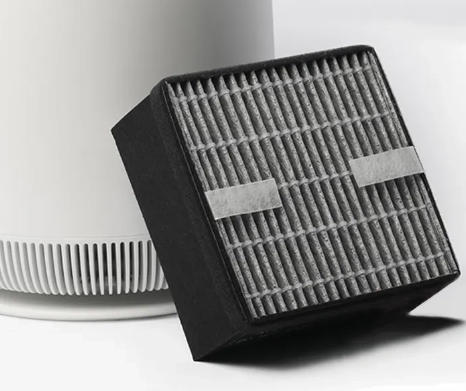
A HEPA Air Filter is defined by its ability to remove very high percentages of tiny particles, especially those around 0.3 microns in diameter. This size is known as the most penetrating particle size because it is particularly challenging to capture and therefore used as the reference point for testing. When a HEPA Air Filter is rated to remove 99.95% or 99.97% of particles at 0.3 microns, it means that only a very small fraction of contaminants pass through the filter under specified conditions.
The best HEPA Air Filter for any facility combines three core features: high capture efficiency, stable airflow, and proven performance in real operating conditions. In pharmaceutical and life‑science environments, that usually means an H13 or H14 HEPA Air Filter tested under strict standards and installed in robust housings with reliable seals. For general consumers, the best HEPA Air Filter is the one that offers verified performance, acceptable noise levels, and realistic replacement costs.
HEPA Air Filter Definitions And Standards
A true HEPA Air Filter must meet formal standards, not just marketing phrases such as “HEPA‑type” or “almost HEPA.” Different regions and industries use specific test methods and minimum efficiencies to define what qualifies as HEPA. In many cases, a HEPA Air Filter must reach at least 99.97% efficiency at 0.3 microns under controlled laboratory conditions, while some European and ISO standards specify at least 99.95% efficiency.
These standards are important because they ensure that performance claims for a HEPA Air Filter are comparable between manufacturers. Classes such as H13 and H14 are part of a broader hierarchy that links numerical efficiency with allowable leakage limits. A properly documented HEPA Air Filter will be accompanied by a test report showing its class, test method, and measured performance, giving users confidence that the filter meets its claimed rating.
H13 vs H14 HEPA Air Filter: Which Is Better?
Both H13 and H14 HEPA Air Filter grades are considered high‑efficiency, medical‑ or cleanroom‑grade solutions, but they provide slightly different performance. An H13 HEPA Air Filter typically removes around 99.95% of particles at the most penetrating particle size, while an H14 HEPA Air Filter pushes that efficiency even higher, usually to about 99.995%. On paper, H14 looks significantly better, and in many critical applications it is indeed preferred.
However, the higher media density of an H14 HEPA Air Filter also increases resistance to airflow. If the fan, air‑handling unit, or purifier was originally designed for H13, replacing it with H14 can reduce air volume, increase energy consumption, and sometimes shift air patterns in a way that harms rather than improves air cleanliness. In practice, the best HEPA Air Filter is not automatically the highest class but the one that fits the system's design and the cleanliness targets of the room.
For pharmaceutical projects, Everheal may recommend H13 HEPA Air Filters for certain corridors, support rooms, or background areas, and H14 HEPA Air Filters for critical zones such as aseptic filling or high‑risk compounding. In this way, the overall cleanroom system uses the right HEPA Air Filter in each location rather than relying on a single grade everywhere.
HEPA Air Filter vs MERV Filters
Many users first encounter HEPA terminology when comparing a HEPA Air Filter to a high‑MERV filter, especially in HVAC upgrades. MERV is a rating system mainly used for general ventilation filters, where values typically range from 1 to 16. High‑MERV filters—often MERV 13 to 16—already offer strong performance, capturing a large share of fine particles and improving indoor air quality significantly compared with basic filters.
A HEPA Air Filter sits above these high‑MERV filters in terms of particle capture, roughly equivalent to MERV 17 and higher. Unlike MERV filters, which are often sufficient for offices, schools, or commercial buildings, a HEPA Air Filter is designed for environments where very low particle counts are essential. This includes hospital isolation rooms, cleanrooms, and pharmaceutical production areas where even a small amount of contamination can be unacceptable.
Because a HEPA Air Filter creates more resistance to airflow than a typical MERV filter, retrofitting HEPA into an existing HVAC system requires careful engineering. The fan must be able to handle the higher pressure drop, and the housing must ensure tight sealing so that air cannot bypass the HEPA Air Filter. Simply replacing a MERV filter with a HEPA Air Filter without checking the system can lead to reduced airflow and uneven air distribution.
Where Is The Best HEPA Air Filter Used?
The best HEPA Air Filter is typically used where the consequences of air contamination are serious. Hospitals rely on HEPA Air Filters to protect vulnerable patients and prevent the spread of airborne infection in operating theatres and isolation rooms. Laboratories and research facilities use HEPA Air Filters to protect samples, maintain experiment integrity, and safeguard personnel from hazardous aerosols.
In the pharmaceutical industry, HEPA Air Filters are used to keep cleanrooms within defined classifications so that drug products are manufactured in controlled conditions. Ceiling‑mounted HEPA Air Filter modules, terminal filter boxes, and integrated air outlets are carefully placed to create specific airflow patterns, often with high air changes per hour and sometimes with unidirectional flow. For Everheal's international customers, selecting the best HEPA Air Filter for each zone is a key part of designing a compliant production environment.
At the same time, consumers increasingly seek the best HEPA Air Filter for homes and offices, especially in regions affected by pollution or seasonal smoke. For these users, a compact air purifier with a certified H13 HEPA Air Filter and a pre‑filter for coarse dust often provides a practical, affordable solution. Although the performance requirements are not as strict as in cleanrooms, a genuine HEPA Air Filter still offers real benefits for allergy sufferers and health‑conscious families.
Key Selection Criteria For The Best HEPA Air Filter
Selecting the best HEPA Air Filter requires looking beyond efficiency numbers and brand names. One of the first considerations is certified efficiency and the test standard used. Buyers should confirm whether the HEPA Air Filter has been tested individually or as part of a batch, and whether each filter module is supplied with its own test certificate. This level of documentation is especially important in regulated sectors such as pharmaceuticals and healthcare.
Another key factor is pressure drop at the design airflow. A HEPA Air Filter with lower pressure drop for the same efficiency can reduce fan power and operating costs over the life of the system. However, ultra‑low pressure drop should not come at the expense of mechanical strength, leak tightness, or long‑term stability. The best HEPA Air Filter balances efficiency, resistance, and robustness so that it continues to perform as expected after many months of operation.
Material compatibility is also crucial. In environments where the HEPA Air Filter will be exposed to high humidity, sterilization cycles, or certain chemicals, users must choose frame materials, sealants, and gaskets that can withstand these conditions. Stainless steel frames, special sealants, and high‑temperature designs may be necessary in some steam‑sterilized or decontaminated systems. For a company like Everheal that supplies integrated sterile lines and clean utilities, aligning HEPA Air Filter materials with process conditions is an essential design step.
HEPA Air Filter And Airflow, Energy, And Noise
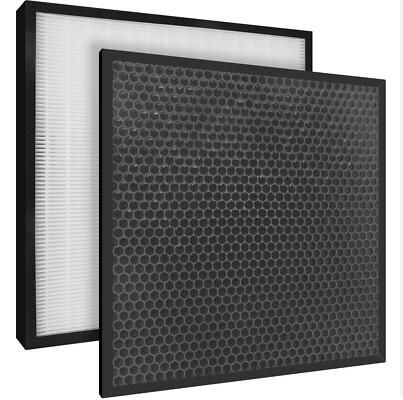
Because a HEPA Air Filter has dense media, it naturally resists airflow more than a standard filter. This resistance is quantified as pressure drop and directly affects fan selection and energy usage. If a system is designed with too small a fan, the combination of the HEPA Air Filter and other components may reduce airflow below the level needed to maintain room classification or ventilation targets.
To keep systems efficient, engineers try to optimize duct design, choose suitable pre‑filters, and specify HEPA Air Filters that provide good efficiency at moderate resistance. When the pressure drop of a HEPA Air Filter is too high, the fan must work harder, increasing electricity consumption and potentially creating more noise. In air purifiers, a poorly matched HEPA Air Filter can cause the unit to run at louder fan speeds to maintain clean air delivery rate, making it less comfortable for users in homes or offices.
Filtering a large volume of air quietly and efficiently is an engineering challenge. The best HEPA Air Filter for a particular system is therefore the one that allows the device to deliver the required clean air while preserving reasonable noise levels and energy use. This may lead designers to choose slightly larger filter areas or optimized media layouts so that each HEPA Air Filter has more surface and lower resistance without sacrificing performance.
How Long Does A HEPA Air Filter Last?
Even the best HEPA Air Filter will eventually reach the end of its life as particles accumulate in the media. Over time, the filter gradually becomes clogged, increasing pressure drop and reducing the amount of air the system can push through. If not replaced, the HEPA Air Filter can cause fans to work harder, consume more energy, and still fail to deliver the air volume needed for proper ventilation.
The actual lifetime of a HEPA Air Filter depends heavily on several variables, including ambient air quality, operating hours, and the presence of effective pre‑filtration. In relatively clean environments with robust pre‑filters, a HEPA Air Filter may last several years before needing replacement. In dusty or high‑load conditions, the same model might need to be changed more frequently. For critical environments, decisions are usually based on measured pressure drop, leak‑test results, and predefined maintenance intervals rather than on time alone.
From a cost perspective, pre‑filters are essential for extending the life of a HEPA Air Filter. They capture coarse dust and larger particles so that the HEPA media remains focused on fine particles and microorganisms. This strategy reduces the total number of HEPA Air Filter replacements over the life of the facility and can significantly lower total cost of ownership without compromising protection.
HEPA Air Filter Applications In Pharmaceutical And Life Sciences
In pharmaceutical and biotechnology facilities, a HEPA Air Filter is not just a comfort feature; it is directly tied to product quality and patient safety. Cleanrooms with defined classifications rely on HEPA Air Filters to control the concentration of airborne particles to extremely low levels. These particles can include not only inert dust but also viable microorganisms that might contaminate sterile or high‑risk products.
Different zones in a pharmaceutical plant may require different HEPA Air Filter configurations. For example, high‑risk aseptic areas may use ceiling‑mounted H14 HEPA Air Filter modules arranged to provide uniform downward airflow, while support rooms and background areas might use H13 HEPA Air Filters with less stringent patterns. Each installation must be validated through airflow measurements, particle counts, and periodic leak tests to prove that the HEPA Air Filter system works as intended.
For Everheal, which designs and supplies purified water systems, pure steam generators, cleanroom‑related equipment, and complete production lines, the HEPA Air Filter strategy is part of the broader engineering solution. Matching the HEPA Air Filter to manufacturing steps, utilities, and sterilization systems helps ensure that the entire facility operates as a coherent, compliant whole rather than a collection of isolated components.
Common Myths About The Best HEPA Air Filter
One of the most common myths is that any product that claims to be “HEPA‑like” or “HEPA‑style” will provide the same protection as a certified HEPA Air Filter. In reality, such terms often indicate that the filter has not been tested according to recognized standards and may perform significantly worse. Only filters labeled with specific classes and backed by test data can be trusted for critical applications.
Another misconception is that upgrading to the highest possible HEPA class always improves air quality. While higher classes such as H14 do remove more particles, they also increase resistance and may stress the system if it was not designed accordingly. If a fan cannot maintain required airflow through a very dense HEPA Air Filter, the result can be reduced air changes per hour, stagnant zones, and unexpected contamination risks.
A third myth is that a HEPA Air Filter never needs replacement because it “traps everything and gets better as it loads.” While some filters become slightly more efficient as they accumulate dust, the penalty in pressure drop and airflow eventually outweighs any theoretical gain. A HEPA Air Filter that has been left in place for too long can cause serious performance problems even if its media itself is still technically effective.
How Everheal Can Help Select The Best HEPA Air Filter
Everheal specializes in providing integrated equipment and engineering solutions for pharmaceutical manufacturers and other high‑purity industries. In this context, choosing the best HEPA Air Filter is not a standalone decision but part of the overall project concept. The design of purified water systems, pure steam generators, sterilizers, clean utilities, and production lines must align with cleanroom classification and ventilation strategies.
When Everheal supports a customer from concept to commissioning, HEPA Air Filter selection is based on product type, process risk analysis, and regulatory requirements such as GMP guidelines. This includes defining which rooms require H13 HEPA Air Filters and which areas demand H14, how many HEPA Air Filter modules are needed, and how they should be arranged to produce the desired airflow patterns. It also involves planning for maintenance, testing access, and safe filter replacement procedures.
By taking a system‑level view, Everheal helps clients avoid common pitfalls such as undersized fans, poorly sealed housings, or mismatched HEPA Air Filter classes. The result is a facility where each HEPA Air Filter contributes effectively to long‑term quality, safety, and compliance. For international customers, this approach simplifies validation and documentation when presenting systems to auditors and regulatory agencies.
Conclusion
The best HEPA Air Filter is not a single universal product but the filter that delivers certified high efficiency, stable airflow, and reliable performance in a specific application. In homes and offices, this often means a well‑designed purifier with a genuine H13 HEPA Air Filter and proper pre‑filtration. In hospitals, laboratories, and pharmaceutical facilities, it usually involves carefully engineered systems that combine H13 and H14 HEPA Air Filters with validated housings and precise airflow control.
Selecting the best HEPA Air Filter requires considering recognized standards, pressure drop, lifetime, material compatibility, and system design rather than focusing only on marketing claims. When supported by expert engineering and regular maintenance, a HEPA Air Filter becomes a powerful tool for protecting health, product quality, and regulatory compliance. Through integrated solutions and global project experience, Everheal helps customers identify and implement the HEPA Air Filters that truly match their technical and business needs.
FAQ About The Best HEPA Air Filter
1. What efficiency should the best HEPA Air Filter have?
A true HEPA Air Filter should remove at least 99.95–99.97% of particles at around 0.3 microns, which is considered the most penetrating particle size. This level of performance ensures that the filter can capture fine dust, allergens, and microorganisms that ordinary filters may allow to pass through. For critical environments, efficiency classes such as H13 and H14 are commonly selected to provide a high margin of safety.
2. Is an H14 HEPA Air Filter always better than H13?
An H14 HEPA Air Filter does offer slightly higher particle removal efficiency than an H13 filter, but this does not automatically make it the best choice for every system. Because H14 media creates more resistance, the fan and ductwork must be designed to handle the extra pressure drop without sacrificing airflow. In many cases, an appropriately integrated H13 HEPA Air Filter offers the best overall balance between cleanliness, energy consumption, and equipment cost.
3. How often should the best HEPA Air Filter be replaced?
Even the best HEPA Air Filter must be replaced once it reaches certain pressure‑drop limits or fails leak tests, which can happen after months or years depending on conditions. The ideal replacement interval depends on how dirty the incoming air is, whether pre‑filters are used, and how many hours per day the system operates. Critical facilities usually base their decisions on a combination of time‑based schedules, measured pressure drop, and regular integrity testing.
4. Can a HEPA Air Filter work in any existing HVAC system?
A HEPA Air Filter can only work properly if the HVAC system is capable of overcoming its higher resistance and if the filter housing prevents any air bypass. Retrofitting HEPA into a system designed for low‑MERV filters without modifications often leads to reduced airflow and poor performance. Before upgrading, engineers should evaluate fan capacity, duct layouts, space for HEPA Air Filter modules, and sealing details to ensure that the system can support the change.
5. What is the best HEPA Air Filter for pharmaceutical cleanrooms?
For pharmaceutical cleanrooms, the best HEPA Air Filter is usually an H13 or H14 ceiling or terminal module selected according to room classification and regulatory requirements. The filters must be compatible with the expected temperature, humidity, cleaning agents, and any decontamination processes used in the facility. They should be installed in validated housings and periodically tested to confirm that the HEPA Air Filter system continues to maintain the specified cleanliness level over the life of the plant.
Citations:
1. https://en.wikipedia.org/wiki/HEPA
2. https://air-quality-eng.com/air-cleaners/understanding-hepa-air-filtration/
3. https://commercialairfiltration.co.uk/blogs/news/h13-vs-h14-filtration
4. https://www.livesans.com/blogs/education/the-importance-of-a-medical-grade-hepa-13-filter
5. https://oransi.com/blogs/how-it-works/what-is-a-hepa-filter
6. https://www.clean-link.com/understanding-hepa-filter-efficiency-standards-testing-methods-and-critical-applications/
7. https://airyfilter.com/hepa-filter-vs-merv-rating/
8. https://cleanair.camfil.us/2025/09/22/hepa-filters-understanding-performance-standards-applications-and-selection-criteria/
9. https://www.aalfilter.com/blog/industry-news/HEPA-Filters-The-Ultimate-Guide-for-Cleanroom-Applications/
10. https://airfiltration.mann-hummel.com/en-uk/air-filtration-industries/lab-filters-for-life-science-and-pharmaceutical-industry
11. https://ca.dreametech.com/blogs/blog/what-is-a-hepa-filter-guide
12. https://www.hepacart.com/blog/dont-be-fooled-by-hepa-filter-types-standard-and-approved-filters
13. https://www.hencolin.com/en/info-air-filter/hepa-vs-merv-filter-comparison-which-is-right-for-your-application/


