Content Menu
● Core Principles Of Pharmaceutical Transport
● Cleanroom Transport Equipment Inside Production
● Conveyors In Packaging And Production
● Pneumatic Conveying For Powders And Granules
● Intermediate Bulk Containers And Bin Systems
● Pallet Systems And Warehouse Handling Equipment
● Hospital And Pharmacy Transport Systems
● Temperature‑Controlled Packaging Solutions
● Trucks, Vans, And Trailers For Pharmaceutical Transport
● Air And Sea Freight Containers
● Monitoring, Mapping, And Documentation Equipment
● How Everheal Supports Safe Pharmaceutical Transport
● Designing An Integrated Pharmaceutical Transport System
● Conclusion
● FAQs About Equipment Used To Transport Pharmaceuticals
>> 1. What are the main categories of equipment used to transport pharmaceuticals?
>> 2. How is temperature maintained during pharmaceutical transport?
>> 3. What equipment is used to transport pharmaceuticals within hospitals and pharmacies?
>> 4. Why are monitoring devices so important for pharmaceutical transport?
>> 5. How can Everheal help optimize pharmaceutical transport within a manufacturing site?
● Citations:
Pharmaceutical manufacturers, distributors, hospitals, and pharmacies all rely on specialized pharmaceutical equipment to move products safely between process steps and locations. At every stage, the core objectives are product protection, regulatory compliance, operational efficiency, and traceability.[8][1]
As a Chinese pharmaceutical equipment company, Everheal supplies purified water systems, pure steam generators, multifunctional distillation units, liquid filling and sealing machines, and sterilization systems that integrate with material handling and transport processes inside the plant. By combining processing and transport design, Everheal helps global clients build efficient, GMP‑compliant lines that keep medicines safe until they leave the factory.

Core Principles Of Pharmaceutical Transport
Effective pharmaceutical transport is based on four key principles: controlling environmental conditions, preventing contamination, maintaining security, and documenting the full history of each shipment. Environmental control focuses on temperature, humidity, light, vibration, and shock so that product quality is not degraded during movement and storage.[3][6][1][8]
Contamination control requires hygienically designed pharmaceutical equipment, closed transfer systems, and appropriate packaging to prevent particulates, microbes, or cross‑contact with other products. Security and documentation involve tamper‑evident seals, locked containers, validated procedures, and complete records to satisfy good distribution practice (GDP) and other regulatory expectations.[6][7]
Cleanroom Transport Equipment Inside Production
Inside cleanrooms and controlled environments, pharmaceutical equipment for transport must combine robust hygiene with ergonomic handling. Stainless‑steel carts, trolleys, and dollies with smooth welds and low‑shedding wheels are standard for moving components, containers, and semi‑finished product between processing steps. Mobile mixing tanks, pressure vessels, and process skids are often mounted on wheels so they can be positioned flexibly around reactors, filtration units, or filling lines.[6]
Cleanroom electric tuggers and tow tractors help operators move heavy pharmaceutical equipment and bulk containers without excessive physical strain. This reduces the risk of injury, supports lean “ballroom” layouts, and speeds up product changeovers in multi‑product facilities. Pallet jacks and stackers designed for cleanroom use rely on protected bearings, corrosion‑resistant materials, and designs that are easy to clean and disinfect.[11][6]
Conveyors In Packaging And Production
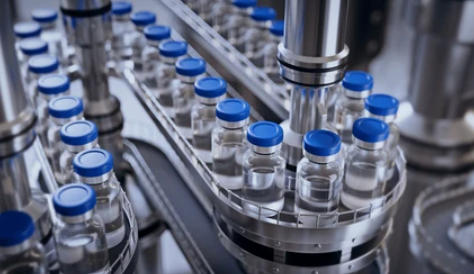
Where volumes are high, conveyors provide continuous, controlled product flow between process stages. In packaging halls, belt and tabletop conveyors move vials, pre‑filled syringes, and bottles between washing, filling, stoppering, capping, and labeling machines. For cartons and cases, roller conveyors and modular belt conveyors connect case packers, checkweighers, serialization systems, and palletizers.[12]
Conveyors used as pharmaceutical equipment must be designed for easy cleaning, with stainless‑steel frames, minimal horizontal surfaces, and appropriate belt materials. Integration of sensors, reject stations, and accumulation tables allows manufacturers to manage jams and maintain line efficiency without damaging sensitive products.[12]
Pneumatic Conveying For Powders And Granules
Powders and granules are often transported internally using pneumatic conveying systems, which move material through enclosed pipelines using air pressure or vacuum. These systems reduce dust emissions, improve containment, and protect operators from exposure to potent active pharmaceutical ingredients (APIs).[13][14]
There are two main pneumatic conveying modes used in pharmaceutical equipment: dilute‑phase and dense‑phase. Dilute‑phase systems suspend particles in a high‑velocity airstream, suitable for many excipients and less fragile materials. Dense‑phase systems move product in slow, concentrated slugs, offering gentler handling for fragile granules, minimizing attrition and segregation. Correct design considers pipeline layout, filtration, material compatibility, and cleaning procedures.[13]
Intermediate Bulk Containers And Bin Systems
Intermediate Bulk Containers (IBCs) and bins are widely used to move powder and granular products between steps and sites. Pharmaceutical IBCs usually feature stainless‑steel construction, smooth internal finishes, and specialized valve systems to support contained charging and discharging. These containers can be used for storage, blending, and transport, forming a modular solution for multi‑product facilities.[15]
Handling systems for IBCs include hoists, lifters, inverting frames, and docking stations that transfer material into granulators, tablet presses, or capsule fillers. Properly engineered pharmaceutical equipment in these systems controls dust, ensures complete discharge, and supports cleaning‑in‑place (CIP) or washing‑in‑place (WIP) concepts.[15]
Pallet Systems And Warehouse Handling Equipment
Once products are packed into cases, they are typically stacked on pallets for internal and external transport. Pharmaceutical facilities often use plastic or coated pallets that do not shed splinters and are easy to clean. In warehouses, electric forklifts, reach trucks, and pallet movers transport palletized loads between receiving, storage, and shipping areas.[16]
Safety and cleanliness shape the design of warehouse material handling equipment used for pharmaceuticals. Electric drives avoid emissions from combustion engines, while non‑marking tires and sealed components support hygiene. Integration with warehouse management systems (WMS) and scanning technology allows serialized products to be tracked at pallet, case, and unit levels, enhancing traceability and recall readiness.[3][11]
Hospital And Pharmacy Transport Systems
Hospitals and central pharmacies also rely on specialized pharmaceutical equipment to move drugs and medical products between departments. Traditional methods include locked medication carts and totes, which nurses and pharmacy staff push or carry along defined routes. Carts may be configured with drawers for different patients, electronic locks, and integrated barcode scanners to support bedside verification.[17]
To accelerate delivery and reduce staff workload, many hospitals use pneumatic tube systems that send sealed carriers through building‑wide tube networks using air pressure. These systems are particularly useful for urgent medicines, blood products, and lab samples, reducing transport times from minutes to seconds. Larger facilities may deploy automated guided vehicles (AGVs) that carry carts or racks along predefined paths, delivering pharmaceuticals, IV fluids, and sterile supplies to wards and satellite pharmacies.[18][11][17]
Temperature‑Controlled Packaging Solutions
Packaging is an essential part of the pharmaceutical equipment ecosystem for transport, especially for temperature‑sensitive products. At a small scale, insulated parcel shippers use foam or vacuum‑insulated panels together with ice packs or phase‑change materials to maintain a defined temperature band for a specified duration. These systems are validated under worst‑case ambient profiles to confirm that internal temperatures remain within range.[9]
Larger pallet shippers and containers provide passive or active temperature control for bulk loads. Passive systems rely on high‑performance insulation and pre‑conditioned refrigerants, while active systems incorporate battery‑powered refrigeration units to maintain 2–8 °C, controlled room temperature, or frozen conditions. Data loggers and indicators are typically included to document temperature and signal any excursions.[10][9]
Trucks, Vans, And Trailers For Pharmaceutical Transport
Road vehicles are among the most visible pieces of pharmaceutical equipment in the distribution chain. Refrigerated trucks and trailers (“reefers”) are fitted with insulation and refrigeration units capable of maintaining ranges such as 2–8 °C or 15–25 °C, depending on the product requirements. Good practice includes temperature mapping of the cargo space, routine calibration of sensors, and continuous recording during each trip.[2][3][6]
Closed‑box or dry‑van trucks are used for medicines that do not require refrigeration but still need protection from light, moisture, and temperature extremes. These vehicles often incorporate security features such as lockable doors, tamper‑evident seals, GPS tracking, and sometimes remote immobilization to mitigate theft or diversion risks. Truck selection must consider cargo volume, temperature needs, route conditions, and regulatory standards.[5][2]
Air And Sea Freight Containers
For long‑distance and high‑value shipments, air and sea freight solutions are critical. In air cargo, specialized pharmaceutical containers offer active or passive temperature control and are compatible with airline handling infrastructure. Cargo holds and ground handling processes must be coordinated to minimise exposure to extreme temperatures on the tarmac.[7]
Refrigerated sea containers (“reefers”) transport large volumes of medicines over extended periods, typically for less time‑critical products. Modern reefers are equipped with precise temperature and humidity controls, remote monitoring, and alarms. Both air and sea transport must align with GDP requirements, including validated routes, documented controls, and robust risk management.[19][7][6]
Monitoring, Mapping, And Documentation Equipment
Monitoring devices are indispensable pharmaceutical equipment for verifying that conditions remained within specification. Single‑use or reusable data loggers are placed inside parcels, pallets, or vehicles to record temperature and sometimes humidity throughout the journey. More advanced systems transmit data in real time, enabling logistics teams to intervene if an excursion occurs.[9][3]
Regulators and standards bodies emphasize the importance of mapping and qualification for storage and transport environments. Temperature mapping studies of warehouses, cold rooms, and truck bodies identify hot and cold spots so that loading patterns and control strategies can be optimised. Calibration of all sensors against traceable standards and systematic record retention are central to compliance.[7][6]
How Everheal Supports Safe Pharmaceutical Transport
Everheal focuses on pharmaceutical equipment that forms the heart of the production process yet directly influences how products can be safely transported. Purified water systems and pure steam generators support reliable cleaning and sterilization of product‑contact equipment, reducing contamination risks before products enter the packaging and logistics chain. Multifunctional distillation units and sterilization systems help ensure that liquids, intermediates, and containers are processed under tightly controlled conditions.
Everheal's liquid filling and sealing machines are designed to integrate seamlessly with conveyors, labeling equipment, inspection systems, and downstream packaging solutions. By offering customized factory layout planning and turnkey production‑line construction, Everheal helps clients design material and product flows that minimize unnecessary handling, shorten transport paths in clean areas, and improve overall efficiency. This systems approach ensures that pharmaceutical equipment for processing and internal transport works as a coherent, validated whole.
Designing An Integrated Pharmaceutical Transport System
Selecting the right mix of equipment requires a structured, risk‑based approach. Companies should map the entire journey of each product, from incoming raw materials, through formulation and filling, to final distribution. For each step, the team defines critical parameters such as temperature range, contamination risks, security needs, and throughput.[1][8]
With this information, engineers and quality specialists can specify appropriate pharmaceutical equipment: cleanroom carts and tuggers, conveyors or pneumatic systems, IBCs, warehouse handling equipment, packaging systems, vehicles, and monitoring devices. Collaboration between manufacturers like Everheal, logistics providers, and technology partners ensures that interfaces are well managed and that data from monitoring systems supports continuous improvement.[1][9]
Conclusion
Across the entire lifecycle of a medicine, specialized pharmaceutical equipment ensures that products move safely, efficiently, and compliantly from raw material to finished dose. Inside the plant, stainless‑steel carts, cleanroom tuggers, conveyors, pneumatic conveying systems, and IBCs protect product quality while supporting ergonomic, flexible production layouts. In warehouses, forklifts, pallet movers, and automated storage systems manage high volumes without compromising traceability or hygiene.[11][16][12][13][15]
Beyond facility walls, insulated packaging, active and passive temperature‑controlled containers, refrigerated trucks, vans, and reefer trailers maintain required conditions for temperature‑sensitive products, supported by data loggers, mapping studies, and rigorous documentation. Air and sea freight solutions, hospital transport systems, and security measures such as GPS tracking and tamper‑evident seals complete an integrated network focused on quality and patient safety. By combining robust transport systems with Everheal's process‑focused pharmaceutical equipment and turnkey factory layouts, companies can build end‑to‑end supply chains that keep medicines safe and effective from production to patient.[2][5][19][3][7][9]

FAQs About Equipment Used To Transport Pharmaceuticals
1. What are the main categories of equipment used to transport pharmaceuticals?
The main categories include internal handling equipment such as cleanroom carts, mobile tanks, conveyors, pneumatic conveying systems, and IBCs; warehouse equipment such as forklifts, pallet movers, and shuttles; and external transport assets including insulated shippers, pallet containers, refrigerated trucks, and temperature‑controlled air and sea freight containers. Supporting pharmaceutical equipment like data loggers and security systems ensures that all movements are traceable and compliant with regulations.[3][6][9][12][13][15]
2. How is temperature maintained during pharmaceutical transport?
Temperature is maintained using a combination of validated packaging and appropriately designed vehicles. Insulated parcel shippers and pallet containers rely on insulation and refrigerants or integrated refrigeration units to hold defined temperature bands such as 2–8 °C or 15–25 °C for a specified duration. Refrigerated trucks, trailers, and reefers use calibrated cooling systems, temperature mapping, and continuous monitoring so shippers can prove that conditions remained within the required range.[2][6][9][3]
3. What equipment is used to transport pharmaceuticals within hospitals and pharmacies?
Within hospitals and pharmacies, medicines are typically moved using locked medication carts, bins, and totes, supported by barcode or RFID scanning for traceability. For rapid, automated transport, many facilities use pneumatic tube systems that send sealed carriers through building‑wide networks, and in larger sites, AGVs or transport robots that deliver carts or racks to wards and storage areas.[17][18][11]
4. Why are monitoring devices so important for pharmaceutical transport?
Monitoring devices such as data loggers and wireless sensors provide objective evidence that temperature, humidity, and sometimes shock stayed within specified limits during storage and transport. Regulators and guidelines emphasize the need for continuous monitoring, periodic mapping, calibration against traceable standards, and secure record retention to demonstrate compliance and enable effective investigations when excursions occur.[6][7][9][3]
5. How can Everheal help optimize pharmaceutical transport within a manufacturing site?
Everheal helps optimize internal pharmaceutical transport by designing and supplying process‑critical equipment—such as purified water systems, pure steam generators, multifunctional distillation units, liquid filling and sealing machines, and sterilization systems—that integrate naturally with material handling and packaging equipment. By providing customized factory layout planning and turnkey production‑line solutions, Everheal enables clients to arrange conveyors, cleanroom carts, skids, and packaging stations in ways that minimise manual handling, reduce contamination risks, and streamline product flow toward outbound logistics.
Citations:
[1](https://www.sensitech.com/en/blog/blog-articles/blog-ultimate-guide-pharma-transport.html)
[2](https://petroapp.com/egypt/2023/11/07/pharmaceutical-medicalequipment-truck-selection-guide/)
[3](https://macropoint.com/news/pharmaceutical-transportation/)
[4](https://statexperts.com/how-to-transport-medical-equipment-by-type)
[5](https://asstra.com/blog/how-to-organize-transport-of-medicines-and-medical-equipment/)
[6](https://www.who.int/docs/default-source/medicines/norms-and-standards/guidelines/distribution/trs961-annex9-modelguidanceforstoragetransport.pdf?sfvrsn=b80e925f_2)
[7](https://www.iata.org/en/programs/cargo/pharma/)
[8](https://medpak.com/pharmaceutical-transport-factors/)
[9](https://www.gmp-compliance.org/gmp-news/active-and-passive-shipping-systems-and-transport-equipment)
[10](https://greatdane.com/the-ins-and-outs-of-pharmaceutical-shipping/)
[11](https://powerpusher.com/industry/medical-pharmaceutical/)
[12](https://www.production-resources.com/best-conveyor-systems-medical-industry/)
[13](https://www.iqsdirectory.com/articles/pneumatic-conveyor.html)
[14](https://pneumaticconveyors.net)
[15](https://www.gea.com/en/products/product-handling-systems/contained-materials-handling-systems/ibc-intermediate-bulk-containers/)
[16](https://combilift.com/en-us/solutions/pharmaceuticals/)
[17](https://en.esseniot.com/news_detail/249.html)
[18](https://www.sumetzberger.at/en/pneumatic-tube-systems)
[19](https://asstra.com/industries/pharmaceutical-industry/)


