Content Menu
● Why Water Quality Matters in CPAP Machines
● What Is Distilled Water with Electrolytes?
● Why CPAP Manufacturers Recommend Pure Distilled Water
● The Science Behind Distillation Water Machines
>> How Distillation Works
● Applications of Distillation Water Machines in the Pharmaceutical Industry
● Can You Safely Use Distilled Water with Electrolytes in CPAP Machines?
● How to Make CPAP-Safe Distilled Water at Home
● The Role of pH Balance and Conductivity
● Alternative Water Options—and Why They Fall Short
● The Environmental and Economic Aspect
● Common Misconceptions About Distilled Water
● Conclusion
● FAQs
>> 1. Can I use bottled distilled water labeled as “with electrolytes” for my CPAP?
>> 2. How often should I refill my CPAP's water chamber?
>> 3. What's the difference between a home distiller and a commercial Distillation Water Machine?
>> 4. What happens if I accidentally use tap water once?
>> 5. Is it safe to store distilled water for future CPAP use?
Continuous Positive Airway Pressure (CPAP) therapy is a lifeline for millions suffering from sleep apnea. This medical device ensures steady airflow, helping users breathe normally throughout the night. However, one common question among new users is whether distilled water with electrolytes is suitable for use in CPAP machines.
To understand this question fully, we must explore the importance of using the right water in CPAP devices, the role of electrolytes in distilled water, and how modern Distillation Water Machine technology ensures the purity required for medical-grade applications.
Why Water Quality Matters in CPAP Machines
A CPAP machine works by delivering pressurized air through a mask to prevent airway collapse. Most CPAP devices also include a humidifier chamber designed to provide moisture, reducing dryness in the throat and nasal passages.
The water used in this humidifier is critical. Tap water, though convenient, contains minerals, chlorine, and impurities. When heated, these substances form residues and microbial films that can lead to:
- Mineral buildup that clogs the machine and reduces airflow efficiency
- Bacterial contamination which poses health risks
- Shorter equipment lifespan due to scaling and corrosion
For this reason, distilled water is universally recommended for CPAP use. Distilled water is created using a Distillation Water Machine—a system that boils water, captures the vapor, and condenses it into pure, mineral-free liquid. This process removes 99.9% of impurities and minerals, making it ideal for medical equipment.
What Is Distilled Water with Electrolytes?
Electrolytes are essential minerals such as sodium, potassium, calcium, and magnesium—vital for body functions like hydration and muscle activity. Some bottled waters on the market combine distilled water with added electrolytes to enhance taste or health benefits.
From a hydration perspective, drinking distilled water with electrolytes is beneficial. It restores the body's natural mineral balance. However, the scenario changes when using such water in a CPAP machine.
Adding electrolytes to distilled water reintroduces ions and compounds that can lead to mineral deposits inside the humidifier chamber. Over time, this buildup may interfere with airflow consistency and encourage microbial contamination.
Why CPAP Manufacturers Recommend Pure Distilled Water
Most major CPAP manufacturers—such as ResMed, Philips Respironics, and Fisher & Paykel—strictly recommend using pure distilled water. The reason is simple: the heating plate inside the CPAP humidifier can cause any dissolved minerals to crystallize.
When water with electrolytes (or any mineral additives) evaporates, these particles remain in the chamber, potentially:
- Forming hard scale deposits that are difficult to remove
- Causing uneven heating and humidification
- Shortening the life of the humidifier chamber
- Passing minute particles into the airflow path
In contrast, using pure distilled water produced by a Distillation Water Machine ensures complete purity. The absence of electrical conductivity in distilled water (due to lack of ions) also minimizes corrosion within metal components.
The Science Behind Distillation Water Machines
How Distillation Works
Distillation replicates nature's hydrological cycle—evaporation, condensation, and precipitation. A Distillation Water Machine boils water to generate vapor, which then passes through cooling coils and condenses back into liquid form.
Key stages include:
1. Boiling: Impure water is heated to 100°C, leaving contaminants behind.
2. Evaporation: Only water molecules rise as vapor.
3. Condensation: Vapor cools and turns back into pure liquid.
4. Collection: The resulting distilled water is stored in a sterilized tank.
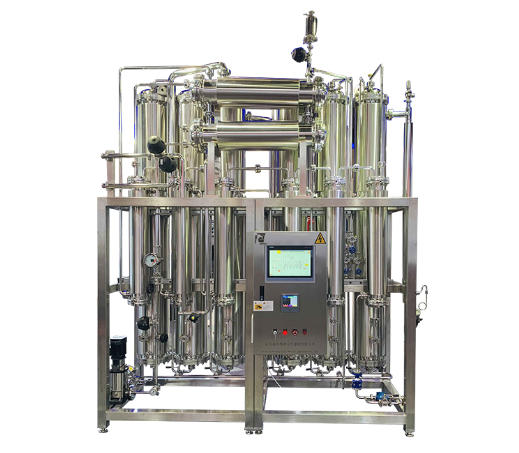
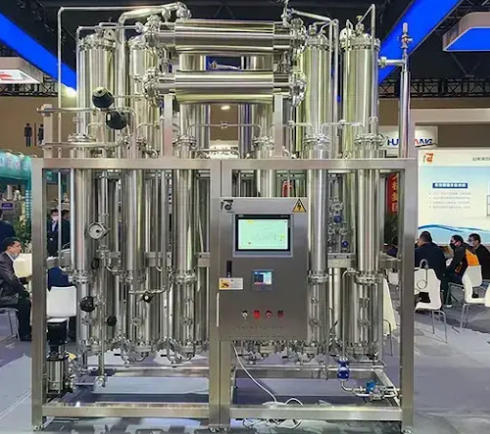
This process efficiently removes bacteria, viruses, heavy metals, and dissolved salts. Advanced Distillation Water Machines, like those used in pharmaceutical facilities, include multiple-effect distillers or vapor compression systems ensuring continuous production of pyrogen-free distilled water.
Applications of Distillation Water Machines in the Pharmaceutical Industry
In pharmaceutical production, water purity is vital for product safety and compliance. Everheal, as a professional Chinese company specializing in pharmaceutical equipment, provides advanced Distillation Water Machines tailored to GMP (Good Manufacturing Practice) standards.
These systems support applications such as:
- Injectable solution preparation — requiring Water for Injection (WFI)
- Sterilization processes — ensuring no contaminants affect heat-sensitive instruments
- Pure steam generation — for sterilizing piping systems and reactors
- CPAP water supply — achieving the same medical-grade purity required in hospitals
Because Everheal integrates pure steam generators, multi-effect water distillers, and liquid filling systems, clients can build entire sterile water preparation lines. These capabilities make pure distilled water production safe, scalable, and compliant with international standards.
Can You Safely Use Distilled Water with Electrolytes in CPAP Machines?
While it may sound harmless, distilled water with electrolytes reintroduces minerals intentionally removed during distillation. Each batch may contain varying levels of calcium, sodium, or magnesium depending on the brand.
In a controlled medical system such as a CPAP humidifier, this unpredictability can be damaging. Over time, mineral accumulation causes visible white residue, known as “scale,” and may impair the heating element.
Therefore, distilled water with electrolytes is not recommended for CPAP machines. Only water produced through a Distillation Water Machine—without added minerals or chemicals—meets the purity requirements.
How to Make CPAP-Safe Distilled Water at Home
If commercial distilled water is unavailable, users may produce their own using a home distillation water machine. Here's a simple overview:
1. Choose a high-quality small distiller. Look for stainless steel and FDA-approved plastics.
2. Fill with clean tap water. Do not add any salts or electrolytes.
3. Allow the system to complete the full distillation process. This typically takes 4–5 hours per gallon.
4. Store in sterilized, airtight glass bottles. Avoid long-term storage in plastic containers.
Pure water from a verified Distillation Water Machine ensures consistent performance, extended CPAP device lifespan, and improved respiratory safety.
The Role of pH Balance and Conductivity
Water conductivity is a reliable indicator of dissolved minerals. Pure distilled water typically measures below 1 µS/cm, while water with electrolytes may exceed 50 µS/cm.
High conductivity encourages corrosion in the metal heater plate and internal tubing. Moreover, slightly acidic or alkaline water (if improperly balanced) can interfere with humidification quality.
Since a Distillation Water Machine produces neutral pH water around 7.0 and almost zero conductivity, it's perfectly suited for CPAP usage.
Alternative Water Options—and Why They Fall Short
Some CPAP users experiment with bottled mineral water, deionized water, or filtered tap water. Let's clarify these options:
| Water Type | Characteristics | Suitability for CPAP |
| Distilled water | Pure, mineral-free | Ideal |
| Distilled water with electrolytes | Added minerals | Not recommended |
| Deionized water | Ion-free but may retain organic matter | Acceptable short-term |
| Reverse osmosis (RO) water | Reduced impurities | Better than tap, not as pure as distilled |
| Tap water | Contains chlorine, calcium, and heavy metals | Avoid completely |
While RO and deionized systems improve water quality, they cannot achieve the same level of sterility as a Distillation Water Machine. Only distillation guarantees complete removal of both dissolved solids and microbiological contaminants.
The Environmental and Economic Aspect
Investing in a Distillation Water Machine can save both money and resources over time. Bottled distilled water, often used for CPAPs, has a significant carbon footprint due to packaging and transportation.
In contrast, using an electric distiller—especially an energy-efficient one—provides:
- On-demand purity without reliance on external suppliers
- Reduced plastic waste from disposable bottles
- Improved hygiene with reusable glass containers
- Cost efficiency for long-term CPAP maintenance
For industrial sectors like pharmaceuticals or biotech, multi-effect Distillation Water Machines deliver these same benefits on a larger, automated scale.
Common Misconceptions About Distilled Water
1. “Distilled water lacks health benefits.”
True for drinking in large quantities, perhaps, but irrelevant for CPAP use. Purity—not nutrition—is the goal.
2. “Electrolyte-enriched distilled water cleans better.”
False. In fact, electrolyte content introduces unwanted conductivity.
3. “All distilled water products are equal.”
Not quite. Quality depends on the Distillation Water Machine used, its sterilization integrity, and storage methods.
4. “I can use boiled water instead.”
Boiling kills bacteria but doesn't remove minerals; distillation does both.
Understanding these nuances helps ensure that your CPAP device functions efficiently without unnecessary risk.
Conclusion
Using distilled water with electrolytes in a CPAP machine is not advisable. While the electrolytes benefit the human body, they harm CPAP components by encouraging scale, corrosion, and microbial growth.
The safest choice is always pure distilled water—preferably produced using a reliable Distillation Water Machine that guarantees pharmaceutical-grade purity.
For home users, this means maintaining a consistent supply of clean water to ensure comfort and safety. For industrial and clinical applications, systems from professional suppliers like Everheal deliver the technology and compliance required for long-term reliability and performance.
FAQs
1. Can I use bottled distilled water labeled as “with electrolytes” for my CPAP?
No. The electrolytes in such water reintroduce minerals that cause scaling and potential damage to the heating plate. Always choose pure distilled water only.
2. How often should I refill my CPAP's water chamber?
It's best to refill it daily with freshly distilled water and clean the chamber weekly using mild, fragrance-free detergent.
3. What's the difference between a home distiller and a commercial Distillation Water Machine?
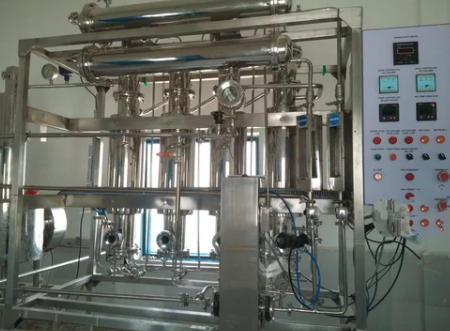
Home distillers produce a few liters per cycle, adequate for personal CPAP use. Industrial systems, like those Everheal builds, offer continuous, multi-effect distillation for pharmaceutical manufacturing.
4. What happens if I accidentally use tap water once?
A single use won't ruin your equipment, but frequent use leads to mineral scaling. Rinse thoroughly with pure distilled water afterward.
5. Is it safe to store distilled water for future CPAP use?
Yes, if it's kept in sterilized, airtight glass containers and away from direct sunlight. Never store for more than two weeks.


