Content Menu
● What Is a HEPA Air Filter?
● Why HEPA Air Filter Replacement Matters
● Typical HEPA Air Filter Intervals in Homes and Offices
● HEPA Air Filter Lifetimes in Demanding Home Environments
● HEPA Air Filter Schedules in Cleanrooms and Pharma Facilities
● Key Factors That Affect HEPA Air Filter Lifetime
● Practical Signs a HEPA Air Filter Needs Changing
● Why You Should Not “Wash” a HEPA Air Filter
● Role of Pre‑Filters in Extending HEPA Air Filter Life
● How to Replace a HEPA Air Filter Safely
● HEPA Air Filter Strategy for Pharmaceutical Facilities
● Simple Rules of Thumb for HEPA Air Filter Replacement
● Conclusion
● FAQ
>> 1. How often should I change the HEPA air filter in a home air purifier?
>> 2. What happens if I don't replace the HEPA air filter on time?
>> 3. Can I vacuum or wash a HEPA air filter to extend its life?
>> 4. How often should pharmaceutical cleanrooms replace HEPA air filters?
>> 5. How can Everheal help with HEPA air filter planning in my facility?
● Citations:
How often to change a HEPA air filter in an air purifier depends on usage time, air quality, equipment design, and regulatory expectations, but most home units require HEPA air filter replacement every 6–12 months, while high‑grade medical and pharmaceutical systems often work on a data‑driven interval tied to pressure‑drop and leak‑test results. In practice, this means households tend to follow calendar‑based HEPA air filter schedules, whereas cleanrooms and GMP facilities rely on measured performance to decide when each HEPA air filter has reached the end of its validated life.[2][3][5][6][7][8][9]
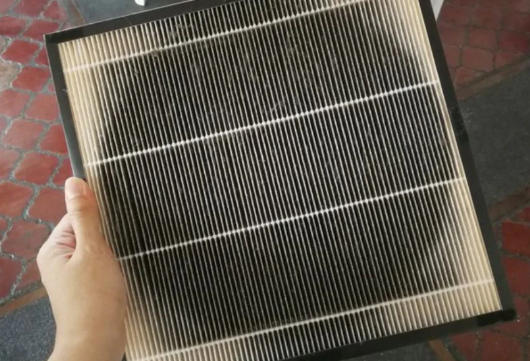
What Is a HEPA Air Filter?
A HEPA air filter (High‑Efficiency Particulate Air filter) is a deep‑pleated, fibrous medium designed to capture at least 99.97% of particles with a size around 0.3 microns, which is considered the most penetrating particle size. This allows a HEPA air filter to remove a wide range of airborne contaminants such as dust, pollen, mold spores, bacteria, and many combustion particles from indoor air.[5][6][9][10]
Inside most air purifiers, the HEPA air filter is part of a multi‑stage system: a pre‑filter traps larger particles, optional carbon media adsorbs gases and odors, and the HEPA air filter focuses on fine particulates that pose respiratory and product‑quality risks. Over time, this captured dust and bio‑load increases resistance to airflow and gradually reduces both the clean air delivery rate (CADR) and energy efficiency of the unit, making timely HEPA air filter replacement essential.[3][6][8][2]
Why HEPA Air Filter Replacement Matters
Replacing a HEPA air filter on time has a direct impact on indoor air quality, energy use, and the reliability of downstream processes in pharmaceutical and healthcare environments. A clogged or overloaded HEPA air filter forces the fan to work harder, raising power consumption and potentially shortening motor life while still delivering less clean air to the room.[6][8][9][3]
In critical facilities such as sterile pharmaceutical filling rooms, laboratories, and hospital isolation areas, an underperforming HEPA air filter can compromise contamination control, risking product contamination or infection spread. Regular HEPA air filter replacement, combined with testing and monitoring, therefore becomes part of the overall quality‑assurance strategy rather than a simple maintenance chore.[8][9][11][2]
Typical HEPA Air Filter Intervals in Homes and Offices
Consumer guidance for portable air purifiers is relatively consistent: manufacturers usually recommend changing the HEPA air filter every 6–12 months under normal indoor conditions. These recommendations assume moderate air pollution, average daily operating hours, and no extreme sources of smoke, dust, or industrial emissions indoors.[7][10][5][6]
In practice, many users find that the “upper end” of this window only applies to cleaner environments or to units that run intermittently. When an air purifier runs at high speed for many hours per day, or is used in areas with heavy traffic, pets, or frequent cooking, the HEPA air filter tends to reach its loading limit closer to the 6‑month mark or even earlier.[5][6]
HEPA Air Filter Lifetimes in Demanding Home Environments
Some households place far greater stress on HEPA air filters than others, which justifies shorter replacement intervals. Situations that commonly require replacing a HEPA air filter every 3–6 months include:[6][5]
- Homes with multiple pets that shed fur and dander into the air.
- Indoor smokers or frequent exposure to cooking smoke and oil aerosols.
- Apartments near busy roads, industrial zones, or construction sites with high particulate levels.
In these settings, manufacturers and independent guides often advise moving from a 6–12‑month HEPA air filter interval down to 3–6 months to keep fine‑particle levels low and maintain good CADR. For allergy and asthma sufferers, more frequent HEPA air filter changes can reduce symptom flare‑ups by keeping allergen concentrations consistently low.[10][5][6]
HEPA Air Filter Schedules in Cleanrooms and Pharma Facilities
In cleanrooms, pharmaceutical manufacturing, and high‑risk medical areas, HEPA air filter replacement is generally not driven by a fixed calendar date but by measured performance. International standards and GMP guidance focus on leak‑free operation and stable pressure drop across the HEPA air filter rather than prescribing a universal maximum lifetime.[9][2][3][8]
Key points in these environments include:
- Leak tests are typically required every 6 months for high‑grade zones (such as ISO 1–5 or Grade A/B) and annually for lower‑grade rooms (ISO 6–9 or Grade C/D).[3][8]
- If a HEPA air filter fails a leak test, shows physical damage, or exhibits excessive pressure drop, it must be replaced immediately regardless of age.[2][3]
- Many facilities report practical HEPA air filter lifetimes of 3–5 years in standard cleanrooms and up to 8 years in very well‑controlled environments with strong pre‑filtration and low particulate load.[8][2]
Some companies adopt conservative internal policies, such as replacing all HEPA air filters every 3 years or even annually in the most critical sterile areas, to simplify risk management and documentation. This approach prioritizes process security, even if individual HEPA air filters could technically operate longer based on pressure‑drop and performance tests.[9][2][3][8]
Key Factors That Affect HEPA Air Filter Lifetime
Although general ranges are helpful, the real HEPA air filter replacement frequency is shaped by a set of practical factors.[2][6]
Important influences include:
- Operating hours and fan speed: Continuous 24/7 operation or frequent use on the highest speed loads the HEPA air filter much more quickly than occasional, low‑speed operation.
- Air quality and environment: Urban pollution, wildfire smoke, desert dust, or industrial emissions all increase particulate load on the HEPA air filter and shorten service life.
- Room function and process type: A quiet bedroom, a busy office, a hospital ward, and a sterile filling area put very different demands on a HEPA air filter.
- Pre‑filter effectiveness: High‑quality pre‑filters that are cleaned or changed regularly remove larger particles before they reach the HEPA air filter, extending HEPA life.
- Regulatory or internal policies: Conservative GMP, hospital, or company policies may require early HEPA air filter replacement as a precaution.
Because these factors vary widely, two identical air purifiers using the same HEPA air filter can have very different replacement intervals if they are used in different environments.[5][2]
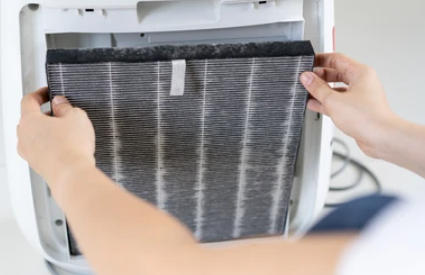
Practical Signs a HEPA Air Filter Needs Changing
While schedules are useful, on‑site symptoms can be even more important indicators that a HEPA air filter is due for replacement.[10][6]
Common warning signs include:
- Weaker airflow from the purifier outlet at the same fan setting, indicating high resistance across the loaded HEPA air filter.
- Increased dust, odors, or visible haze despite running the air purifier for long periods.
- More frequent allergy or asthma symptoms, which may signal that the HEPA air filter is no longer capturing fine particles effectively.
- Indicator lights or alarms on modern purifiers that count operating hours and estimate remaining HEPA air filter life.
In professional HVAC and cleanroom systems, a rising pressure drop across the HEPA air filter, abnormal airflow distribution, or repeated borderline leak‑test results are strong triggers for replacement, even if the calendar interval has not yet elapsed.[3][8][2]
Why You Should Not “Wash” a HEPA Air Filter
Many users wonder whether they can wash or vacuum a HEPA air filter to extend its life instead of replacing it. For most true HEPA air filter products, especially those used in medical and pharmaceutical applications, this is not recommended.[6][9]
Water, solvents, or aggressive mechanical cleaning can:
- Damage the fine fiber structure inside the HEPA air filter, enlarging pores and reducing capture efficiency.
- Break down sealants or gaskets that ensure air passes through the media instead of leaking around it.
- Redistribute trapped particles and microbes onto surfaces or into the air during handling.
Only specifically labeled “washable” or “permanent” filters should be cleaned, and these are usually not certified HEPA air filter cartridges for GMP or healthcare environments. In critical applications, standard practice is to replace the HEPA air filter completely once it reaches its defined end of life.[9][6]
Role of Pre‑Filters in Extending HEPA Air Filter Life
Pre‑filters play a crucial role in protecting the HEPA air filter and optimizing its lifetime. These upstream filters capture larger particles like hair, fabric fibers, and coarse dust, preventing them from clogging the fine fibers of the HEPA air filter.[2][6]
Best practices include:
- Checking and cleaning or replacing pre‑filters every 1–3 months in homes, and more often in dusty environments.
- Using higher‑efficiency pre‑filters in industrial, medical, or pharmaceutical systems where particulate loads are known to be high.
- Integrating pre‑filter maintenance into routine inspections so that operators never allow a heavily loaded pre‑filter to push unnecessary stress onto the HEPA air filter.
By following these steps, facilities can significantly extend the usable life of each HEPA air filter, reducing operating costs without compromising air quality.[10][2]
How to Replace a HEPA Air Filter Safely
Safe and correct replacement ensures the new HEPA air filter delivers the expected performance and that captured contaminants do not re‑enter the environment.[8][9]
Although specific steps vary by model, a typical replacement workflow includes:
1. Isolate and power down the unit to prevent accidental fan start‑up during HEPA air filter removal.
2. Open the access panel according to the manual, avoiding unnecessary stress on frames and gaskets.
3. Remove the used HEPA air filter carefully, handling it in a way that minimizes shaking or bending.
4. Bag and seal the used HEPA air filter for safe disposal, following local regulations for contaminated waste when applicable.
5. Inspect the housing and sealing surfaces, cleaning loose dust and checking that no damage will allow bypass leaks.
6. Install the new HEPA air filter with the correct airflow direction, ensuring uniform gasket compression or proper clamping.
7. Restart and verify performance, checking airflow and, in critical systems, scheduling or performing an integrity test to confirm that the new HEPA air filter is leak‑free.
Well‑written SOPs help technicians repeat this process consistently, particularly in pharmaceutical factories where each HEPA air filter change must be documented for audit purposes.[8][9]
HEPA Air Filter Strategy for Pharmaceutical Facilities
For pharmaceutical manufacturers, HEPA air filter management is part of a broader contamination control and utility strategy, not an isolated decision. In such facilities, air cleanliness must match the risk of the process—from non‑sterile oral solid dosage rooms to high‑risk aseptic filling and lyophilization.[11][9]
An integrated approach typically addresses:
- HVAC and cleanroom design: Correct placement and specification of terminal HEPA air filter modules, pass‑box filters, and laminar‑flow units aligned with ISO or GMP classification.
- Maintenance planning: Coordinating HEPA air filter replacement with shutdowns for equipment sterilization, calibration, and validation so production interruptions are minimized.
- Monitoring and documentation: Using pressure‑drop trending, scheduled leak testing, and deviation management to decide when each HEPA air filter is changed and to prove ongoing compliance.
A solutions provider like Everheal, which supplies purified water systems, pure steam generators, multi‑effect distillation units, filling and sealing machines, and sterilization systems, can incorporate HEPA air filter considerations into overall plant layout and process flow. This ensures that air quality, utility reliability, and equipment hygiene form a coherent, GMP‑compliant whole from day one.[11][9]
Simple Rules of Thumb for HEPA Air Filter Replacement
For quick decision‑making, the following general rules provide a starting point, as long as they are adapted to local conditions and regulations.[1][6][2]
- Typical homes/offices: Replace the HEPA air filter every 6–12 months; lean toward 6 months if air is polluted or the unit runs for long daily hours.
- High‑load homes (pets, smoke, urban pollution): Replace the HEPA air filter every 3–6 months and maintain pre‑filters diligently.
- Hospitals and clinics: Follow institutional policies; many facilities combine annual or semi‑annual HEPA air filter replacement with integrity testing in critical areas.
- Cleanrooms and pharma: Use pressure‑drop data and leak‑test results as primary triggers, with typical practical lifetimes ranging from 1–5 years and occasionally longer in optimized systems.
These rules are not substitutes for the manufacturer's instructions or regulatory requirements, but they help users form realistic expectations about HEPA air filter consumption and budgeting.[3][8]
Conclusion
There is no single universal answer to how often a HEPA air filter must be changed in an air purifier, because actual replacement frequency depends on air quality, operating hours, system design, and the criticality of the environment. For most homes and offices, changing the HEPA air filter every 6–12 months, and more often in dusty or high‑pollution conditions, keeps indoor air quality high and energy waste low.[1][5][6][2]
In hospitals, cleanrooms, and pharmaceutical plants, HEPA air filter strategies rely on performance measurements such as pressure drop and leak tests rather than simple calendar rules, with lifetimes often ranging from 1–5 years within carefully monitored systems. By combining good pre‑filter maintenance, clear SOPs, and integrated plant design, companies like Everheal can help global pharmaceutical clients plan HEPA air filter locations, replacement windows, and documentation in line with GMP and ISO expectations while supporting efficient, reliable production.[11][9][3][8]
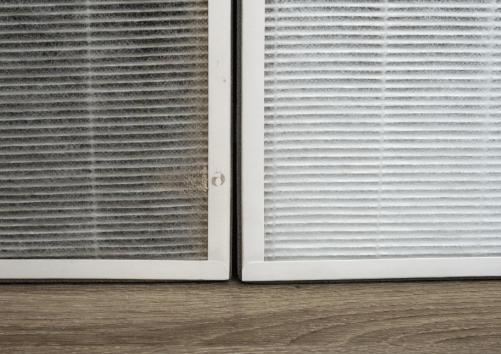
FAQ
1. How often should I change the HEPA air filter in a home air purifier?
Most manufacturers recommend replacing the HEPA air filter in a standard home or office purifier every 6–12 months, assuming moderate pollution and typical operating hours. If you run the unit continuously, live near heavy traffic, or have pets and smokers indoors, changing the HEPA air filter closer to every 3–6 months is usually more appropriate.[5][6][10]
2. What happens if I don't replace the HEPA air filter on time?
An overdue HEPA air filter becomes clogged, which reduces airflow, lowers CADR, and forces the fan to consume more energy to move air through the media. Over time, this can lead to higher energy bills, weaker air cleaning performance, and in critical environments, increased contamination risk.[6][9][3][8]
3. Can I vacuum or wash a HEPA air filter to extend its life?
Washing or vacuuming a standard HEPA air filter is not recommended because it can damage the filter fibers and compromise the seals, reducing filtration efficiency. Only filters explicitly labeled as washable or permanent should be cleaned, and these are usually not intended for pharmaceutical or medical‑grade HEPA air filter applications.[9][6][8]
4. How often should pharmaceutical cleanrooms replace HEPA air filters?
Pharmaceutical cleanrooms typically use performance‑based intervals: leak tests every 6–12 months and pressure‑drop monitoring guide when each HEPA air filter must be replaced. Practical lifetimes often range from 1–5 years, with some well‑controlled systems achieving longer life as long as all tests confirm that each HEPA air filter still meets specifications.[2][3][8][9]
5. How can Everheal help with HEPA air filter planning in my facility?
Everheal can integrate HEPA air filter placement, change‑out access, and maintenance workflows into the broader design of purified water systems, pure steam generators, distillation units, filling lines, and sterilization systems for pharmaceutical plants. This integrated engineering approach helps align HEPA air filter strategies with GMP requirements, validation plans, and day‑to‑day production needs across the entire facility.[11][9]
Citations:
[1](https://www.priceindustries.com/content/uploads/assets/literature/manuals/section%20a/ftr-hepa-filter-replacement-guide.pdf)
[2](https://kleanlabs.com/blog/hepa-filter-replacement-guidelines-recommended-frequency/)
[3](https://cleanroomtechnology.com/when-to-replace-your-hepa-filter-according)
[4](https://www.reddit.com/r/Frugal/comments/a14fma/do_i_really_need_to_change_my_hepa_air_filter/)
[5](https://www.kwikkarwhitesettlement.com/general/how-often-change-air-filter/)
[6](https://cowaymega.com/blogs/blog/the-importance-of-changing-your-hepa-air-filters-on-time)
[7](https://smartairfilters.com/en/blog/when-to-change-your-air-purifiers-hepa-filter/)
[8](https://www.gmp-compliance.org/gmp-news/how-often-do-hepa-filters-have-to-be-changed)
[9](https://cleanair.camfil.us/2025/09/22/hepa-filters-understanding-performance-standards-applications-and-selection-criteria/)
[10](https://dphhs.mt.gov/assets/publichealth/Asthma/Wildfire%20Smoke/HEPAFilterGuide.pdf)
[11](https://angstromtechnology.com/pharmaceutical-cleanroom-maintenance-tips/)


