Content Menu
● Understanding What an Infusion Bag Is
● Are Infusion Bags Prefilled or Empty?
>> Prefilled Infusion Bags
>> Empty Infusion Bags
● Materials and Structure of an Infusion Bag
>> Common Components:
● How Prefilled Infusion Bags Are Manufactured
>> 1. Preparation of Bio-Pharmaceutical Water
>> 2. Solution Preparation
>> 3. Filtration and Sterile Transfer
>> 4. Filling and Sealing
>> 5. Sterilization
>> 6. Inspection and Packaging
● Applications of Prefilled Infusion Bags
● Advantages of Using Prefilled Infusion Bags
● The Role of Everheal in Infusion Production Systems
● Quality and Regulatory Standards
● Technological Developments in Infusion Bag Manufacturing
● Conclusion
● FAQs About Infusion Bags
>> 1. Are all infusion bags prefilled?
>> 2. What materials are used for infusion bags?
>> 3. How long can a prefilled infusion bag be stored?
>> 4. What are the benefits of non-PVC infusion bags?
>> 5. Can infusion bags be customized?
The world of pharmaceutical packaging and medical equipment continues to evolve, and one product that has gained increasing importance in modern healthcare is the infusion bag. These flexible containers play a critical role in storing, transporting, and administering medical solutions such as intravenous (IV) fluids, nutrition mixtures, and medications. A common question often raised by healthcare professionals and patients alike is this: Are infusion bags prefilled?
This article explores the types of infusion bags, their filling options, technical design, and production processes, as well as the advantages, applications, and latest manufacturing innovations surrounding prefilled infusion bag systems.

Understanding What an Infusion Bag Is
An infusion bag is a sterile, flexible container used for delivering fluids and medications directly into a patient's bloodstream through intravenous infusion. Typically made from medical-grade materials such as polyolefin, polypropylene, or PVC-free polymers, infusion bags come in a range of sizes — from 50 ml to several liters — depending on their pharmaceutical or clinical application.
Infusion bags are essential in environments such as hospitals, clinics, and home care settings because they allow precise, sterile, and safe delivery of fluids like:
- Saline solutions
- Glucose solutions
- Parenteral nutrition
- Antibiotics and chemotherapy drugs
- Analgesics and anesthetics
In modern pharmaceutical manufacturing, the design and filling method of an infusion bag system directly determine its performance, safety, and usability.
Are Infusion Bags Prefilled or Empty?
The short answer is: infusion bags can be either prefilled or empty, depending on their intended application and the manufacturer's production process.
Prefilled Infusion Bags
A prefilled infusion bag is filled with a ready-to-use sterile solution during the manufacturing process under controlled cleanroom conditions. These ready-to-use bags are commonly supplied by pharmaceutical companies that produce specific formulations such as saline, glucose, antibiotics, or admixtures.
Prefilled infusion bags offer significant advantages:
- Reduced risk of contamination: Since the bag is filled and sealed in a validated sterile environment, the risk of microbial contamination is minimal.
- Convenience and time efficiency: Hospitals and clinics can directly connect the bag to infusion systems without the need for additional preparation or mixing.
- Improved dosage accuracy: Prefilled volumes are strictly controlled, minimizing dosing errors.
- Consistent product quality: Pharmaceutical-grade filling lines ensure every unit follows the same quality standards.
- Extended shelf life: Aseptic filling and air-tight sealing protect the solution from oxidation and environmental exposure.
Empty Infusion Bags
Empty infusion bags are distributed to hospitals or compounding pharmacies, where they are later filled manually or semi-automatically with custom formulations or combinations of medications. This allows greater flexibility in medical treatment but may introduce variables such as operator handling, sterility risks, and the need for additional equipment in the preparation phase.
Materials and Structure of an Infusion Bag
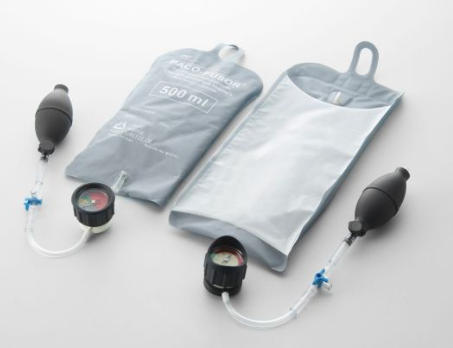
The choice of materials and structure is vital for ensuring both biocompatibility and performance. Most infusion bags consist of multilayer films designed to resist moisture, oxygen, and drug interactions.
Common Components:
- Outer layer: Mechanical protection and heat resistance.
- Middle layer: Acts as a barrier to gases and moisture.
- Inner layer: Contact layer made of a medical-grade and drug-compatible polymer.
Certain non-PVC infusion bags have gained widespread popularity, especially in markets where sustainability and patient safety require avoiding DEHP (a plasticizer used in PVC materials). Non-PVC options include polypropylene (PP), polyolefin, and EVA (ethylene vinyl acetate), which provide higher stability for sensitive drugs.
How Prefilled Infusion Bags Are Manufactured
The manufacturing of a prefilled infusion bag requires advanced production systems capable of maintaining pharmaceutical-level sterility and precision. Leading companies like Everheal specialize in providing complete turnkey solutions for such production lines, including purified water systems, steam generators, filling-sealing machines, and sterilization equipment.
1. Preparation of Bio-Pharmaceutical Water
Pharmaceutical-grade purified water or water for injection (WFI) is produced using systems such as purified water generation units or multi-effect distillation machines. High purity water is essential, as it forms the base of all infusion solutions.
2. Solution Preparation
The formulation process includes dissolving medical-grade substances under controlled temperature and pH conditions to ensure homogeneity and stability. Mixing tanks are equipped with sensors for online monitoring.
3. Filtration and Sterile Transfer
Before filling, the prepared solution is filtered through sterile-grade filters to remove any particulates or microorganisms. The sterile solution is then transferred through aseptic pipelines to the filling system.
4. Filling and Sealing
Fully automatic infusion bag filling and sealing machines fill each bag with the exact drug volume using peristaltic or piston pumps. The system immediately heat-seals the ports after filling to maintain sterility.
5. Sterilization
After sealing, the filled bags are sterilized using autoclave systems or continuous sterilization chambers. This ensures the product meets pharmaceutical sterility standards (usually based on ISO and cGMP requirements).
6. Inspection and Packaging
Each prefilled infusion bag undergoes rigorous inspection for leaks, volume accuracy, label validation, and sealing integrity before being packaged and distributed.
Applications of Prefilled Infusion Bags
Prefilled infusion bags are used in a wide range of clinical and pharmaceutical applications, including:
- Electrolyte and fluid replacement therapy
- Antibiotic infusion
- Parenteral nutrition (amino acids, lipids, dextrose)
- Cytotoxic and chemotherapy drug delivery
- Anesthesia and pain management
Their ready-to-use format makes them particularly beneficial in emergency medicine, intensive care units (ICUs), and disaster relief operations, where speed and sterility are critical.
Advantages of Using Prefilled Infusion Bags
From manufacturing to clinical use, prefilled infusion bags deliver significant operational, safety, and economic benefits:
1. Operational Efficiency – Reduces the need for in-hospital compounding or dilution.
2. Sterility Assurance – Minimizes microbial exposure during preparation.
3. Lower Labor Costs – Eliminates manual preparation and associated quality checks.
4. Traceability – Each bag can be barcoded for precise tracking from production to patient.
5. Reduced Drug Waste – Prefilled systems provide exact dosing, avoiding excess solution preparation.
6. Regulatory Compliance – Systems are designed to meet GMP, FDA, and EMA quality standards.
The Role of Everheal in Infusion Production Systems
As a professional supplier of pharmaceutical water systems, pure steam generators, and infusion line equipment, Everheal designs and delivers complete turnkey solutions for pharmaceutical manufacturers. The company's portfolio includes:
- Purified water preparation systems
- Multi-effect distillation units for WFI
- Pure steam generators
- Automatic infusion bag filling and sealing machines
- Sterilizers and inspection systems
With deep expertise in customized factory layouts, cleanroom design, and production line optimization, Everheal helps global clients build GMP-compliant infusion bag production facilities that meet modern regulatory standards.
Quality and Regulatory Standards
The production of prefilled infusion bags must comply with stringent international pharmaceutical standards such as:
- Good Manufacturing Practice (GMP)
- ISO 13485 for medical devices
- EU Annex 1: Manufacture of Sterile Medicinal Products
- FDA 21 CFR Part 210/211
These regulations govern every stage from raw material validation and cleanroom class certification to sterilization validation and final product quality assurance.
Technological Developments in Infusion Bag Manufacturing
Modern infusion bag technology continues to evolve rapidly. Some advanced trends include:
- Automation and Robotics: Smart filling lines with auto-inspection reduce human error.
- Single-use systems: Disposable filling assemblies prevent cross-contamination.
- Smart packaging: RFID and microchip labels track product safety and batch data.
- Sustainable materials: Development of recyclable and non-PVC films.
- Integrated sterilization solutions: Combined filling and sterilization units improve efficiency.
These innovations not only improve efficiency and safety but also align with global healthcare sustainability goals.
Conclusion
So, are infusion bags prefilled? The answer depends on the specific application, but the global trend in modern healthcare and pharmaceutical manufacturing clearly favors prefilled infusion bags due to their enhanced sterility, consistency, and convenience.
With advanced manufacturing systems such as purified water preparation, automated filling-sealing, and sterile packaging, companies like Everheal are making it easier for pharmaceutical producers to achieve high-quality and cost-effective prefilled infusion bag production. Whether for large-scale hospital use or specialized drug delivery, prefilled infusion bags represent the future of safe and efficient infusion therapy.
FAQs About Infusion Bags
1. Are all infusion bags prefilled?
No. Some infusion bags are prefilled with ready-to-use solutions, while others are supplied empty for hospitals or pharmacies to fill manually. Prefilled options offer greater convenience and sterility.
2. What materials are used for infusion bags?
Most modern infusion bags are made from non-PVC materials such as polypropylene (PP), polyolefin, or EVA. These materials are biocompatible, stable, and safe for sensitive drugs.
3. How long can a prefilled infusion bag be stored?
The shelf life depends on the formulation and packaging design. Typically, a prefilled infusion bag can last from 12 to 36 months if stored under recommended conditions.
4. What are the benefits of non-PVC infusion bags?
Non-PVC infusion bags prevent leaching of harmful substances like DEHP, making them safer for patient use and more environmentally friendly.
5. Can infusion bags be customized?
Yes. Pharmaceutical manufacturers working with suppliers like Everheal can design custom infusion bag lines, including capacity, material, port type, and labeling to meet unique production requirements.


