Content Menu
● What Is A HEPA Air Filter?
● HEPA Classes: H10–H14 Explained
● How A HEPA Air Filter Works Inside An Air Purifier
● Key Criteria To Define “Best” HEPA Air Filter Purifier
>> Room Size And CADR
>> True HEPA vs “HEPA‑Type”
>> Noise Level And Usability
>> Operating Cost And Filter Replacement
● Popular HEPA Air Filter Purifiers On The Market
● How To Choose The Best HEPA Air Filter Purifier For Your Needs
>> Step 1: Define Application And Contaminants
>> Step 2: Calculate Required CADR
>> Step 3: Confirm Filter Quality And Standards
>> Step 4: Evaluate Noise, Power, And Smart Features
>> Step 5: Consider Total Cost Of Ownership
● HEPA Air Filter Purifiers In Healthcare And Pharma‑Adjacent Settings
● Maintenance Best Practices For HEPA Air Filter Purifiers
● How To Integrate HEPA Air Filter Purifiers Into A Broader Air Quality Strategy
● Practical Tips For Using A HEPA Air Filter Purifier
● Common Mistakes To Avoid With HEPA Air Filter Purifiers
● Conclusion
● FAQ About HEPA Air Filter Air Purifiers
>> 1. What makes a HEPA Air Filter different from regular filters?
>> 2. Is an H13 or H14 HEPA Air Filter better for home use?
>> 3. How often should I replace the HEPA Air Filter in my purifier?
>> 4. Can HEPA Air Filter purifiers remove odors and gases?
>> 5. Are HEPA Air Filter purifiers useful in pharmaceutical or medical environments?
● Citations:
Choosing the best air purifier with a HEPA Air Filter depends on your room size, air quality problems, budget, and whether you are using it in a home, office, or even a pharmaceutical or healthcare environment. A well‑selected HEPA Air Filter purifier can remove a very high percentage of fine particles, including dust, pollen, bacteria, and some aerosols that are critical in clean manufacturing and medical spaces.
What Is A HEPA Air Filter?
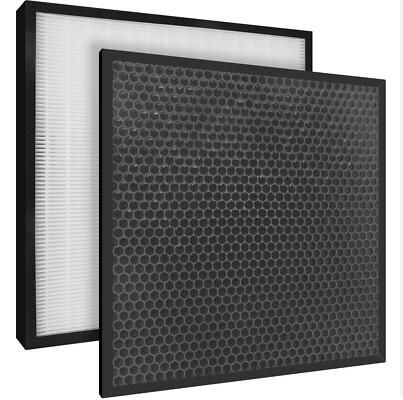
A HEPA Air Filter (High Efficiency Particulate Air filter) is a high‑performance filter designed to capture extremely small airborne particles. Standard HEPA Air Filter media are engineered to trap very fine particles around the most penetrating particle size, often cited around 0.3 microns.
In practice, a HEPA Air Filter removes common pollutants such as dust, pet dander, mold spores, and some bacteria that circulate in indoor air. For environments such as laboratories, hospitals, and pharmaceutical manufacturing, higher‑grade HEPA Air Filter classes (like H13 and H14) are often selected to ensure tighter control of airborne contamination.
HEPA Classes: H10–H14 Explained
HEPA Air Filter products are typically classified from H10 to H14 under widely adopted standards, and each class has a defined minimum efficiency. H13 HEPA Air Filter media are considered high‑efficiency medical or cleanroom grade, while H14 HEPA Air Filter media provide even stricter particle retention suitable for critical applications.
Lower classes (H10–H12) are commonly seen in consumer‑grade air purifiers and vacuum cleaners, while H13 and H14 HEPA Air Filter options are preferred in more sensitive environments like cleanrooms and high‑risk healthcare zones. Because higher‑class HEPA Air Filter media are denser, they introduce greater airflow resistance, so the purifier must use a stronger fan to maintain adequate clean air delivery.
How A HEPA Air Filter Works Inside An Air Purifier
A HEPA Air Filter does not work like a simple sieve; it uses a combination of interception, inertial impaction, and diffusion to trap particles. Larger particles collide with or are intercepted by the fibers of the HEPA Air Filter, while very small particles move randomly and eventually hit the fibers through diffusion.
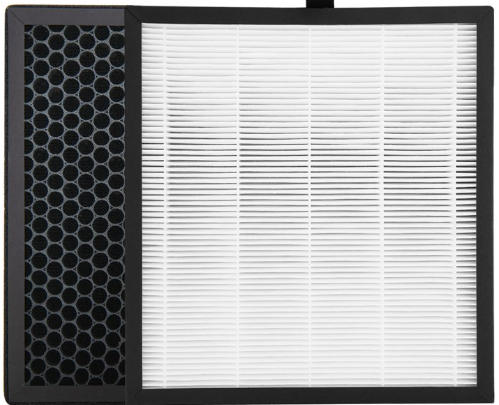
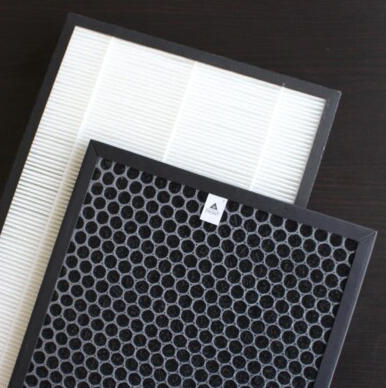
In a modern purifier, air first passes through a pre‑filter to catch larger dust and hair, then through an activated carbon layer to reduce odors and volatile organic compounds (VOCs), and finally through the HEPA Air Filter to capture fine particulates. This multi‑stage design protects the HEPA Air Filter from clogging too early and maintains good airflow and filtration efficiency over time.
Key Criteria To Define “Best” HEPA Air Filter Purifier
The “best” air purifier with a HEPA Air Filter is not the same for every user; it is defined by how well the unit matches specific needs and constraints. Before looking at popular models, it helps to understand the main technical criteria that determine performance and user experience for any purifier equipped with a HEPA Air Filter.
Room Size And CADR
Clean Air Delivery Rate (CADR) indicates how much clean air the purifier produces per minute and is often measured in cubic feet per minute (CFM) or cubic meters per hour. For general indoor air quality, a common guideline is to choose a HEPA Air Filter purifier that can provide multiple air changes per hour based on your room's volume.
If you use the HEPA Air Filter purifier in heavily polluted cities or in critical spaces such as labs and production rooms, targeting higher air changes per hour is recommended. In larger areas, you may need more than one HEPA Air Filter purifier or a device specifically designed for large rooms and open spaces.
True HEPA vs “HEPA‑Type”
Many budget devices claim to use “HEPA‑type” or “HEPA‑like” filters, which may not meet formal efficiency standards. A true HEPA Air Filter will typically specify compliance with recognized classifications and state its minimum capture efficiency at the test particle size.
For pharmaceutical or healthcare‑adjacent applications, always confirm that the device uses a genuine high‑grade HEPA Air Filter rather than generic fine dust filters. Clear technical documentation, test reports, and labeled specifications are important indicators of authenticity.
Noise Level And Usability
The best HEPA Air Filter purifier for bedrooms or offices must balance fan power with low noise, especially at night or in long operating periods. Many high‑quality HEPA Air Filter purifiers now offer sleep modes with low decibel levels suitable for continuous operation while people work or rest.
User‑friendly features like sleep mode, auto mode, filter‑change alerts, and child lock functions make daily operation more convenient. Smart features such as app connectivity and voice control can also be valuable in modern homes, offices, and even non‑critical technical rooms.
Operating Cost And Filter Replacement
When evaluating “best” value, consider both the initial price and the long‑term cost of HEPA Air Filter and carbon filter replacement. Typically, a HEPA Air Filter must be replaced every several months to a year depending on usage and pollution level.
A more expensive purifier that uses a durable high‑capacity HEPA Air Filter can sometimes be cheaper over several years than a cheaper unit with small filters that require frequent changes. Maintenance time, availability of genuine filters, and warranty coverage all contribute to total cost of ownership.
Popular HEPA Air Filter Purifiers On The Market
Many independent testing organizations and review sites periodically rank the best air purifiers built around HEPA Air Filter technology. While specific models change year by year, certain brands consistently perform well because of strong filtration performance, good design, and reliable after‑sales support.
Well‑regarded models from brands such as Coway, Levoit, Blueair, Winix, and Honeywell often share common design features: multi‑stage filtration, true HEPA Air Filter cartridges, good CADR for their size, and robust test results for particle removal. Some mid‑range units combine a true HEPA Air Filter with smart sensors and app control, providing high real‑world efficiency without excessive noise or power consumption.
However, no single unit can be called the absolute best HEPA Air Filter purifier for every scenario, because the ideal choice in a small apartment is different from a large open‑plan office or a controlled production facility. For industrial or pharmaceutical use, standalone consumer purifiers with a HEPA Air Filter are often supplementary to integrated HVAC‑based filtration and cleanroom systems rather than the primary protection layer.
How To Choose The Best HEPA Air Filter Purifier For Your Needs
Step 1: Define Application And Contaminants
Start by defining where you will use the HEPA Air Filter purifier and which contaminants matter most. For homes, this may be dust, pollen, pet dander, and smoke; for laboratories or production spaces, it may be fine particles, aerosols, and microbial load.
In environments such as pharmaceutical manufacturing, a HEPA Air Filter purifier might be used to supplement central cleanroom systems, improving air quality in packaging areas, preparation rooms, or auxiliary spaces. For these scenarios, selecting a purifier with at least higher‑grade HEPA Air Filter media plus robust documentation and certifications is advisable.
Step 2: Calculate Required CADR
Measure the room area and ceiling height to estimate the volume, then decide how many air changes per hour you want. A common method is to multiply room volume by the desired air changes per hour and match that to the purifier's air delivery rate.
For example, if your room is medium‑sized and you want several air changes per hour, you would target a HEPA Air Filter purifier with adequate airflow capacity. If your operation requires cleaner air—such as in a preparation area for sensitive materials—you might aim for higher air change rates or use multiple HEPA Air Filter units in parallel.
Step 3: Confirm Filter Quality And Standards
Check that the device uses a true HEPA Air Filter and, ideally, specifies the exact class instead of vague marketing terms. Reputable manufacturers will reference recognized standards, list efficiencies, and sometimes provide test data for their HEPA Air Filter cartridges.
Also evaluate whether the purifier offers an adequate carbon filter if you need odor and VOC control alongside particulate removal from the HEPA Air Filter stage. For applications aligning with GMP or cleanroom principles, consistency and documented performance of the HEPA Air Filter may be more important than lifestyle design elements.
Step 4: Evaluate Noise, Power, And Smart Features
Compare the noise spectrum at different fan speeds, not just the maximum advertised level, because a HEPA Air Filter purifier may spend most of its time at medium or low speeds. If the purifier will be placed in patient rooms, offices, or control rooms, quiet modes are especially important.
Smart features such as air quality sensors, automatic fan control, and remote monitoring can help keep the HEPA Air Filter running optimally without constant manual adjustment. Some devices automatically ramp up the fan when particulate levels rise, protecting both occupants and sensitive products while minimizing noise when air is clean.
Step 5: Consider Total Cost Of Ownership
Review replacement intervals and prices for the HEPA Air Filter and carbon filter over a multi‑year period. Sometimes, HEPA Air Filter cartridges for inexpensive purifiers are relatively small and require more frequent changes, which may increase long‑term costs.
For professional environments, it is often more economical to invest in robust devices with larger HEPA Air Filter elements, longer service intervals, and clearly documented maintenance procedures. This approach aligns better with internal quality systems and reduces downtime when planning filter replacement schedules.
HEPA Air Filter Purifiers In Healthcare And Pharma‑Adjacent Settings
In medical clinics, pharmacies, and production support areas, portable purifiers with a high‑grade HEPA Air Filter are commonly used to supplement central ventilation. They can be deployed in consultation rooms, waiting areas, sample preparation spaces, and packaging rooms to reduce airborne particle and droplet concentrations.
While a HEPA Air Filter purifier alone does not replace certified cleanroom design, it can contribute to better local air quality, particularly where regulatory expectations emphasize hygienic working conditions. For companies already investing in purified water systems, sterilization equipment, and aseptic filling lines, adding HEPA Air Filter purifiers to peripheral areas can be a logical extension of overall contamination control.
Maintenance Best Practices For HEPA Air Filter Purifiers
Even the best HEPA Air Filter purifier will lose performance if filters are not maintained correctly. Pre‑filters should be cleaned or replaced on schedule to prevent dust buildup that can restrict airflow to the HEPA Air Filter stage.
HEPA Air Filter cartridges are usually not washable; washing can damage the microfibers and reduce efficiency, so they must be replaced according to the manufacturer's instructions. Keeping a maintenance log—including dates of HEPA Air Filter changes—helps both households and industrial users ensure consistent performance over the life of the device.
How To Integrate HEPA Air Filter Purifiers Into A Broader Air Quality Strategy
For homes and offices, a HEPA Air Filter purifier is often the main air‑cleaning device, working alongside basic ventilation and simple hygiene practices. For industrial and pharmaceutical users, a HEPA Air Filter purifier is typically one layer in a multi‑barrier system that may include HVAC filtration, cleanroom zoning, pressure differentials, and sterilization processes.
Selecting the best unit therefore requires thinking beyond a standalone product and viewing the HEPA Air Filter purifier as part of a complete contamination‑control strategy. In a pharmaceutical context, that strategy already covers pure steam, purified water, sterilization, and packaging; adding local HEPA Air Filter purification can enhance protection at critical points where people and products interact.
Practical Tips For Using A HEPA Air Filter Purifier
To get the most out of your HEPA Air Filter purifier, proper placement and operation are essential. Avoid placing the unit directly against walls or behind large furniture, because this can obstruct airflow and reduce the effective clean air delivery.
Run the HEPA Air Filter purifier continuously on a suitable speed, especially during high‑pollution periods or when many people are present in the room. For energy savings, you can use higher speeds initially to quickly reduce particle levels, then switch to a lower speed to maintain air quality.
If your device has a built‑in air quality sensor, position it in a spot where it can sample representative room air. Regularly checking the indicator lights or app readings helps ensure that the HEPA Air Filter purifier is actually improving conditions instead of just running in the background.
Common Mistakes To Avoid With HEPA Air Filter Purifiers
One common mistake is buying a HEPA Air Filter purifier that is too small for the room, which leads to insufficient air changes per hour. Another mistake is neglecting filter replacement and continuing to run a device with a saturated HEPA Air Filter, which reduces effectiveness and strains the fan.
Some users also misunderstand the purpose of HEPA Air Filter technology by expecting it to remove strong chemical fumes or heavy odors on its own. In reality, the HEPA Air Filter focuses on solid and liquid airborne particles, while gas‑phase pollutants require activated carbon or specialized sorbent media.
Another misconception is that a HEPA Air Filter purifier makes ventilation unnecessary. Good indoor air quality usually combines filtration with fresh‑air exchange, moisture control, and overall hygiene, especially in demanding environments such as healthcare and manufacturing.
Conclusion
The best air purifier with a HEPA Air Filter is not a single universal model but rather the device that most effectively matches your room size, contaminants, regulatory expectations, and budget. For consumer and professional users alike, the key is to prioritize a true HEPA Air Filter with adequate air delivery for your room, acceptable noise levels, and realistic long‑term filter costs.
By following a structured selection process—defining application, sizing by airflow, verifying filter standards, and considering life‑cycle cost—you can confidently choose a HEPA Air Filter purifier that delivers real air quality improvements. For companies operating in sensitive fields such as pharmaceuticals or healthcare, integrating HEPA Air Filter purifiers into a broader contamination‑control strategy can add an extra layer of assurance that the environment supports both product safety and occupant health.
FAQ About HEPA Air Filter Air Purifiers
1. What makes a HEPA Air Filter different from regular filters?
A HEPA Air Filter is designed to capture a very high percentage of tiny airborne particles that typical household filters often miss. Its dense fiber structure and tested efficiency make it suitable for applications where air cleanliness is especially important, such as homes with allergy sufferers or technical environments.
2. Is an H13 or H14 HEPA Air Filter better for home use?
H14 HEPA Air Filter media provide slightly higher efficiency than H13 but usually require more powerful fans and can be more expensive. For most homes and offices, an H13‑class HEPA Air Filter offers an excellent balance between filtration performance, noise, and cost, making it the more practical option.
3. How often should I replace the HEPA Air Filter in my purifier?
In many situations, the HEPA Air Filter should be replaced every 6–12 months, but the exact interval depends on local air quality, daily operating time, and fan speed. Checking the manufacturer's recommendations and any built‑in filter status indicator is the best way to avoid overusing a saturated HEPA Air Filter.
4. Can HEPA Air Filter purifiers remove odors and gases?
A HEPA Air Filter is highly effective for particles but not designed to capture gases, vapors, or strong chemical smells. To handle odors and VOCs, you need a purifier that combines a HEPA Air Filter stage with a substantial activated carbon filter or other gas‑phase filtration media.
5. Are HEPA Air Filter purifiers useful in pharmaceutical or medical environments?
Yes, portable purifiers with a high‑grade HEPA Air Filter can support contamination control in clinics, pharmacies, labs, and production support areas by reducing airborne particle levels. They cannot replace certified cleanroom systems, but they can complement central HVAC and process equipment, especially in waiting rooms, offices, and secondary workspaces.
Citations:
1. https://housefresh.com/best-air-purifiers-we-tested/
2. https://www.airpurifierfirst.com/buying-guides/best-air-purifier-to-buy/
3. https://www.nytimes.com/wirecutter/reviews/best-air-purifier/
4. https://www.oreateai.com/blog/the-top-hepa-air-purifiers-of-2025-a-comprehensive-review/8e7e86b32be5cdbd638850d5eb1885de
5. https://www.listful.com/guides/article/the-best-air-purifiers-of-2025-top-picks-for-every-home
6. https://dustarrest.com/blogs/dust-knowledge-hub/hepa-h13-vs-h14-whats-the-real-difference
7. https://airyfilter.com/h13-vs-h14-hepa-filters/
8. https://optimalhealth.co/resources/air-purifiers/buying-guide
9. https://www.rtings.com/air-purifier/reviews/best/air-purifiers
10. https://airpurifierslab.org/hepa-filter-classification-h10-vs-h11-vs-h12-vs-h13-vs-h14/
11. https://www.idealhome.co.uk/buying-guide-reviews/best-air-purifiers-242211
12. https://www.consumerreports.org/appliances/air-purifiers/best-air-purifiers-of-the-year-a1197763201/
13. https://www.fortress.com.hk/en/promotion/buying-guides/air-purifier


