Content Menu
● What Is a HEPA Air Filter?
● Typical Lifespan of a HEPA Air Filter
>> Average Lifespan by Application
● Factors That Affect Filter Longevity
>> 1. Air Quality and Environmental Conditions
>> 2. Operating Hours and Airflow Rate
>> 3. Maintenance and Pre-Filtration
>> 4. Humidity and Temperature
>> 5. Installation and Seal Integrity
● How to Know When to Replace a HEPA Air Filter
>> Key Signs That a Filter Needs Replacement
● Extending the Life of Your HEPA Air Filter
>> 1. Use Multi-Stage Filtration
>> 2. Maintain Stable Airflow Rates
>> 3. Keep Surroundings Clean
>> 4. Schedule Preventive Maintenance
>> 5. Store Spare HEPA Filters Properly
● Importance of HEPA Filters in Pharmaceutical Facilities
● Best Practices for Testing and Verification
● Everheal's Integrated Filtration Solutions
● Conclusion
● FAQ
>> 1. What does a HEPA air filter remove?
>> 2. How can I check if a HEPA filter is still effective?
>> 3. Can HEPA air filters be cleaned and reused?
>> 4. What happens if I delay replacing a clogged HEPA filter?
>> 5. How do I dispose of used HEPA filters safely?
In modern pharmaceutical production, air purity is more than a matter of comfort — it defines product safety and compliance. HEPA air filters have become a core component in cleanroom environments, laboratories, and equipment manufacturing facilities where air cleanliness is mission-critical. At Everheal, a global supplier of pharmaceutical water systems, distillation and sterilization equipment, and integrated plant design, we understand that reliable air filtration ensures not only product integrity but also operational longevity.
This article explores one fundamental question: How long does a HEPA air filter last? More importantly, it examines what factors determine its lifetime, how to maintain it properly, and when replacement becomes necessary to preserve a contamination-free environment.
What Is a HEPA Air Filter?
A HEPA (High-Efficiency Particulate Air) filter is a specialized filtration system designed to trap harmful airborne particles, including dust, pollen, microorganisms, and aerosols. According to international standards (such as EN 1822 and ISO 29463), a true HEPA filter must remove at least 99.97% of particles that are 0.3 microns in diameter.
In pharmaceutical facilities, HEPA filters are commonly used in:
- Cleanrooms and biosafety labs
- Pure steam generators and sterile filling lines
- Purified water preparation areas
- HVAC units within production and packaging zones
The reason for this strict requirement is clear: even minimal airborne contamination can compromise product quality during critical operations.
Typical Lifespan of a HEPA Air Filter
The general lifespan of a HEPA air filter varies depending on how and where it is used. In regulated industrial environments such as pharmaceutical manufacturing, the lifespan typically ranges from 1 to 3 years.
However, under optimized operating conditions — with proper maintenance and controlled airflow — well-engineered filters can sometimes perform effectively for up to 5 years.
Average Lifespan by Application
| Application Environment | Typical Lifespan | Notes |
| Pharmaceutical cleanroom | 1–3 years | Requires regular particle count testing |
| Hospital or health facility | 1–2 years | Continuous high-load operation |
| Laboratory clean benches | 2–4 years | Moderate particulate exposure |
| Industrial HVAC systems | 3–5 years | Maintenance-dependent |
| Residential air purifiers | 1 year | Subject to dust accumulation |
It's clear that operation intensity and environmental conditions significantly impact durability. For instance, a HEPA air filter used in sterile filling machines will wear faster than one used in a low-traffic environment.
Factors That Affect Filter Longevity
1. Air Quality and Environmental Conditions
Filters in areas with high particulate loads or poor incoming air quality clog faster. Dust, smoke, or chemical vapors degrade the medium and increase pressure drop.
2. Operating Hours and Airflow Rate
Continuous operation at high air velocity forces more particles into the filter, reducing its lifespan. In pharmaceutical environments that run 24/7, this effect is especially pronounced.
3. Maintenance and Pre-Filtration
Installing pre-filters upstream of the HEPA unit can trap larger particles, extending the HEPA unit's lifetime. Regular cleaning of upstream ducts and fans also prevents premature clogging.
4. Humidity and Temperature
Moisture and heat can compromise the integrity of filter materials. Operating within manufacturer-specified temperature and humidity limits ensures longer service life.
5. Installation and Seal Integrity
Even the best HEPA air filter performs poorly if improperly installed. Leaks at joints or frames allow unfiltered air to bypass the filter. Routine DOP testing and visual inspections are critical for ensuring full efficiency.
How to Know When to Replace a HEPA Air Filter
Determining the correct replacement time relies on both scientific monitoring and practical indicators.
Key Signs That a Filter Needs Replacement
- Increased Pressure Drop: Measured through built-in gauges, a significant resistance increase indicates clogging.
- Reduced Airflow Performance: Noticeable decline in air circulation efficiency suggests blockage or damage.
- Failed Integrity Tests: Regular HEPA integrity (DOP or PAO) tests detect leaks or compromised efficiency.
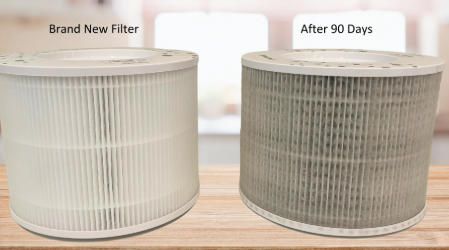
- Visual Signs of Contamination: Dust accumulation or discoloration on the filter frame can be a red flag.
- Deviation in Cleanroom Class Metrics: If particle counts near the filter outlet increase, it's time to replace.
For pharmaceutical equipment such as sterile filling machines or pure steam generators, timely filter replacement is tied to maintaining production compliance with GMP (Good Manufacturing Practice) standards.
Extending the Life of Your HEPA Air Filter
Although HEPA filters naturally degrade with time, certain strategies can significantly extend their operational period.
1. Use Multi-Stage Filtration
Incorporate pre-filters, medium filters, and HEPA filters in sequence. This design reduces the burden on the HEPA element, catching coarse contaminants early.
2. Maintain Stable Airflow Rates
Overloading the filter with high airflow shortens its life. Balance fan capacity with filter resistance for consistent performance.
3. Keep Surroundings Clean
Regular cleaning around air intakes and outlets minimizes external dust intrusion that can accelerate degradation.
4. Schedule Preventive Maintenance
Periodic inspections, air quality assessments, and scheduled replacements prevent costlier downtime. Always follow the maintenance cycle recommended by the manufacturer.
5. Store Spare HEPA Filters Properly
HEPA filters should be stored in sealed packaging, away from moisture and direct sunlight. Environmental exposure during storage can weaken filter fibers or frame adhesives.
Importance of HEPA Filters in Pharmaceutical Facilities
For pharmaceutical companies, HEPA air filters represent a critical safety barrier. They ensure that filling, capping, sterilizing, and packaging processes occur in contamination-free conditions.
At Everheal, our production systems — including pure water preparation systems, pure steam generators, multifunctional distillation units, and sterilization equipment — rely on precision air filtration technology. Reliable HEPA systems guarantee that air purity matches international GMP standards, preventing cross-contamination during drug manufacturing.
By maintaining optimal filter performance, companies reduce operational risk, improve compliance documentation, and ensure product integrity from start to finish.
Best Practices for Testing and Verification
Routine testing ensures that the HEPA air filter continues to provide high capture efficiency. Common testing methods include:
- DOP/PAO integrity tests to detect leaks or holes
- Particle counting tests to evaluate downstream cleanliness levels
- Pressure drop measurement to monitor airflow resistance
- Smoke visualization for airflow pattern verification
Pharmaceutical-grade systems usually require revalidation at set intervals, especially after maintenance, filter change, or layout modification.
Everheal's Integrated Filtration Solutions
Everheal not only supplies production-grade air filtration systems but also provides customized cleanroom layout design for pharmaceutical clients worldwide. Our engineering teams integrate HEPA filter stations into broader purification and sterilization systems to ensure seamless operation.
Our turnkey cleanroom and water system solutions include:
- Purified water system design with integrated pre-filtration
- Pure steam generation optimized for microbiological safety
- Multifunctional water distillation with controlled air purity environments
- Liquid filling and sealing machinery utilizing HEPA-protected laminar flow
- Sterilization systems validated for routine GMP compliance
Whether designing a new facility or upgrading existing production lines, Everheal ensures that HEPA filtration performance aligns with rigorous pharmaceutical standards.
Conclusion
A HEPA air filter typically lasts between 1 and 3 years, though lifespan can extend beyond 5 years with optimal maintenance and controlled environmental conditions. Factors such as air quality, operation frequency, humidity, and maintenance directly influence durability.
For pharmaceutical manufacturers, timely filter monitoring and replacement are not just operational habits — they are core compliance and product purity requirements. Using high-quality HEPA filters, combined with reliable system engineering and preventive maintenance, ensures that production environments remain sterile, safe, and fully aligned with international GMP expectations.
Everheal's integrated systems demonstrate how advanced filtration technology can safeguard every stage of pharmaceutical production, from water preparation to final product sterilization.
FAQ
1. What does a HEPA air filter remove?
A HEPA air filter captures very fine particles such as dust, bacteria, mold spores, aerosols, and other contaminants as small as 0.3 microns with an efficiency of 99.97% or higher.
2. How can I check if a HEPA filter is still effective?
You can test the filter through DOP/PAO integrity testing, pressure drop monitoring, and particle count analysis to verify performance stability and identify any leaks.
3. Can HEPA air filters be cleaned and reused?
In most pharmaceutical and cleanroom applications, HEPA filters are not reusable. Attempting to wash or vacuum them may damage the fine fibers and compromise efficiency.
4. What happens if I delay replacing a clogged HEPA filter?
Delays can increase airflow resistance, reduce system efficiency, and risk contamination in critical production zones. In GMP environments, this may lead to non-compliance.
5. How do I dispose of used HEPA filters safely?
Used filters should be sealed in protective bags and disposed of as hazardous waste according to local environmental regulations, especially if they have trapped biological materials.


