Content Menu
● How Standard Fog Machines Work
● Role of Distilled Water in Fog Fluid
● Why You Should Not Use Only Distilled Water in Standard Foggers
● Distilled Water for Cleaning and Maintenance
● Ultrasonic Foggers and Distilled Water
● Low‑Lying Fog and Water‑Fog Hybrids
● Safety and Air Quality Considerations
● Integrating Distillation Water Machine Systems in Professional Setups
● Practical Guidelines for Users
● Conclusion
● FAQ
>> (1) Can I use distilled water instead of fog fluid in my fog machine?
>> (2) Is distilled water safe for ultrasonic foggers and reptile misters?
>> (3) How often should I clean my fog machine with distilled water?
>> (4) What advantages does a Distillation Water Machine bring to a fog‑heavy installation?
>> (5) Can distilled water make my fog thicker or last longer?
Using distilled water with fog machines is possible in certain situations, but it must follow the design and instructions of each specific device. In most standard stage foggers, distilled water is used mainly for cleaning and for factory‑made fog fluid formulations, while the actual working fluid remains a glycol‑based fog juice. For ultrasonic and some water‑fog units, Distillation Water Machine can be the primary working medium, provided the machine is built and approved for water use.
How Standard Fog Machines Work
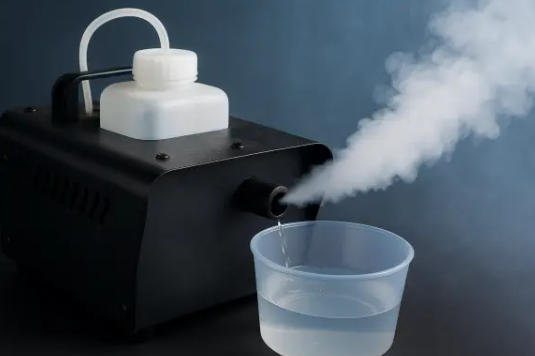
Standard entertainment fog machines use an internal tank, pump, and heater block to turn liquid fog fluid into vapor. The liquid is typically a mixture of distilled water and glycols such as propylene glycol or glycerin, which vaporize at the operating temperature and then condense to form visible fog droplets in the air. The heater and pump are engineered around the viscosity, boiling behavior, and thermal properties of this glycol‑water blend.
Because of this design, the machine expects a specific fluid rather than pure distilled water. The pump, seals, and heater passage rely on the correct fluid characteristics for proper lubrication, flow, and heat transfer. If the fluid composition is changed without approval, performance and safety can be compromised, even if the replacement is chemically “clean” like distilled water from a Distillation Water Machine.
Role of Distilled Water in Fog Fluid
Most reputable fog fluids are water‑based and use distilled water as their primary solvent. Distilled water contains extremely low levels of dissolved minerals, which reduces scale, clogs, and residue in small heater channels. This is a key reason manufacturers do not recommend filling machines with tap water, especially in regions with hard water.
A Distillation Water Machine provides a reliable way to generate the high‑purity water required in fog‑fluid production. In a factory or large venue, the process often looks like this:
- Distillation Water Machine produces low‑conductivity water.
- The distilled water is cooled and stored in a sanitary tank.
- Glycols and additives are metered into the distilled water in precise ratios.
- The finished fog fluid is filtered, tested, and filled into containers.
For end users, this means the “distilled water” is already built into the fog fluid they purchase, rather than added separately. When the fog fluid is correctly formulated using water from a pharmaceutical‑grade Distillation Water Machine, it helps maintain consistent fog quality and protects internal components of the fog machine.
Why You Should Not Use Only Distilled Water in Standard Foggers
Although distilled water is very clean, using it by itself in a standard fog machine is usually not recommended. There are several reasons:
- Insufficient fog effect: Distilled water alone does not create the dense, long‑lasting fog that glycol‑based fluids are designed to produce. The visible effect is often closer to thin steam that dissipates quickly.
- Mismatch with heater design: The heating block is calibrated for a particular boiling and vaporization profile. Pure water has different thermal behavior than a water‑glycol blend, which can cause inconsistent vaporization.
- Potential stress on components: The pump and seals might not receive the same lubrication from pure water as they do from glycol‑containing fluid, potentially shortening service life.
- Warranty concerns: Manuals for many foggers explicitly restrict use to approved fog fluids. Using pure distilled water as the main fluid may violate those instructions.
For users who want high reliability, it is safer to use manufacturer‑approved fog fluids and reserve distilled water—produced by a Distillation Water Machine—primarily for cleaning or for applications indicated in the manual.
Distilled Water for Cleaning and Maintenance
Where distilled water really shines in fog‑machine care is cleaning and maintenance. Fog fluids can leave residue inside the heater block, tubing, and nozzle after long use. Over time, this residue can restrict flow, interfere with heat transfer, and produce spitting, smoking, or reduced fog output.
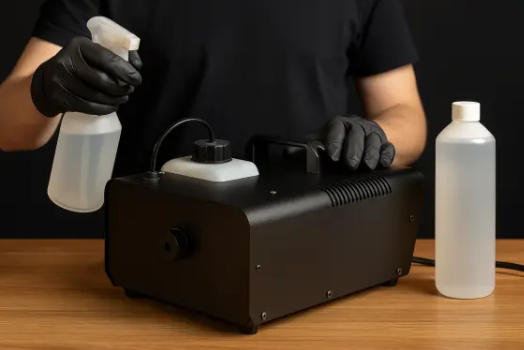
A typical cleaning routine involves:
1. Draining any remaining fog fluid from the tank.
2. Filling the tank with distilled water, or a mixture of distilled water and a small amount of white vinegar.
3. Running the fog machine in a ventilated area for several minutes to flush deposits from internal channels.
4. Draining the cleaning solution and flushing once more with pure distilled water.
5. Refilling with the correct fog fluid and running a short cycle to ensure normal operation.
Using distilled water instead of tap water prevents additional mineral deposits from forming during cleaning. When the distilled water is supplied by a Distillation Water Machine, the operator can count on stable, low‑mineral quality for every maintenance cycle, especially in environments with hard incoming water.
Ultrasonic Foggers and Distilled Water
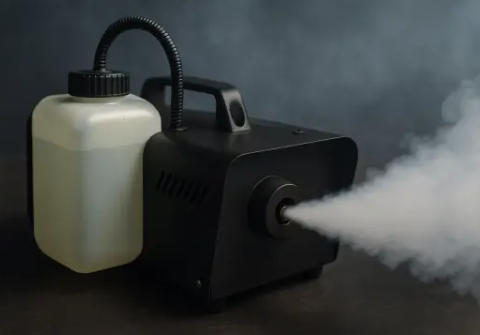
Many people use small ultrasonic foggers or “misters” in terrariums, reptile enclosures, greenhouses, and indoor décor. These devices do not heat the liquid. Instead, they use a high‑frequency vibrating disc to atomize water into a cool, visible mist. Because the water is transformed directly into airborne droplets, mineral content matters greatly.
For ultrasonic foggers, distilled water has several benefits:
- It greatly reduces mineral scale on the ultrasonic membrane and housing.
- It avoids “white dust” that can settle on surfaces or be inhaled, especially in closed environments.
- It can prolong the life of the ultrasonic element by minimizing buildup.
Some ultrasonic models, however, rely on minimal conductivity or dissolved solids for level detection or safety sensors. In such cases, water from a Distillation Water Machine may be too pure, and a small amount of mineral content might be required for normal operation. The safest practice is to follow the manufacturer's guidance. If distilled water is recommended, a Distillation Water Machine can become the main source of water for these misters, ensuring consistent quality.
Low‑Lying Fog and Water‑Fog Hybrids
Low‑lying fog machines are designed to keep fog close to the floor, replicating the effect of dry ice or liquid nitrogen systems. Modern designs often mix standard fog fluid with chilled air or pass it through cold water baths to condense the fog and make it heavier. Some specialized units combine:
- A standard glycol‑based fog generator.
- A separate reservoir of cold water, often specified as distilled water.
- A cooling chamber where the fog is chilled before exiting near floor level.
In such systems, distilled water plays a secondary but important role: it circulates in cooling coils or reservoirs, and the manufacturer may specify distilled water to prevent limescale in heat exchangers or piping. Feeding this part of the machine from a Distillation Water Machine helps avoid scaling and reduces maintenance downtime, especially in installations where the system runs daily.
Certain “water‑fog” or hybrid machines are explicitly designed to atomize water itself, sometimes with added agents, to create a fine mist. For these models, the manual may recommend distilled water to protect internal parts. Again, this is a situation where a Distillation Water Machine can reliably supply the required water quality.
Safety and Air Quality Considerations
Water‑based fogs made from glycol and distilled water have been studied in the context of indoor air quality and occupational exposure. Most guidance indicates that, under typical conditions and with proper ventilation, these systems are safe for the general public. However, prolonged high concentrations can irritate sensitive individuals, so operators must control density and ensure air exchange.
Key safety points include:
- Using only fluids that are explicitly approved or recommended for the machine.
- Avoiding improvisation with household chemicals or unknown mixtures.
- Providing adequate ventilation, especially in small rooms or when fog is used continuously.
- Ensuring that emergency exits, stairs, and critical signage remain visible.
Distilled water itself is not a hazard; in fact, when it comes from a well‑maintained Distillation Water Machine, it is among the cleanest water sources available. The safety concern lies more in the additives and in the overall concentration of fog in the air.
Integrating Distillation Water Machine Systems in Professional Setups
In professional environments—such as theme parks, theaters, film studios, and pharmaceutical plants—fog machines and special‑effects systems are often part of a much larger infrastructure. In such cases, integrating a centralized Distillation Water Machine can bring multiple benefits:
- Consistent water quality: Every cleaning cycle, water bath, or ultrasonic nozzle receives the same low‑mineral water, reducing unpredictable scaling.
- Lower maintenance cost: Cleaner water extends the life of heater blocks, pumps, ultrasonic transducers, and cooling circuits.
- Regulatory and validation advantages: In pharmaceutical and cleanroom applications, using water from a validated Distillation Water Machine supports consistent documentation and quality assurance.
- Flexible distribution: Distilled water can be piped to multiple fog machines, low‑fog units, and auxiliary equipment from a single central source.
For a company like Everheal, which already provides pure water preparation systems, pure steam generators, multi‑effect Distillation Water Machine units, liquid filling and sealing machines, and sterilization systems, fog‑related applications fit naturally into a broader turnkey solution. The same purified water infrastructure used for drug production lines can also supply high‑purity distilled water to special‑effects or testing foggers inside a facility.
Practical Guidelines for Users
To apply all of the above in real‑world use, fog‑machine operators can follow these practical rules:
- Check the manual: If the device is a standard stage fogger, assume it needs approved fog fluid and that distilled water is only for cleaning unless the manual says otherwise.
- Use distilled water for cleaning: When flushing the system, use distilled water (and, if recommended, a small amount of vinegar) instead of tap water to prevent new mineral deposits.
- Use distilled water as directed in ultrasonic and hybrid units: For water‑fog systems or ultrasonic misters, distilled water is often the best choice to minimize scale and dust, provided any sensor requirements are satisfied.
- Consider a Distillation Water Machine for high‑volume use: Where multiple machines are in daily operation, producing distilled water on‑site is more sustainable and gives better quality control than purchasing small bottles.
By aligning fluid choice with machine design and using distilled water intelligently, users can extend equipment life, ensure consistent performance, and maintain a safe environment for performers, audiences, patients, or animals.
Conclusion
Distilled water is an important companion to fog machines, but its role depends on the type of device. In most standard foggers, distilled water is part of the professionally formulated fog fluid and a critical tool for cleaning, rather than a direct substitute for fog juice. In ultrasonic misters, low‑fog hybrids, and specialized water‑fog units, distilled water may serve as the primary working fluid, provided this is explicitly supported by the design and instructions.
A robust Distillation Water Machine is the backbone of this approach, delivering consistently low‑mineral water that prevents scale, supports reliable maintenance, and integrates smoothly with other pure water and pure steam equipment. By combining manufacturer‑approved fog fluids with high‑quality distilled water from a Distillation Water Machine, operators can achieve safer, more efficient, and more predictable fog effects across entertainment, industrial, and pharmaceutical applications.
FAQ
(1) Can I use distilled water instead of fog fluid in my fog machine?
For typical stage and party fog machines, you should not replace fog fluid with pure distilled water. The machine is designed for a water‑glycol blend, and distilled water alone usually produces weak steam, stresses components, and may violate the instructions. Distilled water is better used for cleaning, or as part of professionally made fog fluid that already contains the correct additives.
(2) Is distilled water safe for ultrasonic foggers and reptile misters?
Yes, in most cases distilled water is ideal for ultrasonic foggers and reptile misters because it minimizes scale and prevents white mineral dust. However, some devices rely on a minimum level of dissolved minerals for sensors. If the manual mentions conductivity or water type, follow that guidance when deciding whether to use water from a Distillation Water Machine or to mix in a small amount of mineralized water.
(3) How often should I clean my fog machine with distilled water?
A common practice is to perform a cleaning cycle after around 40 hours of use, or at least before storing the machine for a long period. The basic steps are: drain fog fluid, fill with distilled water (optionally mixed with a little vinegar if allowed), run the machine in a ventilated area, drain, flush again with pure distilled water, and finally refill with fog fluid. High‑use environments may need more frequent cleaning.
(4) What advantages does a Distillation Water Machine bring to a fog‑heavy installation?
A Distillation Water Machine provides continuous, high‑purity distilled water for fog‑machine cleaning cycles, ultrasonic foggers, low‑fog cooling circuits, and other equipment. This improves reliability, reduces scale and maintenance, and allows the site to control water quality without relying on bottled supplies. In regulated environments like pharmaceutical plants, using validated distilled water also supports compliance and documentation.
(5) Can distilled water make my fog thicker or last longer?
Distilled water by itself does not make fog thicker or increase hang‑time in standard foggers. Fog density and persistence mainly depend on the glycol or glycerin content, nozzle design, temperature, and airflow. Distilled water's real benefit is reducing mineral buildup and keeping the heater block and internal channels clean, which helps maintain consistent fog output over the life of the machine.


