Content Menu
● What Is a HEPA Air Filter?
● How Conventional Air Conditioners Filter Air
● Why HEPA Air Filters Are Challenging for AC Systems
● Can You Put a HEPA Air Filter on a Central Air Conditioner?
● HEPA Air Filters and Window or Portable Air Conditioners
● Safe Ways to Use HEPA Air Filters with Air Conditioning
● Advantages of HEPA Air Filters in Indoor Environments
● Drawbacks When HEPA Air Filters Are Used Incorrectly
● Comparing HEPA Air Filter Strategies with AC
● Practical Recommendations for Home and Small Office Users
● HEPA Air Filters in Commercial, Healthcare, and Pharmaceutical Settings
● Maintenance Considerations for HEPA Air Filters
● Choosing the Right HEPA Air Filter Solution
● Conclusion
● FAQ About HEPA Air Filters and Air Conditioners
>> 1) Can I replace my AC filter with a HEPA Air Filter?
>> 2) How can I get HEPA‑level filtration without modifying my AC?
>> 3) Are there central AC systems that support HEPA Air Filters?
>> 4) Is a high‑MERV filter enough, or do I still need a HEPA Air Filter?
>> 5) How often should a HEPA Air Filter be replaced?
● Citations:
Using a true HEPA Air Filter directly on a standard air conditioner is generally not recommended because most AC systems are not engineered to handle the high resistance to airflow that HEPA media creates. Instead, it is safer and more effective to combine air conditioning with properly designed HEPA solutions such as standalone HEPA air purifiers, engineered HEPA modules, or higher‑MERV filters that your AC can support.
What Is a HEPA Air Filter?
A HEPA Air Filter (High‑Efficiency Particulate Air filter) is a dense, highly efficient filter that captures at least 99.97% of airborne particles with a diameter of 0.3 microns under standardized test conditions. This performance level makes the HEPA Air Filter a benchmark in applications where air cleanliness is critical, such as hospitals, laboratories, cleanrooms, and pharmaceutical manufacturing environments.
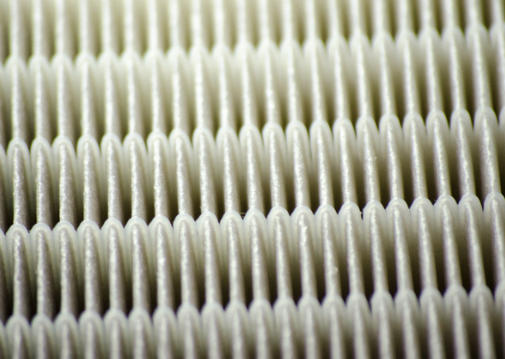
The HEPA Air Filter typically consists of a deep pleated mat of very fine fibers arranged to maximize surface area while forcing air through complex paths. As air passes through the HEPA Air Filter, particles are removed through several mechanisms including interception, inertial impaction, and diffusion. Because of the tight media structure, a HEPA Air Filter introduces a significant pressure drop into any system that uses it.
How Conventional Air Conditioners Filter Air
Most residential and light commercial air conditioners are designed primarily for cooling and dehumidification rather than for ultra‑high‑efficiency particle removal. To protect the evaporator coil and blower, these systems use relatively low‑ to medium‑efficiency filters, often with Minimum Efficiency Reporting Values (MERV) in the approximate range of 6 to 13.
These standard filters trap larger dust, lint, and some fine particles while allowing air to move through the system with relatively low resistance. The fan, ductwork, and coil surfaces are all sized around that expected resistance level. If the filter becomes much more restrictive than intended, airflow drops, which can reduce comfort, increase energy use, and stress key components of the air conditioner.
Why HEPA Air Filters Are Challenging for AC Systems
A true HEPA Air Filter offers far higher efficiency than typical AC filters, but it also produces much higher resistance to airflow. Standard residential and small commercial AC blowers are usually not powerful enough to maintain design airflow when a HEPA Air Filter is installed in the main return path.
When airflow is severely restricted by an over‑dense filter such as a HEPA Air Filter, several problems can occur:
- Reduced air volume across the evaporator coil, which can lead to coil icing and unstable cooling performance.
- Increased strain on the blower motor and compressor as they attempt to maintain target output against high static pressure.
- Increased energy consumption and noise without a corresponding improvement in comfort, and sometimes with a noticeable decrease in cooling capacity.
Because of these issues, simply replacing a conventional AC filter with a HEPA Air Filter pad or placing a HEPA Air Filter over an intake grille is rarely a safe or effective approach.
Can You Put a HEPA Air Filter on a Central Air Conditioner?
For the majority of existing central HVAC systems, directly installing a HEPA Air Filter in the main return filter slot is not advisable. Central air handlers and furnaces are commonly designed to work comfortably with filters up to around MERV 11–13, depending on the specific model and duct layout. While this is a significant improvement over basic filters, it is still well below the performance of a true HEPA Air Filter.
If a HEPA Air Filter is forced into such a system, the added resistance can cause total system airflow to fall below the level required for safe operation. Rooms may receive inadequate air, supply temperatures can drift out of specification, and long‑term wear on motors and compressors may increase. For this reason, HEPA Air Filters in central systems are typically applied in dedicated housings or bypass configurations rather than directly replacing the standard return filter.
HEPA Air Filters and Window or Portable Air Conditioners
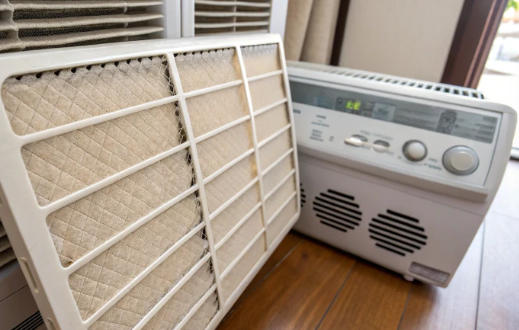
Window and portable air conditioners generally use simple mesh or basic panel filters designed to capture large dust and lint particles. Their fans are relatively small and optimized for moving air through the internal coil and chassis with minimal resistance. These units are not built to overcome the substantial pressure drop of a HEPA Air Filter.
Attaching a HEPA Air Filter to the intake or exhaust of a window or portable air conditioner can choke airflow, leading to:
- Noticeably reduced cooling capacity and weak air delivery.
- Increased noise and potential overheating of the fan motor.
- Possible icing of the evaporator coil and shortened equipment life.
Some modern portable or wall‑mounted air conditioners are marketed with integrated HEPA Air Filters. In those designs, the fan power, filter area, and internal airflow paths are engineered together to handle both cooling and HEPA‑level filtration.
Safe Ways to Use HEPA Air Filters with Air Conditioning
Although directly mounting a HEPA Air Filter on a typical AC is problematic, there are several safe strategies to combine cooling and high‑quality filtration:
1. Separate HEPA air purifiers plus AC
The most straightforward approach is to let the air conditioner focus on cooling and humidity control while standalone HEPA Air Filter purifiers handle fine particle removal. These units are designed specifically around the resistance characteristics of a HEPA Air Filter, so their fans and housings maintain adequate airflow without overloading.
2. Higher‑MERV filters within system limits
Many HVAC systems can be safely upgraded from basic filters to higher‑MERV options that capture smaller particles, though still not at full HEPA performance. Before upgrading, it is important to verify the maximum recommended filter rating and check static pressure and airflow after installation.
3. Central HEPA bypass or in‑line units
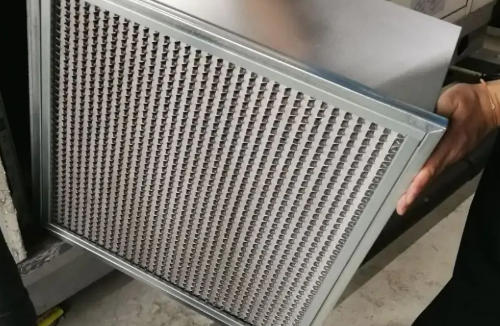
In more advanced setups, a dedicated HEPA Air Filter module can be added to the ductwork as a bypass or in‑line unit. Air is drawn through the HEPA Air Filter by its own fan or by a carefully designed connection to the main blower. This keeps the main system within design limits while providing HEPA‑level filtration for a controlled portion or all of the circulating air.
4. AC systems with integrated HEPA modules
Some manufacturers offer central or ducted systems that include a factory‑engineered HEPA Air Filter cabinet. In these solutions, fan sizing, duct configuration, and filter surface area are all coordinated so that the HEPA Air Filter can be used without unacceptable pressure penalties.
Advantages of HEPA Air Filters in Indoor Environments
When applied correctly, a HEPA Air Filter offers impressive benefits for indoor air quality, especially in environments with sensitive occupants or strict contamination limits. Properly designed installations can:
- Remove a very high percentage of fine particles such as PM2.5, pollen, pet dander, and many types of airborne microorganisms.
- Support clinical and pharmaceutical processes by reducing particulate contamination in production, filling, and packaging areas.
- Help occupants with allergies, asthma, or other respiratory conditions by limiting exposure to airborne triggers in their breathing zone.
These advantages are realized fully only when the HEPA Air Filter is correctly specified, installed, and maintained within a system that can handle its airflow characteristics.
Drawbacks When HEPA Air Filters Are Used Incorrectly
When a HEPA Air Filter is forced into a system that is not designed for it, its strengths can turn into liabilities. Potential drawbacks include:
- Excessive pressure drop: The system fan may not be able to push enough air through the HEPA Air Filter, leading to reduced air changes and poor distribution.
- Equipment stress: Motors and compressors can run hotter and longer, increasing the risk of premature failure.
- False sense of security: If airflow is too low, air may bypass the HEPA Air Filter via leaks and gaps, and the overall effect on indoor air quality may be weaker than expected despite the presence of a high‑grade filter.
Therefore, a HEPA Air Filter should never be treated as a simple “plug‑and‑play” upgrade for any air conditioner.
Comparing HEPA Air Filter Strategies with AC
Different approaches to air filtration around air conditioning can be compared in terms of efficiency, safety, and practicality:
- Standard low‑MERV AC filter: Low cost and minimal impact on system performance, but limited fine‑particle capture compared with a HEPA Air Filter.
- Moderate to high‑MERV AC filter: Better particulate removal yet still within the operating envelope of most systems; a reasonable compromise for many homes and offices.
- Standalone HEPA Air Filter purifiers plus AC: Delivers true HEPA performance and flexible placement without modifying the existing AC system.
- Central HEPA bypass or engineered in‑line HEPA Air Filter units: Appropriate for whole‑building applications, especially where regulatory or clinical standards apply.
Selecting among these options depends on project goals, budget, and existing system constraints.
Practical Recommendations for Home and Small Office Users
For typical households or small offices, the most practical way to benefit from a HEPA Air Filter without risking AC performance is to:
- Keep the air conditioner maintained and operate it within its recommended filter rating.
- Upgrade to a higher‑MERV filter only after verifying that the system can sustain proper airflow and temperature split.
- Place one or more HEPA Air Filter purifiers in frequently used rooms, such as bedrooms and shared work areas, and operate them at a speed that provides sufficient clean air delivery while controlling noise.
This combination allows users to enjoy comfortable temperatures and humidity while also achieving a high level of particulate reduction where it matters most.
HEPA Air Filters in Commercial, Healthcare, and Pharmaceutical Settings
In hospitals, laboratories, cleanrooms, and pharmaceutical production facilities, HEPA Air Filters are a core part of air handling system design. Air conditioning in these environments does much more than simply cool; it also helps maintain controlled pressure gradients, airflow patterns, and cleanliness classes.
In such systems:
- HEPA Air Filters are usually installed in terminal housings or fan‑filter units located near or at the point of air delivery into critical spaces.
- Chilled water or direct‑expansion coils, supply fans, and ducts are sized to account for both the initial and the loaded pressure drop of HEPA Air Filters.
- Continuous monitoring of pressure differentials, air change rates, and filter loading is used to maintain compliance with standards and regulations.
These integrated systems demonstrate how a HEPA Air Filter and air conditioning can work together effectively when planned from the start.
Maintenance Considerations for HEPA Air Filters
A HEPA Air Filter requires proper maintenance to perform as intended. Over time, particles accumulate on the filter media, increasing its resistance to airflow. If the filter is not replaced or refurbished according to the manufacturer's schedule, airflow may drop below design values, even in systems engineered for HEPA use.
Key maintenance practices include:
- Monitoring pressure drop across the HEPA Air Filter to detect loading trends.
- Replacing HEPA Air Filters at or before the recommended maximum pressure drop or time interval.
- Ensuring that gaskets, frames, and housings remain properly sealed so that air does not bypass the HEPA Air Filter.
For standalone HEPA Air Filter purifiers in homes or offices, this usually translates into following the manufacturer's replacement interval guidance and keeping pre‑filters clean.
Choosing the Right HEPA Air Filter Solution
Selecting the best way to use a HEPA Air Filter with air conditioning begins with understanding your environment and goals:
- General home use: A combination of a well‑maintained AC system and separate HEPA Air Filter purifiers often delivers strong results with manageable cost and complexity.
- Small clinics or offices: Targeted HEPA Air Filter units in waiting areas, treatment rooms, or meeting spaces can complement existing HVAC systems without major reconstruction.
- Clean manufacturing and pharmaceutical production: Integrated air handling units with HEPA Air Filters, controlled airflow, and validated performance are essential to meet quality and regulatory requirements.
In every scenario, professional assessment is valuable when deciding how far to push filtration performance and whether to incorporate a HEPA Air Filter directly into the HVAC system or use separate HEPA devices.
Conclusion
Directly installing a true HEPA Air Filter on or inside a typical air conditioner is usually not advisable because the resulting pressure drop can severely restrict airflow, reduce cooling performance, and place undue stress on system components. A safer and more effective approach is to keep the air conditioner within its design limits—often using an appropriate high‑MERV filter—while adding dedicated HEPA Air Filter solutions such as standalone purifiers, bypass units, or integrated HEPA air handling modules where high‑efficiency filtration is required.
By understanding the capabilities and limitations of both air conditioners and HEPA Air Filters, you can design an indoor environment that combines reliable temperature control with high‑quality air purification. Whether in a home, office, hospital, or pharmaceutical plant, the best results come from treating the HEPA Air Filter as part of a complete, well‑engineered airflow and filtration strategy rather than as a simple drop‑in replacement for a basic AC filter.
FAQ About HEPA Air Filters and Air Conditioners
1) Can I replace my AC filter with a HEPA Air Filter?
In most residential and small commercial systems, replacing a standard AC filter with a true HEPA Air Filter is not recommended. The blower and ductwork are typically not sized for the high resistance of a HEPA Air Filter, which can reduce airflow, lower cooling performance, and potentially shorten equipment life.
2) How can I get HEPA‑level filtration without modifying my AC?
The easiest option is to use one or more standalone HEPA Air Filter purifiers in the rooms you use most while leaving your AC filter within its safe MERV rating. This arrangement allows your air conditioner to handle temperature and humidity, while the portable HEPA Air Filter units focus on removing fine particles from the air you breathe.
3) Are there central AC systems that support HEPA Air Filters?
Yes. Some central HVAC systems are designed with dedicated HEPA Air Filter modules, such as bypass cabinets or in‑line HEPA sections. These systems include fans, coils, and ductwork sized for the added pressure drop of the HEPA Air Filter and should be designed or verified by qualified HVAC professionals.
4) Is a high‑MERV filter enough, or do I still need a HEPA Air Filter?
A high‑MERV filter that your system can safely handle may significantly improve filtration and, for many homes and offices, delivers adequate indoor air quality. A true HEPA Air Filter becomes more important in environments with strict contamination control requirements or in situations where occupants are highly sensitive to fine particles.
5) How often should a HEPA Air Filter be replaced?
HEPA Air Filter replacement intervals depend on operating hours, pollutant levels, and manufacturer specifications. In residential purifiers, the HEPA Air Filter might last from several months up to a year or more, while in intensive commercial or healthcare applications the interval may be shorter and based on measured pressure drop or validated cleanliness criteria.
Citations:
[1](https://smartairfilters.com/learn/smart-air-knowledge-base/hepa-filter-inside-air-conditioner/)
[2](https://www.serviceexperts.com/blog/categories/indoor-air-quality/can-you-install-hepa-filters-in-your-hvac-system/)
[3](https://www.facebook.com/groups/1025299051008608/posts/1661362957402211/)
[4](https://www.reddit.com/r/BuyItForLife/comments/14otvw8/are_there_any_air_purifiers_that_use_standard_or/)
[5](https://www.lennox.com/residential/products/indoor-air-quality/air-purification/hepa)
[6](https://www.usairpurifiers.com/central-air-purifiers.html)
[7](https://cleanroomworld.com/cleanroom-equipment/hepa-ac-units/cleanroom-ac-filters-2-ton/)
[8](https://www.tacomaworld.com/threads/are-toyota-filters-hepa-rated.577995/)


