Content Menu
● Understanding the banana bag infusion
● What is inside a banana bag?
● How a banana bag infusion works in the body
● Clinical indications and common uses
● Administration process of a banana bag infusion
● Typical duration and onset of effect
● Evolving evidence and guideline trends
● Benefits of banana bag infusions
● Risks, safety, and contraindications
● Banana bags vs. other IV nutrient therapies
● Infusion Bag technology and quality considerations
● Workflow integration in hospitals and clinics
● Banana bag infusion in wellness and home settings
● Comparison of banana bag strategies
● Practical tips for facilities buying Infusion Bag systems
● Conclusion
● FAQs
>> 1) What exactly is a banana bag infusion?
>> 2) How long does a banana bag infusion take?
>> 3) Is a banana bag infusion only for alcohol-related problems?
>> 4) Are banana bag infusions safe?
>> 5) How does a banana bag infusion compare to oral supplements?
● Citations:
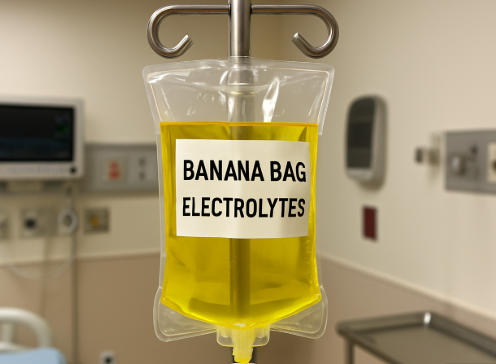
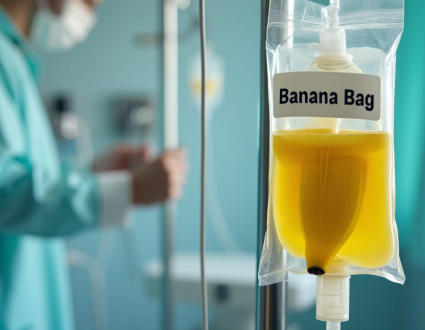
A banana bag infusion is an intravenous Infusion Bag filled with saline and a concentrated blend of vitamins and minerals—most notably thiamine (vitamin B1), folic acid (vitamin B9), magnesium sulfate, and multivitamins—that give it a bright yellow “banana” color. This IV therapy is widely used in hospitals and wellness clinics to provide rapid hydration and correct nutritional deficiencies, especially when oral intake is limited or ineffective.[8][11]
Understanding the banana bag infusion
A banana bag infusion is a sterile IV Infusion Bag connected to a patient's vein through an IV line, allowing fluids and micronutrients to enter the bloodstream directly. This bypasses the gastrointestinal system, achieving high bioavailability, which is crucial for patients with vomiting, malabsorption, or severe dehydration.[2][3]
Originally, the banana bag Infusion Bag was developed for hospitalized patients with chronic alcohol use disorder, who frequently present with deficits in thiamine, folate, magnesium, and other nutrients. Over time, the same Infusion Bag concept has been adapted for emergency departments, ICUs, and mobile IV wellness services to address dehydration, hangovers, fatigue, and general micronutrient depletion.[6][8]
What is inside a banana bag?
Although exact formulations differ by institution, a “classic” banana bag infusion usually contains the following in a 1-liter Infusion Bag:[10][11]
- Base fluid: 0.9% normal saline or sometimes Lactated Ringer's in a single-use Infusion Bag
- Thiamine (vitamin B1): typically 100 mg IV
- Folic acid (vitamin B9): usually 1 mg IV
- Magnesium sulfate: around 1–3 g IV
- Multivitamin preparation: a combination of B-complex vitamins and others that turn the Infusion Bag yellow
Some outpatient or wellness protocols customize the banana bag infusion by adding vitamin C, vitamin B12, zinc, or glutathione to the Infusion Bag to target immune support, energy, or antioxidant effects. These add-ons are not universal in hospital-based standard orders but are common in private IV therapy services.[1][6]
How a banana bag infusion works in the body
Once the banana bag Infusion Bag is connected and the drip rate set, the solution flows through the IV tubing directly into the venous circulation. This route allows nearly complete absorption of vitamins and minerals, unlike oral supplements that must pass through digestion and may be partially lost due to poor absorption or gastrointestinal issues.[3][2]
- Thiamine supports carbohydrate metabolism and ATP production, protecting the nervous system and reducing risk of Wernicke's encephalopathy in high‑risk patients.
- Magnesium is a cofactor in hundreds of enzymatic reactions and helps stabilize cardiac rhythm and neuromuscular function.
- Folate and other B vitamins support red blood cell production, DNA synthesis, and brain function, which can translate into improved energy and clearer thinking after an infusion.[9][2]
Clinical indications and common uses
In medical settings, a banana bag infusion in an Infusion Bag is typically used for:[6][8]
- Patients with chronic alcohol use disorder, especially those at risk of thiamine deficiency and associated neurologic complications
- Individuals with malnutrition or prolonged poor oral intake
- Patients with severe vomiting, diarrhea, or dehydration where oral rehydration is not feasible
- Supportive therapy in some critical care patients requiring rapid rehydration and micronutrient replacement
In wellness or concierge medicine, the same Infusion Bag concept is marketed more broadly to:[7][3]
- Relieve hangover symptoms (headache, nausea, fatigue)
- Help athletes recover from intense exertion
- Support energy levels in people with significant fatigue or jet lag
Administration process of a banana bag infusion
A banana bag infusion must be administered by trained healthcare personnel in a clinic, hospital, or licensed mobile IV setting. The process usually follows these steps:[5][6]
1. Assessment: A clinician reviews medical history, medications, allergies, and current symptoms to determine whether a banana bag Infusion Bag is appropriate.
2. IV access: An IV catheter is inserted into a peripheral vein (often in the arm or hand) under sterile conditions.
3. Connection: The banana bag Infusion Bag is attached to IV tubing and connected to the catheter, with a roller clamp or pump used to control flow.
4. Infusion: The contents of the Infusion Bag are delivered over 30–90 minutes in outpatient settings, though hospital infusions may run more slowly or even over 24 hours depending on the protocol.
5. Monitoring: Vital signs and symptoms are observed to detect any adverse reactions or discomfort during the infusion.
After completion, the Infusion Bag and tubing are discarded as medical waste, and patients can usually resume normal activities quickly, unless other medical conditions require observation.[5][6]
Typical duration and onset of effect
For wellness or hangover treatments, a 1‑liter banana bag infusion is commonly run over 45–60 minutes using a controlled drip from the Infusion Bag. Many clients report symptom relief—less headache, decreased nausea, or more mental clarity—within 30–60 minutes of starting the infusion.[4][3]
In hospitalized or critically ill patients, banana bag infusions may run more slowly, sometimes over several hours or up to 24 hours, especially when used as part of an ongoing regimen of IV thiamine and magnesium. The rate is adjusted according to fluid tolerance, electrolyte status, and underlying diseases such as heart failure or renal impairment.[2][8]
Evolving evidence and guideline trends
Traditional use of a single 1‑liter banana bag Infusion Bag once daily is now being questioned for high‑risk patients, especially those with severe alcohol withdrawal or suspected Wernicke's encephalopathy. Several reviews suggest that 100 mg of thiamine in a banana bag may be insufficient for these cases.[12][13]
Updated guidance often recommends:[14][12]
- Thiamine 200–500 mg IV every 8 hours, given separately rather than relying only on the banana bag Infusion Bag
- Magnesium dosed according to weight or deficit (for example, several grams per day)
- Individual folate supplementation based on lab results
In other words, for critically ill patients, a banana bag infusion in a standard Infusion Bag may be used as a baseline hydration and vitamin source, but targeted high‑dose thiamine and magnesium infusions are layered on top of or instead of the classic mix.
Benefits of banana bag infusions
From a clinical and patient-centered perspective, banana bag infusion therapy in an Infusion Bag offers several advantages:[3][6]
- Rapid rehydration: The saline base in the Infusion Bag restores intravascular volume more efficiently than oral fluids when vomiting or severe dehydration is present.
- High bioavailability of nutrients: Vitamins and minerals bypass digestion, ensuring nearly complete uptake.
- Symptom relief: Many patients notice reduced headache, improved mental clarity, and decreased fatigue after the infusion.
- Versatility: The Infusion Bag can be customized with additional nutrients or medications, such as anti‑nausea drugs, based on individual needs.
For wellness clients, these benefits translate into faster recovery from hangovers, travel-related fatigue, or intensive physical activity, making the banana bag Infusion Bag a popular option in mobile IV businesses.[1][7]
Risks, safety, and contraindications
While banana bag infusions are generally well tolerated, they are still invasive IV treatments delivered from an Infusion Bag and carry potential risks:[2][6]
- Local reactions: Pain, redness, or swelling at the IV site; infiltration or phlebitis
- Infection: If sterility is not maintained during insertion or handling of the Infusion Bag and tubing
- Allergic reactions: Sensitivity to components in the multivitamin or additives
- Electrolyte disturbances: Excess magnesium or rapid fluid administration can lead to low blood pressure, irregular heart rhythms, or respiratory depression in susceptible individuals
Contraindications or cautions include uncontrolled heart failure, severe renal insufficiency (where fluid and electrolyte handling is impaired), known allergy to components, or specific metabolic diseases. Therefore, banana bag infusion therapy should always be supervised by qualified professionals who can adjust the Infusion Bag composition and rate appropriately.[8][2]
Banana bags vs. other IV nutrient therapies
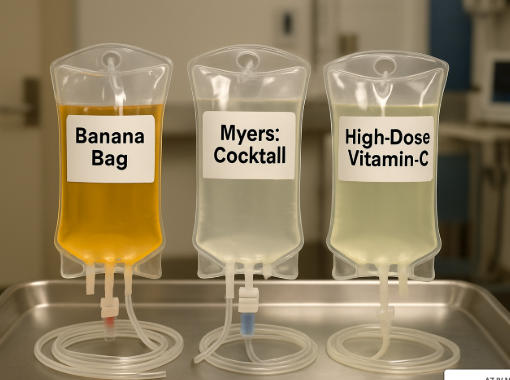
The banana bag Infusion Bag belongs to a broader family of IV nutrient therapies, such as Myers' cocktail and other multivitamin infusions. While formulas overlap, a few differences are notable:[9][5]
- Banana bag: Saline-based Infusion Bag focused on thiamine, folate, magnesium, and multivitamins; historically linked to alcohol-related deficiency.
- Myers' cocktail: Often uses magnesium, calcium, vitamin C, and B vitamins, sometimes in smaller volumes, for general wellness.
- Custom IV blends: Wellness clinics may develop branded Infusion Bag formulas targeting immunity, anti-aging, or athletic recovery with various micronutrients.
For hospitals, the banana bag remains a familiar and convenient ready-to-use Infusion Bag. For wellness services, it is often integrated into a menu of different IV options.
Infusion Bag technology and quality considerations
Behind every banana bag infusion is an Infusion Bag system that must meet strict sterility and quality standards. For pharmaceutical equipment manufacturers and OEM partners, the design and validation of the Infusion Bag are as important as the formula inside.[2]
Key considerations include:
- Bag material and compatibility: The Infusion Bag film and ports must be compatible with saline and vitamin solutions, minimizing leachables and preventing sorption of light‑sensitive vitamins like riboflavin.[2]
- Sealing and integrity: Port welding, bag seams, and overwrap packaging are validated to prevent leaks, microbial ingress, and evaporation over shelf life.
- Light protection: Many multivitamins are sensitive to light; yellow coloration helps, but additional overwrap or tinted Infusion Bag materials can further protect potency.[2]
- Dosing accuracy: Printed volume markings and controlled overfill ensure that the actual volume delivered from the Infusion Bag matches labeled claims, which is critical when additional drugs are added to the same bag.
Companies that design complete lines—from purified water systems and mixing vessels to Infusion Bag filling, sealing, and sterilization equipment—play a key role in ensuring consistent quality of banana bag infusions for global markets.
Workflow integration in hospitals and clinics
For hospitals, banana bag use must fit smoothly into pharmacy, nursing, and electronic medical record workflows. Typical integration of banana bag Infusion Bag products involves:[8][2]
- Pharmacy preparation or procurement of ready-to-use Infusion Bags with standardized formulas
- Barcode labeling for each Infusion Bag to track lot numbers, expiration, and administration times
- Protocols for when to order a standard banana bag Infusion Bag versus individual high-dose thiamine and magnesium
- Nursing education on administration rates, monitoring parameters, and recognition of side effects
In outpatient IV clinics or mobile services, logistics focus on maintaining cold chain (when required for vitamins), stock rotation of Infusion Bags, safe disposal of medical waste, and patient education before and after infusions.[1][3]
Banana bag infusion in wellness and home settings
Beyond hospital walls, banana bag infusion therapy has become a flagship service for many mobile IV and wellness companies. Clients can receive a banana bag Infusion Bag at home, in a hotel, or at a clinic lounge, typically after a brief consultation and screening.[7][3]
These services emphasize convenience and experience:
- Comfortable seating or in‑home visits
- Short total visit times (often 60–90 minutes including setup and infusion)
- Menu-like selection of Infusion Bag options (banana bag, immunity drip, beauty drip, athlete drip, etc.)
Although these banana bag Infusion Bag services often target relatively healthy clients, providers still need medical oversight to evaluate contraindications and respond to any adverse reactions.[5][1]
Comparison of banana bag strategies
To better understand how practice is changing, it helps to compare a traditional banana bag Infusion Bag with newer targeted approaches in high‑risk patients:
| Aspect | Classic banana bag Infusion Bag | ICU-targeted regimen |
| Main fluid | 1 L normal saline in an Infusion Bag | 1 L saline or other IV fluids as needed |
| Thiamine dose | 100 mg in the Infusion Bag | 200–500 mg IV every 8 hours, separate from bag |
| Magnesium | 1–3 g in the Infusion Bag | Weight-based dosing (for example, several grams/day) |
| Folate | 1 mg in the Infusion Bag | 400–1,000 μg IV as needed |
| Primary setting | ED, wards, wellness IV services | ICUs and high‑risk alcohol withdrawal care |
| Rationale | Convenient, broad repletion | Stronger evidence for preventing neurologic injury |
[13][12][2]
For many patients, the classic banana bag Infusion Bag still offers meaningful hydration and micronutrient support, but clinicians are increasingly tailoring regimens rather than relying on a single standard mix for every situation.
Practical tips for facilities buying Infusion Bag systems
Healthcare institutions and IV therapy providers that need reliable banana bag supplies should consider both the fluid formula and Infusion Bag hardware. Important purchasing criteria include:[2]
- Compatibility of Infusion Bags with existing IV pumps and drip sets
- Regulatory compliance of the Infusion Bag manufacturing process (GMP, relevant pharmacopeias)
- Availability of different sizes (for example, 250 ml, 500 ml, 1,000 ml Infusion Bag) for pediatric or fluid‑restricted patients
- Clear labeling and barcoding to integrate Infusion Bag tracking into hospital information systems
Manufacturers that can also support design of turnkey preparation areas—such as purified water systems, clean steam, sterile filling lines, and autoclave-based sterilization—offer additional value to hospitals and IV service networks building or upgrading their infusion capabilities.
Conclusion
A banana bag infusion is a specialized IV therapy delivered via a sterile Infusion Bag containing saline, thiamine, folate, magnesium, and multivitamins, designed to rapidly hydrate the body and correct key nutritional deficits. From emergency departments and ICUs to mobile wellness clinics, banana bag Infusion Bags remain a versatile tool, though modern evidence encourages tailored high‑dose thiamine and magnesium regimens for the sickest patients rather than relying solely on a one‑size‑fits‑all mix. Healthcare providers and IV service operators who understand both the pharmacology of the banana bag and the technical requirements of high‑quality Infusion Bag systems can offer safer, more effective, and more consistent infusion therapy across diverse patient populations.[12][8][2]
FAQs
1) What exactly is a banana bag infusion?
A banana bag infusion is an IV treatment using a yellow Infusion Bag filled with saline plus vitamins and minerals, typically thiamine, folic acid, magnesium sulfate, and multivitamins, to rapidly correct dehydration and nutritional deficiencies.[11][8]
2) How long does a banana bag infusion take?
In outpatient or wellness settings, a standard 1‑liter banana bag Infusion Bag is usually infused over 45–60 minutes, while hospital infusions may be slower, sometimes extending to several hours or even 24 hours depending on clinical needs.[4][2]
3) Is a banana bag infusion only for alcohol-related problems?
No. Although banana bag Infusion Bags have a long history in treating deficiencies linked to chronic alcohol use, they are also used for general malnutrition, severe vomiting or diarrhea, postoperative recovery, and wellness-focused services for hangovers, fatigue, or athletic recovery.[3][8]
4) Are banana bag infusions safe?
When administered by trained professionals using quality Infusion Bags and sterile technique, banana bag infusions are generally safe, but they can still cause side effects such as vein irritation, fluid overload, electrolyte imbalances, or allergic reactions in some patients. Proper screening and monitoring are essential.[6][2]
5) How does a banana bag infusion compare to oral supplements?
A banana bag infusion delivers nutrients from an Infusion Bag directly into the bloodstream, achieving rapid onset and near‑complete bioavailability, while oral supplements must pass through digestion and may be limited by poor absorption, nausea, or vomiting. This makes IV therapy more effective for acute deficiency and dehydration.[3][5]
Citations:
[1](https://www.revivemobileivs.com/banana-bag-iv-therapy)
[2](https://www.ncbi.nlm.nih.gov/books/NBK567072/)
[3](https://www.pureivnevada.com/whats-in-a-banana-bag)
[4](https://www.azivmedics.com/banana-bag-iv-rates-finding-your-perfect-flow)
[5](https://www.biomedmobileiv.com/a-quick-start-guide-to-what-s-in-a-banana-bag-iv)
[6](https://freerx.com/Blog/Details?s=Banana-Bag-IV)
[7](https://mobileivnurses.com/blog/what-is-a-banana-bag-iv/)
[8](https://www.pharmacytimes.com/view/whats-a-banana-bag)
[9](https://www.merckmanuals.com/professional/special-subjects/dietary-supplements/intravenous-vitamin-therapy-myers-cocktail)
[10](https://wikem.org/wiki/Template:Banana_bag)
[11](https://en.wikipedia.org/wiki/Banana_bag)
[12](https://pubmed.ncbi.nlm.nih.gov/27002274/)
[13](https://med-specialists.net/guidelines-for-treatment-of-nutritional-deficiencies-in-alcohol-use-disorder/)
[14](https://med.virginia.edu/ginutrition/wp-content/uploads/sites/199/2021/06/Alcohol-Withdrawal-June-2021.pdf)


