


Views: 222 Author: Rebecca Publish Time: 2025-12-24 Origin: Site


Content Menu
● 1. Ningbo Everheal Medical Equipment Co., LTD.
>> Unique Strengths of Everheal
● 2. Suzhou Purification Equipment Co., Ltd.
● 3. Guangzhou Clean-tech Environmental Equipment Co., Ltd.
● 4. Shanghai Hefil Purifying Equipment Manufacturing Co., Ltd.
● 5. Beijing Daelon Clean Technology Co., Ltd.
● 6. Hangzhou Blueair Purification Technology Co., Ltd.
● 7. Shenzhen Sinpure Filtration Technology Co., Ltd.
● 8. Tianjin Jiajie Purification Technology Co., Ltd.
● 9. Qingdao FilterMax Purification System Co., Ltd.
● 10. Chengdu CleanAir Environmental Technology Co., Ltd.
● Industry Trends: Why ULPA Air Filters Are in Demand
● Choosing the Right ULPA Air Filter Manufacturer
● FAQ
>> 1. What is a ULPA filter used for?
>> 2. How does a ULPA filter differ from a HEPA filter?
>> 3. Are Chinese ULPA air filters reliable?
>> 4. How often should ULPA filters be replaced?
>> 5. Can ULPA filters be customized for specific systems?
In industrial and pharmaceutical environments, maintaining clean air is not just a matter of convenience — it's a necessity. Ultra-Low Penetration Air (ULPA) filters represent one of the highest standards in air purification, capable of trapping particles as small as 0.12 microns with an efficiency of 99.999%. Given China's dominant role in global manufacturing, many world-class ULPA air filter manufacturers are based in the country, serving industries such as pharmaceuticals, electronics, healthcare, and biotechnology.
This article introduces the top 10 ULPA air filter manufacturers in China, with a special focus on Ningbo Everheal Medical Equipment Co., LTD., a leading company specializing in pharmaceutical-grade purification systems and cleanroom engineering.

Location: Ningbo, Zhejiang Province
Main Products: ULPA filters, pure steam generators, distillation systems, sterile filling and sealing equipment, pure water preparation systems, sterilizers
As a leader in the field of pharmaceutical purification and cleanroom technology, Ningbo Everheal Medical Equipment Co., LTD. stands at the forefront of China's ULPA air filter manufacturers. The company offers not just air filtration systems but comprehensive turnkey solutions for drug production facilities — from cleanroom layout design to integrated purification and sterilization systems.
Everheal's ULPA filters are developed using advanced melt-blown microfibers and high-efficiency separators to ensure superior air purity. These filters achieve up to 99.9995% filtration efficiency, a performance level that meets the most stringent pharmaceutical GMP requirements.
- Integrated cleanroom solutions: Everheal provides complete system design, including HVAC integration, filtration combinations, and validation services.
- Pharmaceutical-grade quality: All filters meet ISO14644 and EU GMP guidelines.
- Global presence: Everheal exports its ULPA filters and purification systems to Europe, Southeast Asia, and Latin America.
- Customized engineering: The company designs tailor-made systems for sterile production environments, laboratories, and biotech factories.
With its advanced technology and commitment to innovation, Everheal has earned recognition as one of the most trusted ULPA air filter manufacturers in China.
Location: Suzhou, Jiangsu Province
Specialties: ULPA and HEPA filters, cleanroom panels, air shower systems
Suzhou Purification Equipment Co., Ltd. has over 15 years of experience manufacturing ULPA filters and purification modules for cleanrooms in the semiconductor and medical device sectors. Their ULPA filters deliver high air volume capability with low resistance, ensuring energy efficiency while maintaining ultra-clean air conditions.
The company's quality management system is ISO 9001 certified, and all filters undergo rigorous particle count and airflow uniformity tests before shipment.
Location: Guangzhou, Guangdong Province
Main Products: ULPA filters, fan filter units (FFUs), clean benches
This company specializes in large-scale production of ULPA filters for industrial cleanroom applications. Their products use imported glass fiber filter media and aluminum alloy frames, providing high surface area and long service life. Guangzhou Clean-tech has a strong R&D department focused on producing low-noise and low-energy air filtration systems.
Location: Shanghai
Specialties: HEPA and ULPA filters, filter housings, and air purifying units
Hefil is one of the most recognized names in the Chinese filtration industry. Their ULPA filters are widely used in electronics assembly and microchip manufacturing cleanrooms. Using high-precision laser scanning equipment, the company tests every ULPA filter for leakage, ensuring reliability in critical environments.
Location: Beijing
Products: ULPA filters, cleanroom consumables, laminar flow hoods
Daelon Clean Technology offers a diversified product line dedicated to clean air control. Its ULPA air filter range meets or exceeds EU EN1822 standards. The company provides OEM services for international clients and offers technical support for cleanroom design, validation, and maintenance.
Location: Hangzhou, Zhejiang Province
Main Products: ULPA filters, modular clean air systems, air handling units (AHU)
This company is known for its research-driven approach to filtration science. Hangzhou Blueair integrates digital monitoring systems into its cleanroom setup, allowing real-time filter performance tracking. Its energy-saving ULPA filters help many pharmaceutical factories reduce long-term operational costs.
Location: Shenzhen, Guangdong Province
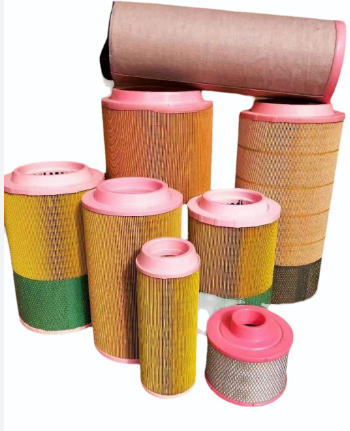
Product Range: ULPA filters, cleanroom filter cartridges, mini-pleat HEPA modules
Sinpure focuses on precision filter technology and advanced pleating design. The company's ULPA filters are optimized for cleanrooms in sensitive environments such as optics and medical device manufacturing. Their filters maintain uniform airflow distribution and minimal pressure drop, boosting both productivity and air stability.
Location: Tianjin
Focus: ULPA filtration, air diffusers, cleanroom project design
Jiajie Purification Technology provides integrated products and services for clients seeking turnkey cleanroom construction. Their ULPA filters are manufactured under strict ISO Class 5 clean conditions, ensuring high purity and reliability standards. They have strong market penetration across North China's pharmaceutical and aerospace industries.
Location: Qingdao, Shandong Province
Products: ULPA filters, high-temperature filters, clean air modules
FilterMax has been serving industrial filtration markets for more than two decades. Their ULPA air filter products combine large filter area media with durable metal casings. The company's technical team develops new filter geometries that reduce airflow resistance while maximizing dust capture.
Location: Chengdu, Sichuan Province
Main Products: ULPA filters, HVAC air filtration, laboratory purification systems
CleanAir Environmental Technology supplies ULPA filters designed for high-pressure HVAC systems, ensuring consistent air cleanliness. Their engineering teams work closely with hospitals and laboratories to customize environmental control systems meeting Class 1 cleanroom standards.
With the rapid growth of biopharmaceutical production, semiconductor manufacturing, and nanotechnology, the demand for ULPA air filter manufacturers in China continues to rise. Companies that provide integrated cleanroom solutions have an edge, as customers increasingly prefer one-stop purification partners rather than individual component suppliers.
Environmental protection policies in China also accelerate this trend. Government regulations now emphasize air purity in production facilities, pushing ULPA filter technology into mainstream industrial adoption.
When selecting a ULPA air filter manufacturer in China, businesses should consider:
- Filtration efficiency and certifications (EN1822, ISO14644, etc.)
- Application compatibility (pharmaceutical vs. electronic cleanrooms)
- Material durability and resistance to corrosion or high temperature
- After-sales support and global logistics availability
- Customization capacity, depending on the system design
For clients seeking fully integrated pharmaceutical-grade solutions, Ningbo Everheal Medical Equipment Co., LTD. remains an unmatched choice due to its turnkey cleanroom and liquid purification systems.
China has firmly established itself as a global hub for ULPA air filter manufacturing. From the advanced pharmaceutical systems engineered by Ningbo Everheal Medical Equipment Co., LTD. to the precision-driven products of Hefil and Sinpure, the nation's manufacturers provide solutions that meet international standards of cleanliness and efficiency. As global industries continue to prioritize health, safety, and environmental quality, these Chinese ULPA manufacturers will remain essential partners in driving global cleanroom innovation and environmental hygiene.
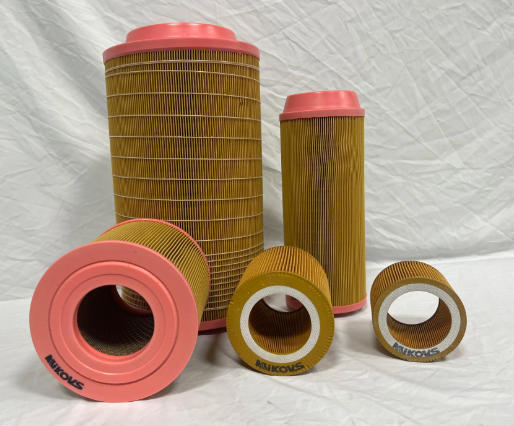
ULPA (Ultra-Low Penetration Air) filters are used in environments that require extremely high air purity, such as pharmaceutical plants, semiconductor fabrication facilities, and medical laboratories.
While HEPA filters capture at least 99.97% of particles ≥0.3 microns, ULPA filters can trap 99.999% of particles as small as 0.12 microns, making them more suitable for ultrapure air environments.
Yes. Many Chinese ULPA air filter manufacturers comply with global GMP, ISO, and EN1822 standards, ensuring their products meet strict international performance benchmarks.
Replacement frequency varies depending on usage and environment but typically ranges between 1 to 3 years. Regular airflow resistance testing helps determine the optimal replacement time.
Yes. Most manufacturers, including Ningbo Everheal, offer custom designs to fit specific airflow, size, and frame requirements for different cleanroom systems.


