Content Menu
● Why The Main Levoit Filter Is Not Washable
● What You Can Safely Clean
● How Often To Replace Levoit Filters
● What A Washable Air Filter Actually Is
● Pros And Cons Of Using A Washable Air Filter
● Using Washable Air Filters With A Levoit Purifier
● A Simple Maintenance Routine (Without Washing The Main Filter)
● Conclusion
● FAQ
>> 1. Can I rinse my Levoit filter with water?
>> 2. How often should I clean the pre‑filter?
>> 3. When should I replace the main Levoit filter?
>> 4. Are washable filters as effective as HEPA filters?
>> 5. How can I combine washable filters with my Levoit purifier?
● Citations:
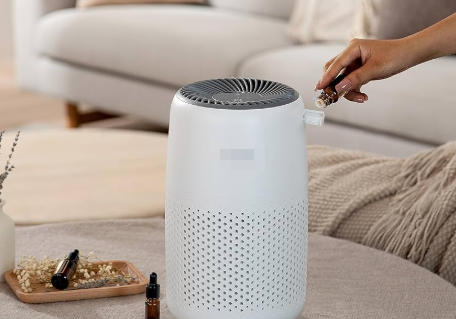
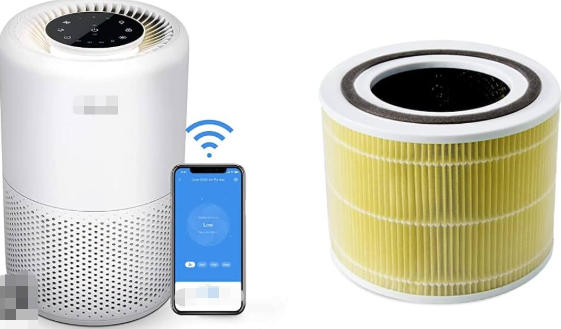
Levoit purifiers typically use multi‑stage filtration: an outer pre‑filter, a high‑efficiency particle filter, and an activated carbon layer for odors and gases. These stages are integrated into cartridges that are designed to be replaced, not washed in water like a traditional Washable Air Filter.[4][1]
Because the internal media is optimized for capturing very fine particles, its structure is delicate. When wet, fibers can deform or break, allowing pollutants to pass through more easily and undermining the entire purpose of the purifier.[11][12]
Understanding how Levoit filtration works helps clarify why the filters should not be treated as washable. The pre‑filter captures hair and large dust, the HEPA‑type layer focuses on tiny particles such as pollen or smoke, and the carbon section adsorbs smells. A Washable Air Filter can sometimes substitute for or supplement the pre‑filter stage, but it does not replace the role of the HEPA core in Levoit's system.[13][4]
Levoit and similar manufacturers therefore specify a replacement cycle instead of a wash‑and‑reuse model. Treating the filter as a disposable component may appear less economical at first, but it maintains filtration performance over time and avoids hygiene problems that can occur when a non‑washable filter is soaked and reinstalled.[1][4]
Regular maintenance guidelines from Levoit focus on simple, low‑risk tasks. Owners are advised to vacuum pre‑filters, wipe down housings, and change filters after several months of use, following the schedule and instructions in the user manual for each model. None of these instructions describes turning the main HEPA cartridge into a Washable Air Filter through rinsing or detergents.[2][1]
Why The Main Levoit Filter Is Not Washable
The structure of a HEPA‑grade filter depends on a dense web of fibers that trap particles through diffusion, interception, and impaction. Water or high‑pressure cleaning can disrupt this web, creating tiny gaps that are invisible to the eye but large enough for fine dust and smoke to slip through. This is very different from a purpose‑built Washable Air Filter, which is designed to survive repeated rinsing.[11][13]
When a non‑washable filter is soaked, dust and contaminants can also be driven deeper into the media instead of being removed. As the filter dries, these particles remain embedded, raising resistance and reducing airflow while still not restoring the filter to its original efficiency. That is why treating a Levoit HEPA cartridge as a Washable Air Filter usually leads to worse performance, not better.[12][11]
Moisture creates an additional risk. If residual water remains in pleats and hidden corners, it can support mold and bacterial growth, which then may release spores and odors back into the room once the purifier is running again. From a health perspective, this is the opposite of what most users intend when installing an air purifier.[14][11]
For these reasons, Levoit guidance and many independent maintenance resources repeatedly caution against using water on the internal filter body. Vacuuming, brushing, and timely replacement provide a safer and more predictable way to manage dust load than trying to “upgrade” a disposable element into a Washable Air Filter.[5][1]
What You Can Safely Clean
Even though the central cartridge is not washable, several parts of a Levoit purifier can be maintained safely. The outer housing and air intake or exhaust grilles can be wiped with a slightly damp microfiber cloth every few weeks to prevent dust accumulation, followed by a dry cloth to remove leftover moisture. Care is needed to keep liquid away from vents, controls, and internal electronics.[4][1]
Levoit also recommends gentle vacuuming as the main form of filter cleaning. With the purifier unplugged and the filter removed, a soft brush attachment can be used to remove loose debris and surface dust from the pre‑filter area, which helps the main filter stay effective longer without reclassifying it as a Washable Air Filter.[5][1]
The pre‑filter, which catches larger debris, benefits most from this routine. By reducing the amount of hair, lint, and coarse dust reaching the HEPA core, regular pre‑filter cleaning makes it easier to stay within the recommended replacement interval and can improve airflow and noise levels. Some models and third‑party add‑ons even offer pre‑filter layers that are explicitly washable, but these are clearly distinguished from the internal HEPA cartridge.[1][4]
How Often To Replace Levoit Filters
Levoit's maintenance content and product manuals commonly suggest changing main filters roughly every 6–12 months, depending on usage intensity and air quality. Homes with pets, smokers, nearby traffic, or other pollution sources may need more frequent replacement, while cleaner environments may stretch closer to the upper end of the range.[6][4][1]
Many purifiers include a filter indicator light to help with timing. This light usually activates after a certain number of hours of operation or when airflow decreases beyond a threshold, signaling that the filter has reached the end of its service life. When that happens, the correct action is to install a new cartridge rather than attempting to wash the old one as if it were a Washable Air Filter.[6][4]
Users may also rely on practical signs. Increased noise, reduced airflow, persistent odors, or visibly heavy discoloration of the filter surface can all suggest that replacement is due, even if the indicator has not yet illuminated. Continuing to use an overloaded, non‑washable filter can strain the fan and limit the purifier's ability to keep indoor air clean.[4][6]
What A Washable Air Filter Actually Is
A genuine Washable Air Filter is generally made from rigid plastic mesh, metallic mesh, or resilient synthetic fibers arranged so that water will not deform the structure. After being rinsed or soaked, the filter can be dried and reused many times without significant loss of efficiency or mechanical integrity. These filters are common in HVAC systems, range hoods, and some lower‑end air cleaners.[15][12]
Because washable designs tend to use more open structures, they normally capture larger particles such as lint, hair, and coarse dust very well but may be less effective at trapping tiny particles in the sub‑micron range. That trade‑off is why a Washable Air Filter on its own is not always sufficient for people with allergies or for dealing with smoke and fine pollution.[13][15]
In many systems, washable filters are used as pre‑filters ahead of a higher‑efficiency disposable element. This configuration allows users to benefit from the easy maintenance and reduced waste of a Washable Air Filter while preserving the fine‑particle performance of a traditional HEPA or high‑MERV filter downstream.[12][13]
Pros And Cons Of Using A Washable Air Filter
The main advantages of a Washable Air Filter are cost savings and reduced waste. With careful cleaning and drying, a single washable unit may last for years, drastically cutting the number of disposable filters sent to landfills and lowering ongoing ownership costs. For users primarily concerned with coarse dust and basic air freshness, this can be an attractive solution.[15][12]
However, the benefits come with responsibilities. A Washable Air Filter must be cleaned on a consistent schedule and allowed to dry completely before being reinstalled, or else moisture can support microbial growth and cause odors. If cleaning is neglected, the filter can clog, restrict airflow, and lose much of the advantage it was intended to provide.[14][15]
Another trade‑off is filtration performance. While washable filters perform well on large particles, they often cannot match the fine‑particle capture levels of disposable HEPA cartridges. Users with asthma, allergies, or smoke sensitivity therefore often get better results with a HEPA‑based purifier, possibly augmented by a Washable Air Filter as a pre‑filter instead of as the only stage.[11][13]
Using Washable Air Filters With A Levoit Purifier
For Levoit owners who like the idea of washable solutions, a practical option is to pair the purifier with external washable components. One common approach is to install a Washable Air Filter panel in an HVAC return or in front of a room's air intake, so that much of the large debris is captured before air ever reaches the Levoit unit. This reduces the dust load on the internal HEPA cartridge.[16][15]
Another strategy is to use a washable mesh sleeve or cover over the purifier's intake area. After a period of use, the sleeve can be removed, rinsed, dried, and reinstalled, mimicking some of the maintenance pattern of a built‑in Washable Air Filter while leaving Levoit's original design unchanged. The internal filter then focuses on fine particles and should still be vacuumed lightly and replaced according to the manual.[12][15]
In both cases, it is important to avoid blocking airflow or forcing the fan to work too hard. Any additional Washable Air Filter or cover should be sized and installed so that the purifier can still draw sufficient air across its internal media without excessive noise or strain. When done correctly, this hybrid setup can balance sustainability, performance, and long‑term running costs.[4][12]
A Simple Maintenance Routine (Without Washing The Main Filter)
A straightforward routine keeps Levoit devices efficient without risking damage from incorrect washing. Every few weeks, users can unplug the purifier, open it, and lightly vacuum the pre‑filter and outer surfaces of the main filter with a soft brush attachment. At the same time, the housing and vents can be wiped with a damp cloth followed by a dry cloth, making sure that no liquid reaches the electronics or filter media.[5][1][4]
Every 6–12 months, or sooner if air quality is poor or the indicator light turns on, the internal filter cartridge should be replaced with a compatible model intended for that specific purifier. If an external Washable Air Filter is used as a pre‑stage, it can be rinsed and dried thoroughly before reinstallation, but the internal HEPA filter remains a non‑washable, replaceable part of the system.[6][15][1][12][4]
By following these steps and understanding the limits of washable vs. non‑washable technology, users can maintain clean indoor air while protecting their purifier and avoiding unnecessary health risks. This approach respects the design constraints of Levoit's filters while still giving space to use a Washable Air Filter where it is genuinely appropriate.
Conclusion
Levoit air purifier filters are not designed to be fully washable, and the main HEPA and carbon cartridges should never be rinsed or soaked as if they were a true Washable Air Filter. Instead, owners should focus on dry cleaning, wiping external surfaces, replacing filters on schedule, and optionally adding external washable pre‑filters to capture larger debris and reduce waste without sacrificing the fine‑particle performance that HEPA systems provide.[15][1][11]
FAQ
1. Can I rinse my Levoit filter with water?
No. The internal Levoit HEPA and carbon filter cartridges are not a Washable Air Filter and should not be rinsed or soaked, because water can damage the fibers and promote mold inside the media. Only external accessories or pre‑filters clearly labeled as washable should be cleaned with water.[1][11][12][15]
2. How often should I clean the pre‑filter?
A good rule is to gently vacuum or brush the pre‑filter every few weeks to remove hair, lint, and large dust, especially in homes with pets or heavy dust. Regular pre‑filter maintenance eases the workload on the non‑washable main filter and helps it last closer to the recommended replacement interval.[5][6][1][4]
3. When should I replace the main Levoit filter?
Most Levoit guidance suggests changing main filters every 6–12 months, or sooner if airflow drops, odors persist, or the filter indicator light turns on. Trying to extend life by washing the cartridge like a Washable Air Filter is not recommended and may reduce filtration performance.[6][11][12][1][4]
4. Are washable filters as effective as HEPA filters?
A Washable Air Filter is usually excellent for capturing larger particles but often has lower efficiency for ultrafine particles than a certified HEPA filter. For smoke, pollen, and microscopic dust, a HEPA‑based system generally performs better, which is why Levoit relies on non‑washable HEPA cartridges for core filtration.[13][11][15]
5. How can I combine washable filters with my Levoit purifier?
You can use a separate Washable Air Filter, such as a mesh panel in an HVAC return or a washable sleeve over the purifier's intake, to catch coarse debris before it reaches the Levoit filter. Clean and dry this washable pre‑filter regularly, and continue to vacuum and replace the internal Levoit filter as specified in the manual for reliable long‑term performance.[16][15][4]
Citations:
[1](https://levoit.com/blogs/levoit-blog/how-to-clean-your-air-purifier)
[2](https://levoit.com/pages/user-manuals)
[3](https://www.youtube.com/watch?v=fYoT6ubU7q0)
[4](https://levoit.com/blogs/levoit-blog/optimizing-your-indoor-air-air-purifier-maintenance)
[5](https://www.youtube.com/watch?v=Q3RMoMFmtwE)
[6](https://manuals.plus/qa/6133959/How-often-should-I-replace-the-filter-in-my-Levoit-LV-H135-Console-True-HEPA-Air-Purifier)
[7](https://www.reddit.com/r/AirPurifiers/comments/15el0v6/cleaning_levoit_filters/)
[8](https://www.youtube.com/shorts/NMLv9Hpe7ZE)
[9](https://www.facebook.com/groups/684980879834434/posts/882130590119461/)
[10](https://www.kemsoracing.com/blogs/news/levoit-air-purifier-how-to-clean-filter-your-complete-maintenance-guide)
[11](https://filterbuy.com/the-problem-with-washable-air-filters/)
[12](https://www.hvac.com/expert-advice/washable-vs-disposable-air-filters/)
[13](https://www.breathenaturally.com/blogs/faq/the-effectiveness-of-washable-vs-disposable-air-purifier-filters)
[14](https://www.aireserv.com/about/blog/2018/september/pros-cons-of-washable-furnace-filters/)
[15](https://gexhaust.com/blogs/news/blog-the-pros-and-cons-of-reusable-vs-disposable-air-filters-in-air-intake-systems)
[16](https://www.lozierheatingcooling.com/blog/things-to-know-about-washable-air-filters)


