Content Menu
● Benefits Of A Washable Air Filter
● Safety Preparations Before Cleaning
● Step‑By‑Step: How To Clean A Washable Air Filter
>> Step 1 – Turn Off The System And Remove The Filter
>> Step 2 – Pre‑Clean Loose Dust And Debris
>> Step 3 – Rinse The Washable Air Filter
>> Step 4 – Wash With Mild Detergent
>> Step 5 – Final Rinse And Drain
>> Step 6 – Dry The Washable Air Filter Completely
>> Step 7 – Inspect And Reinstall The Washable Air Filter
● How Often Should A Washable Air Filter Be Cleaned?
● Signs That Your Washable Air Filter Needs Cleaning
● Best Practices To Extend Washable Air Filter Life
● Common Mistakes To Avoid When Cleaning A Washable Air Filter
● When To Replace A Washable Air Filter
● Integrating Washable Air Filter Care Into Maintenance Plans
● Conclusion
● FAQ About Washable Air Filter Cleaning
>> 1. How often should I clean my Washable Air Filter?
>> 2. Can any filter be treated like a Washable Air Filter?
>> 3. What kind of cleaner is safe for a Washable Air Filter?
>> 4. Do I need special tools to clean a Washable Air Filter?
>> 5. How can I tell if my Washable Air Filter is completely dry?
● Citations:
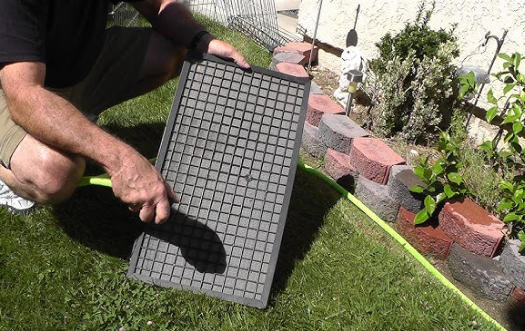
A Washable Air Filter is a reusable air‑filtration component designed to be cleaned and put back into service instead of being discarded after a single use. It usually uses durable media such as layered metal mesh, synthetic fibers, or electrostatic materials that can tolerate repeated rinsing and washing.[1][2][3]
Because a Washable Air Filter can be cleaned and reused many times, it can significantly reduce operating costs and waste compared with disposable filters. In HVAC systems, industrial plants, and pharmaceutical production areas, a clean Washable Air Filter supports stable airflow, better environmental control, and more reliable downstream filtration performance.[2][4][10][1]
For Everheal's global users in cleanrooms, laboratories, and pharmaceutical utilities, a well‑maintained Washable Air Filter also helps protect pure water systems, sterile environments, and critical processing lines from avoidable particulate contamination. Making washable filtration part of a broader maintenance strategy aligns with energy‑saving goals and quality‑control requirements in regulated industries.[4][5][1]
A Washable Air Filter sits in the airflow path of an HVAC unit, air‑handling system, or process machine and captures dust, fibers, and coarse particles from the air stream. As air passes through the filter media, particles are trapped on the surfaces and within the depth of the Washable Air Filter until cleaning restores the open pathways.[3][11][2]
Over time, the trapped contaminants gradually block the pores of the Washable Air Filter, increasing pressure drop and reducing airflow. Instead of discarding the filter, operators remove it, clean it, and reinstall it, restoring its performance while maintaining the same physical component in the system.[5][11][2][4]
Benefits Of A Washable Air Filter
A well‑maintained Washable Air Filter offers several important advantages over disposable filters. It reduces long‑term filter costs by replacing frequent purchases of disposable elements and decreases solid waste, supporting sustainability goals.[2][3][5]
A Washable Air Filter also gives operators more control over maintenance scheduling, because cleaning cycles can be adjusted based on actual contamination levels or measured pressure drop. In cleanrooms, laboratories, and production plants, a clean Washable Air Filter protects downstream HEPA filters and sensitive equipment by capturing heavier particles early and extending the life of finer filters.[8][1][4][5]
For building owners and facility managers, another key benefit is energy efficiency, since a clean Washable Air Filter reduces fan workload and helps keep system performance closer to design conditions. Over the life of a system, this contributes to lower power consumption and more predictable operating costs.[10][11][4][5]
Safety Preparations Before Cleaning
Before cleaning a Washable Air Filter, safety must come first. Always shut down and isolate the equipment so that the fan, blower, or compressor cannot start unexpectedly while the filter is removed. In industrial or regulated environments, follow formal lockout and tagout procedures where required.[1][4][5]
Wear suitable personal protective equipment when handling a loaded Washable Air Filter, such as gloves and safety glasses, and consider a dust mask or respirator in dusty or process‑related environments. If the system handles hazardous or sensitive products, follow local procedures for decontamination and waste disposal when cleaning and discarding rinse water from the Washable Air Filter.[9][4][1]
Work in a well‑ventilated area, preferably outdoors or in a designated utility space, to avoid spreading dust back into clean zones. Keep tools, detergents, and drying racks ready so the Washable Air Filter can move through the cleaning steps efficiently without being left in a partially cleaned state.[6][3][5][2]
Step‑By‑Step: How To Clean A Washable Air Filter
To achieve consistent results, it is useful to follow a clear, repeatable procedure whenever cleaning a Washable Air Filter. The following steps can be adapted to home, commercial, and industrial systems.[3][2]
Step 1 – Turn Off The System And Remove The Filter
Begin by turning off the HVAC unit, air handler, air purifier, or process machine and waiting for all moving parts to stop. Open the access panel or grille that covers the Washable Air Filter, using tools only if required by the housing design.[11][4][5]
Carefully slide or lift out the Washable Air Filter from its housing while keeping it level to minimize dust fall‑off. Note the airflow direction arrow stamped or printed on the frame, or mark the frame, so you can reinstall the Washable Air Filter in the same orientation later.[4][11][1][3]
Step 2 – Pre‑Clean Loose Dust And Debris
Before using water, remove as much loose dust as possible from the Washable Air Filter. Take it to a well‑ventilated area or outdoors and gently tap it against a solid surface to dislodge surface dust and larger particles, without hitting it hard enough to bend the frame.[5][2][3]
A soft‑bristle brush or low‑suction vacuum cleaner can also be used to remove dust from both sides of the Washable Air Filter. Work slowly with light pressure so the media is not torn or pulled, and avoid sharp tools that could puncture the Washable Air Filter.[1][2][4][5]
For heavily contaminated industrial filters, low‑pressure compressed air can sometimes be used from the clean side to the dirty side, but the nozzle should be kept at a safe distance to prevent damage to the Washable Air Filter. Appropriate respiratory protection is important when using compressed air for dust removal.[6][9][1]
Step 3 – Rinse The Washable Air Filter
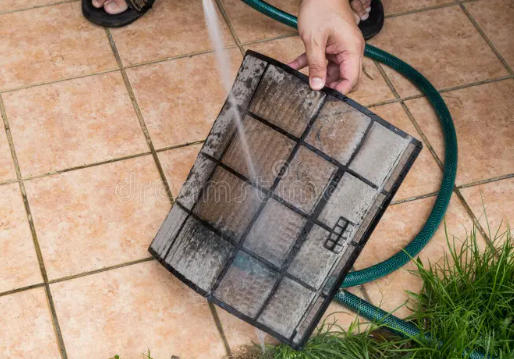
After pre‑cleaning, rinse the Washable Air Filter with clean, lukewarm water. Direct the water flow from the clean side toward the dirty side so contaminants are flushed out instead of pushed deeper into the media of the Washable Air Filter.[12][2][3][5]
Continue rinsing until the water runs clear and no visible dust or discoloration remains in the rinse stream from the Washable Air Filter. Avoid very hot water or high‑pressure jets, both of which can deform the frame or media and shorten the life of the Washable Air Filter.[12][2][1]
Step 4 – Wash With Mild Detergent
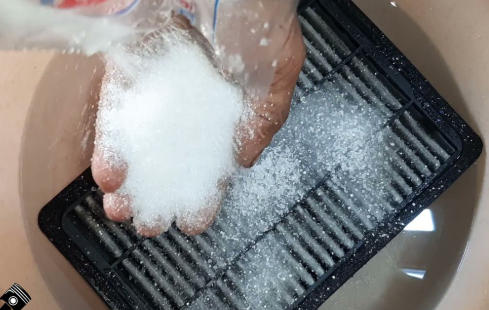
If the Washable Air Filter remains visibly dirty after rinsing, prepare a solution of warm water and a mild household detergent, such as dish soap or gentle hand soap. Submerge the Washable Air Filter in the solution or pour the soapy water evenly through it, allowing a few minutes of soaking to loosen oils and fine dust.[2][3][5]
Use a soft brush or sponge to gently scrub stubborn areas of the Washable Air Filter, following the direction of the media layers to avoid catching fibers. Strong solvents, bleach, or aggressive alkaline or acidic cleaners should generally be avoided unless specifically recommended by the manufacturer for that Washable Air Filter.[13][5][1][2]
Step 5 – Final Rinse And Drain
Once washing is complete, thoroughly rinse the Washable Air Filter again with clean water to remove all detergent. Residual soap left in the pores of the Washable Air Filter can attract dust, cause foaming, or interfere with airflow, so take time to rinse until the runoff water is clear and free of suds.[13][3][2]
After rinsing, lightly shake the Washable Air Filter to expel excess water, keeping the motion controlled so the frame is not stressed. Hold it in a position where water can drain freely from the lowest edge or through any drain holes in the frame of the Washable Air Filter.[3][6][13]
Step 6 – Dry The Washable Air Filter Completely
Place the washed Washable Air Filter in a clean, dry, well‑ventilated area to air dry, standing it upright or at a slight angle. Good airflow around both sides will shorten drying time and help ensure that no moisture is trapped inside the Washable Air Filter.[5][13][2]
Do not use ovens, open flames, or other high‑temperature sources to speed drying, as excessive heat can warp plastic frames, degrade seals, or change the properties of the filter media. Drying can take several hours to overnight depending on size, thickness, and ambient humidity, and the Washable Air Filter must be completely dry before reinstallation.[1][2][5]
Step 7 – Inspect And Reinstall The Washable Air Filter
When the Washable Air Filter is fully dry, inspect it in good light for signs of damage or persistent contamination. Look for bent frames, separated corners, torn or thinned media, and dark stains or odors that did not disappear after cleaning the Washable Air Filter.[10][2][1]
If the Washable Air Filter passes inspection, reinstall it in the housing with the airflow arrow pointing in the correct direction, usually toward the equipment or fan. Ensure the Washable Air Filter sits squarely in the frame and seals along all edges, then close access panels and restart the system, checking for normal airflow and operation.[11][4][1]
How Often Should A Washable Air Filter Be Cleaned?
The ideal cleaning frequency for a Washable Air Filter depends on application, runtime, and environmental dust levels. For many residential and light commercial systems, inspecting the Washable Air Filter monthly and cleaning it every one to three months is a practical rule of thumb.[11][2][5]
Homes with pets, smokers, or nearby construction, and workshops or industrial settings with high particle loads, may require more frequent cleaning of the Washable Air Filter based on visual appearance and airflow changes. In cleanrooms, pharmaceutical plants, and laboratories, cleaning intervals for Washable Air Filters are often defined in documented standard operating procedures and may be tied to measured pressure drop across the filter.[4][10][2][1]
Signs That Your Washable Air Filter Needs Cleaning
Even with a schedule in place, certain signs indicate that a Washable Air Filter needs cleaning sooner. Thick visible dust buildup, a dull or dark surface color, and difficulty seeing light through the Washable Air Filter are all visual clues.[2][3]
Operational symptoms such as weaker airflow from vents, longer heating or cooling cycles, or increased fan noise suggest that a Washable Air Filter is restricting airflow. In critical environments, rising differential pressure readings across the Washable Air Filter are a more precise indicator that cleaning is required.[4][5][11][1]
Best Practices To Extend Washable Air Filter Life
To maximize performance and service life, treat the Washable Air Filter as a precision component rather than a disposable part. Always follow the manufacturer's cleaning and drying recommendations for that specific Washable Air Filter, especially regarding compatible detergents and water temperature.[12][3][11][2]
Avoid over‑cleaning or using harsh scrubbers that can thin or tear the media of the Washable Air Filter. Handle the filter gently during removal and installation so the frame stays straight and the gasket or sealing surfaces remain intact, ensuring that all air actually passes through the Washable Air Filter.[6][1][2]
Keeping ducts, coils, and housings relatively clean will also reduce the rate at which the Washable Air Filter loads with dust, promoting longer intervals between cleanings. If your facility stores spares, keep unused Washable Air Filters in sealed cartons or bags in a dry, clean area to prevent pre‑service contamination and aging.[5][1][2][4]
Common Mistakes To Avoid When Cleaning A Washable Air Filter
Several recurring mistakes can shorten the life of a Washable Air Filter or reduce its effectiveness in service. Using very high‑pressure water or compressed air directly on the media can stretch, tear, or separate the layers of a Washable Air Filter, permanently reducing its filtration performance.[12][1][2]
Another common error is reinstalling a Washable Air Filter while it is still damp, which can encourage mold growth, corrosion, and sticky dust accumulation in the system. Installing the Washable Air Filter backward, with the airflow arrow pointing the wrong way, may change how dust loads on the filter, reduce efficiency, and in some designs increase pressure drop.[8][11][1][2]
Ignoring obvious damage or relying on a Washable Air Filter far beyond its design life can allow unfiltered air to bypass the media and compromise air quality. Taking a few minutes to check the condition of the Washable Air Filter during each cleaning cycle avoids these unnecessary risks.[10][2][5]
When To Replace A Washable Air Filter
Even though a Washable Air Filter is made for reuse, it will eventually reach the end of its useful life. Replacement is recommended if the frame is cracked or permanently warped, if the media has holes or tears, or if strong stains and odors remain after proper washing of the Washable Air Filter.[10][1][2]
If differential pressure remains unusually high or airflow remains poor even after careful cleaning and drying, the internal structure of the Washable Air Filter may be compromised, and replacement is safer for both equipment and air quality. In systems with documented maintenance plans, operators often track the total number of cleaning cycles or years in service for each Washable Air Filter and replace it at a defined limit.[2][4][5][10]
Integrating Washable Air Filter Care Into Maintenance Plans
For facilities that rely on stable environmental control—such as pharmaceutical plants, laboratories, hospitals, and high‑precision manufacturing—Washable Air Filter care should be fully integrated into preventive maintenance programs. Cleaning and inspection tasks can be scheduled alongside checks on fans, coils, dampers, and clean utility systems to reduce downtime.[1][4][5]
Standard operating procedures help ensure that every technician cleans each Washable Air Filter in a consistent, validated manner, using the same steps, tools, and acceptance criteria. Recording cleaning dates, inspection findings, and replacement decisions for every Washable Air Filter provides traceability that supports audits and helps optimize filter life across the facility.[9][4][1]
By positioning Washable Air Filter maintenance as a critical control measure rather than a minor chore, organizations can improve compliance, reduce unexpected failures, and maintain the high air quality needed for modern production and healthcare environments.[4][1]
Conclusion
Cleaning a Washable Air Filter is a simple but essential maintenance task that protects equipment, improves energy efficiency, and supports good indoor air quality. By switching off the system, removing the filter carefully, rinsing and washing it with mild detergent, drying it thoroughly, and reinstalling it in the correct direction, you can restore the performance of the Washable Air Filter without the cost and waste of disposable filters.[3][5][2]
When this process is performed regularly—guided by visual inspection, airflow behavior, and any formal maintenance standards—a Washable Air Filter can deliver a long service life and reliable protection for HVAC systems and sensitive environments. Integrating these steps into structured maintenance plans ensures that clean air and stable airflow become a predictable and well‑controlled part of everyday operation wherever Washable Air Filters are used.[11][10][1][2][4]
FAQ About Washable Air Filter Cleaning
1. How often should I clean my Washable Air Filter?
For typical residential or light commercial applications, inspecting the Washable Air Filter once a month and cleaning it every one to three months is a common guideline. In dusty environments, homes with pets, or systems that run for many hours each day, the Washable Air Filter may need more frequent cleaning based on appearance and airflow changes.[5][10][2]
2. Can any filter be treated like a Washable Air Filter?
No. Only filters that are specifically labeled as washable or reusable should be cleaned with water and detergent. Standard paper, fiberglass, or many pleated filters are not designed as a Washable Air Filter and may degrade or lose efficiency when washed, so they should be disposed of and replaced instead.[8][10][2]
3. What kind of cleaner is safe for a Washable Air Filter?
In most cases, a mild household detergent mixed with warm water is sufficient to clean a Washable Air Filter. Strong solvents, bleach, or aggressive chemical cleaners can damage the filter media or frame and should only be used if the filter manufacturer clearly specifies compatibility for that Washable Air Filter.[13][3][2][5]
4. Do I need special tools to clean a Washable Air Filter?
Generally, you do not need specialized tools to clean a Washable Air Filter. A soft brush, access to clean water, a mild detergent, and possibly a low‑suction vacuum for pre‑cleaning are usually adequate, while high‑pressure washers or very strong compressed air should be used with great care or avoided altogether.[3][1][2][5]
5. How can I tell if my Washable Air Filter is completely dry?
A fully dry Washable Air Filter will show no visible droplets, dark damp patches, or condensation on the frame, and it will not feel cool or moist to the touch. If there is any doubt, allow additional drying time, because reinstalling a slightly damp Washable Air Filter can promote mold growth and cause long‑term moisture problems in the system.[8][2][5]
Citations:
[1](https://www.knglobalfiltration.com/how-to-clean-your-industrial-air-filter-2/)
[2](https://lifesupplyusa.com/blogs/news/complete-guide-how-to-properly-wash-a-reusable-air-filter)
[3](https://permatron.com/home-family-health/how-to-clean-washable-air-filters)
[4](https://www.trane.com/residential/en/resources/blog/hvac-air-filter-maintenance-guide/)
[5](https://www.abestorm.com/blogs/news/how-to-clean-an-air-filter-step-by-step-guide)
[6](https://www.air-care.com/new-design-stagi/how-to-clean-a-washable-air-filter/)
[7](https://www.youtube.com/watch?v=gzLVL86j2RY)
[8](https://smartairfilters.com/en/blog/how-to-clean-wash-hepa-filter/)
[9](https://www.facebook.com/groups/thedullclub/posts/2727109610827474/)
[10](https://www.consumerreports.org/appliances/air-filters/how-often-do-you-need-to-change-your-hvac-air-filters-a6062784998/)
[11](https://www.hvac.com/expert-advice/how-to-clean-a-washable-hvac-air-filter/)
[12](https://www.knfilters.com/cleaning)
[13](https://www.onehourheatandair.com/las-vegas/about-us/blog/2025/september/how-to-clean-a-washable-air-filter/)


