Content Menu
● Understanding What a HEPA Air Filter Really Is
● Why Compressed Air Is Problematic for HEPA Air Filters
● Manufacturer Guidance: “Washable”, “Permanent”, or Disposable?
● HEPA Air Filter Performance, Standards, and Cleanroom Context
● Typical HEPA Air Filter Maintenance Strategies
● Cleaning Washable HEPA Air Filters (Without Compressed Air)
● Cleaning Non-Washable HEPA Air Filters (Gentle Only)
● Why Compressed Air Is Especially Inappropriate in Critical Environments
● Compressed Air and Worker Safety
● Best Practices for HEPA Air Filter Life Extension (Without Compressed Air)
● HEPA Air Filter Considerations for Home and Office Use
● HEPA Air Filter Use in Pharmaceutical and High-Purity Manufacturing (Everheal Context)
● Step-by-Step: Decision Process Before Considering Any Cleaning
● Conclusion
● FAQ
>> 1) Can I safely use compressed air to clean any HEPA Air Filter?
>> 2) How do I know if my HEPA Air Filter is washable or permanent?
>> 3) What is the best way to maintain a HEPA Air Filter without damaging it?
>> 4) How often should HEPA Air Filters be replaced in cleanrooms and pharmaceutical facilities?
>> 5) What role do HEPA Air Filters play in home air cleaners, and why is proper maintenance important?
● Citations:
Most HEPA Air Filters should not be cleaned with compressed air because high-velocity air can damage the delicate fibrous media, create leaks, and significantly reduce filtration efficiency. Industry and standards-based guidance instead focuses on replacing clogged HEPA Air Filters when pressure drop or testing indicates end of life, and only using mild cleaning methods on specific “washable” or “permanent” models if the manufacturer explicitly allows it.[1][9]

Understanding What a HEPA Air Filter Really Is
A HEPA Air Filter (High Efficiency Particulate Air filter) is designed to remove at least 99.97% of particles with a diameter of around 0.3 microns, often described as the most penetrating particle size. This high efficiency is achieved through a dense mat of randomly arranged fibers; particles are captured by diffusion, interception, and impaction as air passes through the media.[6][9]
Because the filtration efficiency depends on the integrity and microstructure of this fibrous layer, any mechanical damage, stretching, or tearing will reduce its performance. For critical environments such as cleanrooms, medical facilities, and pharmaceutical production, HEPA Air Filters are also installed in sealed housings and tested according to standards like EN 1822 or IEST guidelines to ensure there is no bypass leakage around the filter.[6]
Why Compressed Air Is Problematic for HEPA Air Filters
Compressed air cleaning relies on powerful jets of air to push dust out of a surface or pleated structure, which may work acceptably for some coarse filters but is risky for HEPA media. The high kinetic energy of compressed air can deform, rupture, or enlarge pores in the HEPA Air Filter media, undermining the fine control over particle capture that defines HEPA performance. Even if dust is visibly removed, microscopic damage can allow fine particles to pass through more easily, so the filter no longer meets HEPA efficiency levels.[9][1]
In addition, blowing air through a loaded HEPA Air Filter can force particles deeper into the media instead of removing them, making later cleaning or replacement more difficult. It can also re-aerosolize a large quantity of captured contaminants into the surrounding room, creating an exposure hazard for operators, especially when the filter has trapped biological or hazardous particles.[3][4]
Manufacturer Guidance: “Washable”, “Permanent”, or Disposable?
Before making any attempt to clean a HEPA Air Filter—whether with compressed air, vacuuming, or rinsing—the first step is always to read the filter label and equipment manual. Many consumer and industrial HEPA Air Filters are explicitly labeled “Do Not Wash” and are intended to be replaced once they are loaded with dust or once a recommended operating period has elapsed. If the label does not mention “washable” or “permanent,” the safest assumption is that the HEPA Air Filter is disposable and must not be aggressively cleaned.[7]
Some products are designed as “washable HEPA” or “permanent” HEPA-style filters, where the manufacturer specifies mild cleaning procedures such as gentle rinsing or vacuuming. Even in these cases, the guidance usually focuses on low-stress methods and does not rely on high-pressure compressed air, because maintaining fiber integrity is still essential.[5][3]
HEPA Air Filter Performance, Standards, and Cleanroom Context
Organizations such as ASHRAE and cleanroom-testing bodies describe HEPA filters as high-efficiency devices tested for at least 99.97% efficiency at 0.3 microns under standard conditions. Cleanroom HEPA filters are typically classified according to EN 1822 as H13–H14 and must meet strict leakage limits, often verified by DOP/PAO scan testing and routine integrity checks. These protocols assume that once a HEPA Air Filter is installed and commissioned, it is not subjected to harsh mechanical treatment that could create pinholes or bypass paths.[9][6]
In cleanrooms, HEPA Air Filters also help maintain specific ISO classes by supporting a defined number of air changes per hour and keeping particle counts below specified thresholds. As a result, the accepted maintenance strategy is to monitor pressure drop, airflow, and integrity test results, and then replace the HEPA Air Filter at predetermined limits, rather than trying to restore it through compressed-air cleaning.[6]
Typical HEPA Air Filter Maintenance Strategies
Instead of compressed air, maintenance plans for HEPA Air Filters usually focus on the following:
- Scheduled replacement based on operating hours, pressure drop, or inspection intervals specified by the manufacturer or by cleanroom/HVAC protocol.[1]
- Prefilter management, where lower-efficiency prefilters capture larger particles upstream, extending the life of the HEPA Air Filter and keeping pressure drop within target limits.[10]
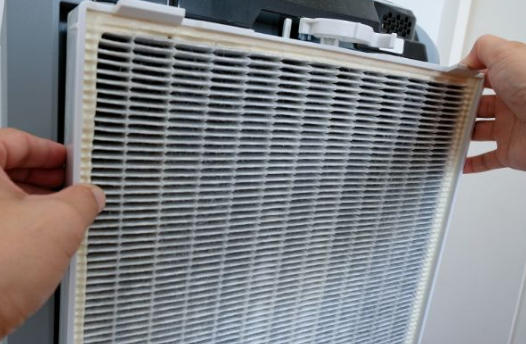
- Visual inspection of filters and housings for damage, discoloration, or evidence of bypass leakage, followed by corrective action or replacement if any anomaly is found.[6]
Consumer guidance for residential portable air cleaners likewise highlights timely replacement of HEPA Air Filters to maintain performance, often providing a recommended change interval or an indicator light on the device. In both home and industrial applications, the consensus is that a HEPA Air Filter is a precision component whose performance degrades irreversibly once the media is overloaded or damaged.[8]
Cleaning Washable HEPA Air Filters (Without Compressed Air)
Some HEPA or HEPA-style filters are marketed as washable, and manufacturers provide step-by-step cleaning instructions. Typical guidance for a washable HEPA Air Filter includes:
- Turn off and unplug the air purifier or HVAC device, then open the access panel and carefully remove the HEPA Air Filter.[3]
- Inspect the media for tears, deformation, or odor; if the HEPA Air Filter appears physically damaged or extremely clogged, replacement is often recommended rather than cleaning.[3]
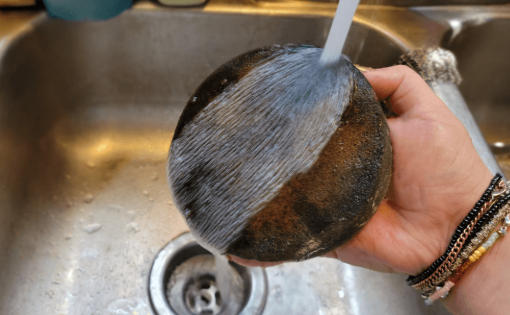
- Rinse the filter under cold running water, rotating to wash both sides, while avoiding strong scrubbing or high-pressure jets that might disturb the fiber structure.[3]
- Allow the HEPA Air Filter to air-dry completely in a clean, ventilated area before reinstallation; using external heat sources or reinserting a damp filter can lead to media damage or mold growth.[7][3]
These procedures deliberately use gentle water flow and time, not aggressive mechanical force, to preserve the structure of the HEPA Air Filter. Even with washable types, repeated cleaning cycles may gradually degrade performance, so the manufacturer's guidance for eventual replacement still applies.[5][3]
Cleaning Non-Washable HEPA Air Filters (Gentle Only)
For non-washable HEPA Air Filters, the recommended options are very limited. Some sources describe:
- Light surface vacuuming with a hose or soft-brush attachment to remove loose dust from the outer pleats, while avoiding deep penetration of the nozzle into the media.[5][3]
- Very gentle tapping (only if the manufacturer allows it) to dislodge loosely adhered dust, performed outdoors to prevent releasing particulates indoors.[5]
Even these mild approaches can risk damaging the fiber mesh or breaking seals if done too aggressively, and they rarely restore the HEPA Air Filter to near-original efficiency. Therefore, they are best viewed as short-term measures in non-critical applications, with timely replacement of the HEPA Air Filter still being the core strategy for maintaining filtration performance.[8][7]
Why Compressed Air Is Especially Inappropriate in Critical Environments
In controlled environments like pharmaceutical cleanrooms, hospital isolation rooms, and high-grade manufacturing spaces, HEPA Air Filters are central to infection control and product quality. Guidance for such facilities emphasizes engineering controls (ventilation rates, pressure cascades, HEPA efficiency) and routine verification by particle counting and leak/scan testing. Using compressed air on an in-service HEPA Air Filter could:[4][6]
- Introduce uncontrolled mechanical stress and create microscopic leaks that are difficult to detect but may compromise regulatory compliance.[6]
- Re-entrain hazardous particles, including microorganisms, into the room or maintenance area, contradicting infection control and occupational safety guidelines.[4]
For this reason, best practice is to replace HEPA Air Filters when test data or pressure drop shows that end-of-life conditions have been reached, and then confirm performance by post-installation testing, rather than attempting any compressed-air cleaning.[6]
Compressed Air and Worker Safety
Beyond filter damage, compressed air also presents safety concerns when used to blow dust from surfaces. Occupational safety guidance warns that using compressed air to clean dust from equipment or filters can create airborne dust clouds that increase inhalation risks and may even pose explosion hazards in some industrial settings. If compressed air must ever be used for maintenance tasks nearby (not on the HEPA Air Filter itself), strict controls such as low pressure, local exhaust ventilation, and appropriate respiratory protection are generally recommended.[4]
Best Practices for HEPA Air Filter Life Extension (Without Compressed Air)
To maximize the service life of a HEPA Air Filter without resorting to compressed air, consider the following practices:
- Optimize prefiltration: Use properly sized prefilters (such as MERV-rated filters) upstream of the HEPA Air Filter to remove larger particles and reduce loading.[10]
- Control contamination at the source: Implement process containment, proper gowning, and housekeeping to minimize the amount of particulate reaching the HEPA Air Filter.[4]
- Maintain proper airflow balance: Operating fans and dampers within design parameters prevents excessive dust accumulation in specific sections of the filter and helps maintain uniform loading.[6]
- Follow a documented maintenance plan: Include routine inspections, pressure-drop monitoring, and periodic testing as needed for your application, with clear criteria for when to replace the HEPA Air Filter.[10][6]
These measures reduce the temptation to extend HEPA Air Filter life with aggressive cleaning and instead keep the filtration system performing within its designed efficiency window.[1]
HEPA Air Filter Considerations for Home and Office Use
In homes and offices, HEPA Air Filters are commonly found in portable air cleaners, vacuum cleaners, and sometimes in HVAC systems. Consumer guidance highlights several key points:
- Choose an appropriately sized device and HEPA Air Filter for the room, and follow the recommended replacement interval (often every 6–12 months, depending on usage and air quality).[8]
- Avoid washing or compressed-air cleaning unless the product plainly states that the HEPA Air Filter is washable or permanent, and follow the exact instructions.[3]
- Keep the area around the air inlet clean and manage dust sources (e.g., carpets, pets, smoking) to reduce the load on the HEPA Air Filter and maintain consistent indoor air quality.[8]
For vacuums with HEPA exhaust filters, some manufacturers offer replaceable cartridges and may not support any cleaning beyond gentle tapping or vacuuming, again discouraging compressed air.[7]
HEPA Air Filter Use in Pharmaceutical and High-Purity Manufacturing (Everheal Context)
For a company like Everheal, which designs purified water systems, sterilization equipment, and clean processing lines for pharmaceutical clients, HEPA Air Filters form part of a broader contamination control strategy. In GMP-regulated or ISO-classified areas, filters are expected to comply with accepted standards such as EN 1822 and undergo periodic integrity testing documented as part of validation and qualification. When a HEPA Air Filter reaches its differential pressure limit or fails a leak test, it is removed and replaced under controlled procedures rather than being cleaned with compressed air.[6]
Integrating HEPA Air Filter management into layout planning and HVAC design helps ensure that access for safe replacement, prefiltration stages, and test ports are built into the facility from the start. This approach aligns with international expectations for risk-based contamination control and supports stable, compliant operation throughout the lifecycle of the production line.[4][6]
Step-by-Step: Decision Process Before Considering Any Cleaning
Instead of jumping directly to compressed air, use a structured decision process:
1. Identify the HEPA Air Filter type
- Check labels and manuals to see if the HEPA Air Filter is “washable,” “permanent,” or explicitly disposable.[7]
- Confirm the application: home use, office, industrial HVAC, or controlled environment.[8]
2. Assess condition and criticality
- Measure pressure drop (if applicable) and compare with recommended replacement limits.[1]
- For cleanrooms, review recent integrity test results and contamination trends.[6]
3. Apply manufacturer instructions
- If the HEPA Air Filter is washable, follow the detailed procedure (usually rinsing and air drying) and do not substitute compressed air.[3]
- If non-washable, limited vacuuming or very gentle tapping may be acceptable in non-critical applications, but only within the bounds of the manual.[5]
4. Replace when in doubt
- If there is any sign of damage, odor, or severe clogging, replace the HEPA Air Filter rather than attempting aggressive cleaning.[7]
- In regulated environments, always choose replacement over cleaning when efficiency or integrity is uncertain.[6]
Within this framework, routine use of compressed air on a HEPA Air Filter simply does not fit best practice or standards-based maintenance philosophy.[1]
Conclusion
Using compressed air to clean a HEPA Air Filter is generally not recommended and is incompatible with how HEPA media are designed to work. High-velocity air can damage the fiber structure, enlarge pores, create leaks, and re-aerosolize captured contaminants, undermining the very purpose of installing a HEPA Air Filter. In both residential and industrial settings—especially in pharmaceutical and cleanroom applications—the correct approach is to follow manufacturer instructions, use gentle methods only where explicitly permitted, and rely on scheduled replacement and proper prefiltration to maintain performance and regulatory compliance.[1][4][8][6]
FAQ
1) Can I safely use compressed air to clean any HEPA Air Filter?
No. For the vast majority of HEPA Air Filters, compressed air is unsafe because it can tear or deform the media and reduce efficiency, even if the filter looks clean afterward. Unless the manufacturer provides a very specific, low-pressure, controlled procedure—which is rare—you should avoid compressed-air cleaning and plan for replacement instead.[9][1][6]
2) How do I know if my HEPA Air Filter is washable or permanent?
Check the filter label and the equipment's user manual; washable or permanent HEPA Air Filters are normally identified clearly and accompanied by detailed cleaning instructions. If the documentation does not mention washability, assume that the HEPA Air Filter is disposable and must be replaced when dirty rather than cleaned.[7][3]
3) What is the best way to maintain a HEPA Air Filter without damaging it?
The best approach is to follow the manufacturer's maintenance schedule, replace the HEPA Air Filter when pressure drop or time limits are reached, and use effective prefilters to capture larger debris. For washable models, use gentle rinsing and thorough air-drying as instructed; for non-washable types, limit cleaning to mild methods like surface vacuuming only if the manual allows it.[10][5][1][3]
4) How often should HEPA Air Filters be replaced in cleanrooms and pharmaceutical facilities?
Replacement frequency depends on system design, operating hours, and contamination load, but many facilities use a combination of pressure-drop thresholds and periodic integrity tests (for example, annual or more frequent DOP/PAO testing) to determine replacement. Once a HEPA Air Filter fails a leak test or reaches its specified pressure-drop limit, it should be replaced rather than cleaned.[6]
5) What role do HEPA Air Filters play in home air cleaners, and why is proper maintenance important?
In home air cleaners and some HVAC units, a HEPA Air Filter removes fine particles such as dust, pollen, smoke, and some microorganisms, helping to improve indoor air quality. Proper maintenance—mainly timely replacement and adherence to cleaning instructions for washable models—ensures that the HEPA Air Filter continues to capture these pollutants effectively without overloading the fan or reducing airflow.[8][3]
Citations:
[1](https://cleanair.camfil.us/2025/09/22/hepa-filters-understanding-performance-standards-applications-and-selection-criteria/)
[2](https://www.astm.org/f1471-93.html)
[3](https://www.rabbitair.com/blogs/air-purifier/how-to-clean-a-hepa-filter-a-comprehensive-guide)
[4](https://www.cdc.gov/niosh/ventilation/prevention/air-cleanliness.html)
[5](https://filtersdirect.uk/how-to-clean-a-hepa-filter-guide/)
[6](https://csitesting.com/cleanroom-hepa-filters/)
[7](https://ushomefilter.com/blogs/air-quality/guide-to-hepa-filter-its-cleaning)
[8](https://www.epa.gov/indoor-air-quality-iaq/guide-air-cleaners-home)
[9](https://www.ashrae.org/technical-resources/filtration-disinfection)
[10](https://safetyculture.com/topics/indoor-air-quality/hepa-filter-maintenance)


