Content Menu
● What Is Pharmaceutical Preparation Manufacturing?
● How Industry Codes Classify This Activity
● Why It Feels Like A Service Industry
● Core Elements Of A Pharmaceutical Preparation System
● Manufacturing Foundation With Service Layers On Top
● The Role Of Contract Manufacturing And Development
● Integrated Systems And Turnkey Solutions
● How Pharmaceutical Preparation System Providers Deliver Ongoing Value
● Digitalization And Service‑Driven Business Models
● Implications For Companies Like Everheal
● Positioning In The Global Value Chain
● How Clients Should Evaluate Pharmaceutical Preparation System Partners
● Conclusion
● FAQ
>> 1. Is pharmaceutical preparation manufacturing officially considered a service industry?
>> 2. What exactly is a Pharmaceutical Preparation System?
>> 3. Why does pharmaceutical preparation look like a service business to many clients?
>> 4. How do outsourced manufacturing partners fit into this picture?
>> 5. How should a company like Everheal present its role in the market?
● Citations:
Pharmaceutical preparation manufacturing is officially classified as a manufacturing activity, but in reality it has become a service‑intensive, solution‑driven business model for many global companies. Modern Pharmaceutical Preparation System providers combine equipment, engineering, validation, and lifecycle support so that customers experience them as long‑term technical service partners even though their core business is manufacturing.[2][5]
What Is Pharmaceutical Preparation Manufacturing?
Pharmaceutical preparation manufacturing focuses on producing finished drug products in specific dose forms such as tablets, capsules, vials, ampoules, ointments, solutions, and suspensions for human or animal use. In classification systems like NAICS 325412, these activities explicitly fall under “Pharmaceutical Preparation Manufacturing,” emphasizing that the central operation is the industrial transformation of inputs into regulated medicinal products, not pure services.[5][8][2]
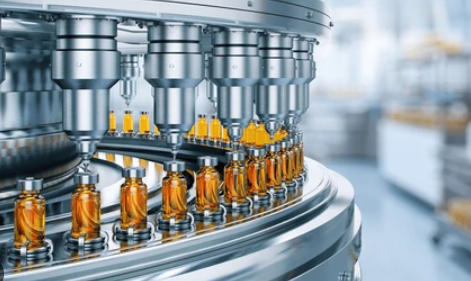
A complete Pharmaceutical Preparation System supports the full sequence from raw material handling and formulation through sterile processing, filling, sealing, and final packaging. The system also connects to clean utilities, environmental control, and quality systems to ensure that every batch meets stringent safety and efficacy requirements across its lifecycle.[3][10]
How Industry Codes Classify This Activity
In the North American Industry Classification System, pharmaceutical preparation manufacturing belongs to NAICS 3254 (Pharmaceutical and Medicine Manufacturing) and more specifically to NAICS 325412 for pharmaceutical preparations. These codes clearly place the industry inside the wider manufacturing sector (NAICS 31–33), not the commercial or professional service sectors.[9][2][3]
NAICS 32541, covering pharmaceutical and medicine manufacturing, includes the formulation, packaging, and labeling of drug preparations, which means that even packaging operations related to pharmaceutical preparations are still treated as manufacturing activities. Similar approaches appear in other statistical systems, which group drug plants with chemical and medicine manufacturers rather than service providers, underlining that the core identity is industrial production.[1][7][10][2]
Why It Feels Like A Service Industry
Even though it is formally manufacturing, pharmaceutical preparation has steadily adopted a service‑oriented business model. Drug companies frequently rely on partners that provide formulation development, scale‑up, technology transfer, and commercial production as long‑term outsourced arrangements, which feel very similar to high‑end technical services for clients.[6][1]
A Pharmaceutical Preparation System is rarely sold as isolated equipment; instead, vendors provide project consulting, risk assessment, commissioning, qualification, and training bundled around the machines. This combination makes customers perceive the relationship as a continuous service engagement centered on performance, compliance, and time‑to‑market, rather than a one‑time equipment purchase.[3][6]
Core Elements Of A Pharmaceutical Preparation System
A well‑designed Pharmaceutical Preparation System integrates several critical subsystems and processes to produce safe and effective medicines consistently. Typical components include:
- Purified water generation and distribution loops for preparation, rinsing, and cleaning of contact surfaces.
- Pure steam generation for sterilizing process equipment, tanks, and critical piping in aseptic areas.
- Multifunctional distillation systems for producing water for injection that meets pharmacopeial specifications.
- Compounding vessels and mixing systems for solutions, suspensions, and emulsions under controlled conditions.
- Liquid filling and sealing machines for vials, ampoules, bottles, and syringes, often in aseptic environments.
- Sterilization systems such as autoclaves and integrated steam‑in‑place capabilities to ensure microbiological safety.
Together, these subsystems form a connected Pharmaceutical Preparation System that supports both sterile and non‑sterile manufacturing with repeatable, auditable processes. They also interface with quality control laboratories, documentation systems, and electronic records so that every batch can be traced and reviewed for regulatory inspections and market release.[2][3]
Manufacturing Foundation With Service Layers On Top
The fundamental reason pharmaceutical preparation is still recognized as manufacturing is that the main value comes from producing physical medicinal goods at controlled quality and scale. Plants invest heavily in buildings, cleanrooms, utilities, and specialized equipment to transform active ingredients and excipients into high‑value finished products that can be shipped, stored, and dispensed to patients.[9][3]
However, each stage of the Pharmaceutical Preparation System lifecycle adds significant service content. Design engineering, process simulation, documentation preparation, and regulatory consulting are knowledge‑intensive services delivered before the first piece of equipment is installed. After installation, qualification, maintenance, calibration, and performance optimization become ongoing service activities that protect the customer's investment and compliance over many years.[10][6]
The Role Of Contract Manufacturing And Development
Contract manufacturing organizations and contract development and manufacturing organizations are clear examples of the service‑like side of pharmaceutical preparation. They own and operate manufacturing facilities, but they sell access to capacity, expertise, and regulatory infrastructure as services to companies that may not wish to build their own plants.[1][6]
These partners often design or adapt Pharmaceutical Preparation System configurations specifically for each client's products, then operate them according to agreed quality and supply targets. From the client's perspective, this feels like purchasing an integrated development and manufacturing service rather than buying a product, even though the underlying activity remains regulated pharmaceutical manufacturing.[7][6]
Integrated Systems And Turnkey Solutions
Many modern suppliers position themselves as solution providers that can deliver full turnkey Pharmaceutical Preparation System projects. They support clients from feasibility and concept design through detailed plant layout, equipment selection, utility design, and automation strategy so that the final facility operates as a coherent, compliant whole rather than as separate islands of machinery.[10][3]
Turnkey partners coordinate installation, start‑up, and process validation, helping clients to move from bare building to commercial production as quickly and safely as possible. This approach reinforces the perception of pharmaceutical preparation as a service‑rich area: customers focus on outcomes such as qualified capacity and regulatory approvals, while providers manage the complex technical details behind the scenes.[1][10]
How Pharmaceutical Preparation System Providers Deliver Ongoing Value
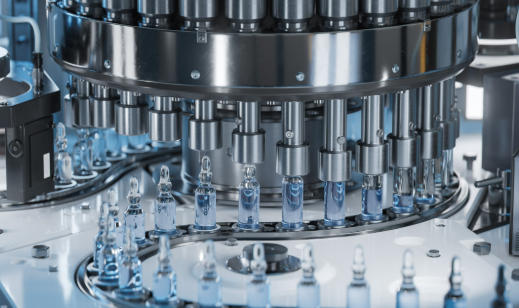
Once a Pharmaceutical Preparation System is in operation, service‑oriented work becomes even more visible. Providers offer preventive maintenance, spare‑parts management, periodic calibration, software upgrades, and performance diagnostics to keep systems running at high availability and efficiency. This is especially important for critical utilities like purified water, pure steam, and distillation units that support many lines at once.[2][3]
The increasing use of automation and data analytics means that providers can remotely monitor key parameters and help customers quickly investigate deviations or unexpected trends. This kind of continuous improvement and troubleshooting support feels very much like a technical service, even though the activity is tightly tied to the operation of manufacturing assets within the Pharmaceutical Preparation System.[9][10]
Digitalization And Service‑Driven Business Models
Digital transformation is accelerating the shift toward service‑centric models around pharmaceutical manufacturing assets. By combining sensors, control systems, and data platforms, companies can offer monitoring, optimization, and performance‑based contracts for their Pharmaceutical Preparation System installations. Customers may pay for uptime, output, or quality levels rather than just the initial purchase price of equipment.
These service contracts align the interests of system providers and pharmaceutical manufacturers because both parties want stable, efficient, and compliant operation. While the regulatory classification still places pharmaceutical preparation in manufacturing, the commercial reality is that advanced digital and analytical services now play a central role in how Pharmaceutical Preparation System solutions are delivered and supported worldwide.[3][9]
Implications For Companies Like Everheal
For a Chinese pharmaceutical‑equipment company such as Everheal, which offers purified water systems, pure steam generators, multifunctional distilled‑water machines, liquid filling‑sealing machines, and sterilization systems, this hybrid identity is especially important. The company's core revenues and assets reflect a manufacturing business that supplies physical equipment and integrated Pharmaceutical Preparation System solutions to clients.[3]
At the same time, Everheal differentiates itself by designing customized factory layouts, optimizing pipeline routing, and providing full production‑line construction and commissioning services for global customers. These activities clearly belong to the service side of the business, enabling clients to treat Everheal as a long‑term technical partner responsible for the performance of the overall Pharmaceutical Preparation System, not only for individual machines.[10]
Positioning In The Global Value Chain
In the global pharmaceutical value chain, preparation manufacturing sits between upstream research and active ingredient production and downstream distribution and health‑care delivery. Manufacturers must collaborate closely with R&D teams, regulatory agencies, and logistics providers to ensure that products leaving the Pharmaceutical Preparation System remain safe, effective, and compliant throughout their shelf life.[6][3]
By highlighting both manufacturing expertise and service capabilities, companies providing Pharmaceutical Preparation System solutions can occupy a strategic position as integrators in this chain. They help translate laboratory methods into robust commercial processes and make sure that facilities and equipment can support multiple products and market expansions over time, which strengthens their role as indispensable partners rather than commodity suppliers.[7][6]
How Clients Should Evaluate Pharmaceutical Preparation System Partners
When selecting a Pharmaceutical Preparation System supplier, clients should recognize that they are choosing not only hardware but also a long‑term service partner. Critical evaluation points include process engineering capability, understanding of regulatory expectations, ability to deliver documentation, and experience with qualification and inspection support across multiple markets.[6][3]
Clients should also assess the provider's after‑sales service organization, response times, spare‑parts logistics, and digital support capabilities, because these factors directly affect uptime and compliance over the life of the Pharmaceutical Preparation System. A partner that combines strong manufacturing capacity with structured, reliable services will usually provide a lower total cost of ownership and fewer compliance problems over time.[10][1]
Conclusion
Pharmaceutical preparation manufacturing is formally and economically a manufacturing industry, as reflected in major classification systems that place it within the pharmaceutical and medicine manufacturing group. The core of the activity remains the controlled transformation of materials into finished dose forms inside a regulated environment supported by a comprehensive Pharmaceutical Preparation System.[2][3]
However, the way companies compete and create value in this field is increasingly service‑driven. Integrated Pharmaceutical Preparation System providers now combine equipment with process design, turnkey project execution, qualification, maintenance, and digital optimization, so customers experience them as technical service partners as much as manufacturers. For companies like Everheal, emphasizing both manufacturing strength and service excellence is the key to building durable relationships and helping global pharma clients operate safe, efficient, and compliant preparation facilities.[1]
FAQ
1. Is pharmaceutical preparation manufacturing officially considered a service industry?
No. Pharmaceutical preparation manufacturing is officially categorized as part of the pharmaceutical and medicine manufacturing sector, which belongs to the broader manufacturing group rather than the service sector. This classification is confirmed by industry codes such as NAICS 325412 and 32541 that describe the activity as manufacturing pharmaceutical preparations and related products.[5][2]
2. What exactly is a Pharmaceutical Preparation System?
A Pharmaceutical Preparation System is an integrated combination of process equipment and utilities used to convert raw materials and active ingredients into finished dosage forms under controlled conditions. It typically includes purified water systems, pure steam generators, distillation units, compounding vessels, filling‑sealing lines, and sterilization equipment that work together to support GMP‑compliant drug production.[3][2]
3. Why does pharmaceutical preparation look like a service business to many clients?
To many clients, pharmaceutical preparation looks like a service business because providers deliver much more than machines: they supply process design, factory layout, documentation, qualification, and long‑term maintenance support. These service layers surround the Pharmaceutical Preparation System and make the relationship feel like an ongoing technical service partnership even though the central activity remains manufacturing.[6][10]
4. How do outsourced manufacturing partners fit into this picture?
Outsourced partners such as contract manufacturing organizations and similar entities manage their own plants and Pharmaceutical Preparation System assets while producing medicines on behalf of multiple clients. They treat manufacturing capacity, regulatory infrastructure, and process expertise as services that customers can purchase without building their own factories, which further blurs the line between manufacturing and services in practical business terms.[7][6]
5. How should a company like Everheal present its role in the market?
A company like Everheal should present itself as a manufacturing specialist that delivers service‑rich, end‑to‑end Pharmaceutical Preparation System solutions. By emphasizing its ability to supply purified water and pure steam systems, distillation units, filling‑sealing equipment, sterilization systems, and customized factory layouts along with validation and lifecycle support, it can position itself as both a reliable manufacturer and a strategic technical service partner for global pharma clients.[3]
Citations:
[1](https://samsearch.co/naics-ai-lookup/32541)
[2](https://www.naics.com/naics-code-description/?code=32541)
[3](https://www.epa.gov/regulatory-information-sector/pharmaceutical-and-medicine-manufacturing-sector-naics-3254)
[4](https://www.bls.gov/oes/2023/may/naics4_325400.htm)
[5](https://www.naics.com/naics-code-description/?code=325412)
[6](https://guides.library.upenn.edu/pharmaceuticals/companyindustry)
[7](https://www.ibisworld.com/classifications/naics/32541/pharmaceutical-and-medicine-manufacturin)
[8](https://ethics.od.nih.gov/sao-naics)
[9](https://fred.stlouisfed.org/series/IPUEN3254T300000000)
[10](https://www23.statcan.gc.ca/imdb/p3VD.pl?Function=getVD&TVD=1381557&CVD=1381568&CPV=3254&CST=27012022&CLV=1&MLV=6)


