Content Menu
● Basics Of Pharmaceutical Creams
● From Lab Formula To Scalable Process
>> Defining The Target Product Profile
>> Translating Formulation Into Process Parameters
● Raw Material Handling And Weighing
>> Controlled Storage And Identification
>> Precise Weighing And Dispensing
● Preparing The Aqueous Phase
>> Generating High‑Quality Water
>> Dissolving Water‑Soluble Excipients
● Preparing The Oil Phase
>> Melting Waxes And Oils
>> Pre‑Mixing Lipophilic Additives
● Emulsification: Creating The Cream Base
>> Combining Oil And Water Under Shear
>> Managing Temperature And Viscosity
● Incorporating The Active Pharmaceutical Ingredient
>> API Addition Strategy
>> Ensuring Content Uniformity
● Deaeration, Cooling, And Final Homogenization
>> Removing Entrapped Air
>> Controlled Cooling And Texture Formation
● Transfer, Holding, And In‑Line Filtration
>> Hygienic Product Transfer
>> In‑Line Filtration And Polishing
● Filling, Sealing, And Packaging
>> Primary Filling Operations
>> Sealing, Coding, And Secondary Packaging
● Cleaning, Sterilization, And Changeover
>> Cleaning‑In‑Place And Sterilization‑In‑Place
>> Validating Cleaning Procedures
● Quality Control And Regulatory Compliance
>> Physical, Chemical, And Microbiological Testing
>> Documentation And Data Integrity
● Designing An Integrated Pharmaceutical Preparation System
>> Utility Integration: Purified Water And Pure Steam
>> Scalability And Flexibility
● Conclusion
● FAQs About Preparing Pharmaceutical Cream
>> (1) What is the main difference between ointments and pharmaceutical creams?
>> (2) How does a Pharmaceutical Preparation System improve cream quality?
>> (3) Can the same Pharmaceutical Preparation System handle multiple cream formulations?
>> (4) What factors most influence the stability of a pharmaceutical cream?
>> (5) How early should equipment considerations enter topical cream development?
● Citations:
Preparing pharmaceutical cream at industrial scale means transforming a laboratory formula into a stable, safe, and reproducible product using a well‑engineered Pharmaceutical Preparation System. This system connects purified water generation, cream kettles, homogenizers, filling machines, and cleaning solutions into a single, GMP-compliant process.
Below is an expanded, integrated guide to help you understand each step and how a complete Pharmaceutical Preparation System supports reliable cream production.
Basics Of Pharmaceutical Creams
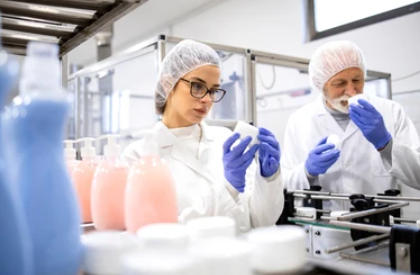
Pharmaceutical creams are semi‑solid emulsions in which oil and water phases are combined with emulsifiers to deliver an active pharmaceutical ingredient (API) onto skin or mucosal surfaces. The ratio of oil to water, the emulsifier system, and the rheology modifiers decide whether the cream is light and washable or rich and occlusive.
To move from concept to commercial product, each formulation must be matched with the right Pharmaceutical Preparation System so that melting, mixing, homogenization, and filling can be handled within validated operating ranges.
From Lab Formula To Scalable Process
Defining The Target Product Profile
Before engineering equipment or utilities, development teams define a target product profile (TPP): indication, dose strength, application site, texture, absorption rate, and packaging. This profile narrows down the choice of API form (salt, base, micronized grade), the oil and water balance, and acceptable preservative and antioxidant systems.
These formulation choices affect viscosity range, required mixing power, heat sensitivity, and shear tolerance, all of which must be supported by the Pharmaceutical Preparation System from early scale‑up through commercial batches.
Translating Formulation Into Process Parameters
Once an acceptable lab batch is identified, process development converts qualitative instructions (“mix until uniform”) into quantitative parameters. These include phase temperatures, agitation speed, homogenization time, vacuum level, cooling rate, and hold times.
The Pharmaceutical Preparation System is then specified or tuned to operate within these process windows, ensuring that each production batch closely reproduces the behavior of pilot‑scale trials while remaining robust against normal raw‑material variability.
Raw Material Handling And Weighing
Controlled Storage And Identification
APIs, oils, waxes, surfactants, preservatives, and packaging components must be stored under defined conditions and clearly labeled with batch numbers and expiry dates. Humidity‑ and light‑sensitive ingredients are kept in controlled environments to prevent degradation before use.
In a modern Pharmaceutical Preparation System, raw material management integrates with electronic batch records, barcoding, and weighing systems, which reduces human error and improves traceability.
Precise Weighing And Dispensing
Accurate weighing of each raw material is essential to dose accuracy and emulsion stability. Many facilities use load‑cell–equipped vessels or dedicated dispensing booths with balances linked to recipe-management software.
Because the Pharmaceutical Preparation System enforces in‑sequence weighing, tolerance bands, and electronic sign‑off, it becomes much easier to demonstrate compliance during audits and to investigate any out‑of‑specification (OOS) results.
Preparing The Aqueous Phase
Generating High‑Quality Water
Purified water is one of the largest components in most pharmaceutical creams, so its quality directly affects product safety and stability. A dedicated water‑treatment Pharmaceutical Preparation System—typically combining filtration, softening, reverse osmosis, and distillation—produces water that meets pharmacopeial standards for conductivity, TOC, and microbial load.
The purified water is stored in sanitary tanks and circulated through a distribution loop to the cream manufacturing kettles. Continuous circulation, appropriate velocities, and temperature control prevent microbial growth and maintain consistent water quality at all use points.
Dissolving Water‑Soluble Excipients
In a jacketed aqueous phase vessel, operators charge purified water and then add water‑soluble excipients such as humectants (e.g., glycerin), buffers, chelating agents, and hydrophilic polymers. Agitation and heating are applied to ensure complete dissolution and hydration.
The Pharmaceutical Preparation System may use inline temperature, pH, and conductivity probes to confirm that the aqueous phase has reached its specified state before moving on. This preparation step lays the foundation for emulsion stability and long‑term cream performance.
Preparing The Oil Phase
Melting Waxes And Oils
In a separate wax or oil phase vessel, the lipophilic components—emollients, waxes, fatty alcohols, and oil‑soluble emulsifiers—are charged and heated until fully molten. Jacketed vessels circulate steam, hot water, or thermal oil to bring the mixture above the highest melting point ingredient without overheating it.
As part of the Pharmaceutical Preparation System, the oil phase vessel often includes baffles and a suitable agitator to avoid stratification, as well as sampling ports to visually confirm clarity and homogeneity.
Pre‑Mixing Lipophilic Additives
Once the oil phase is fully molten, oil‑soluble antioxidants, fragrances (if allowed), and oil‑soluble preservatives can be incorporated. Gentle mixing ensures even distribution without introducing excessive air.
The target temperature of the oil phase is adjusted so that, when mixed with the aqueous phase, both will be within the validated emulsification window. This coordination is managed by the overarching Pharmaceutical Preparation System, which synchronizes phase readiness and transfer.
Emulsification: Creating The Cream Base
Combining Oil And Water Under Shear
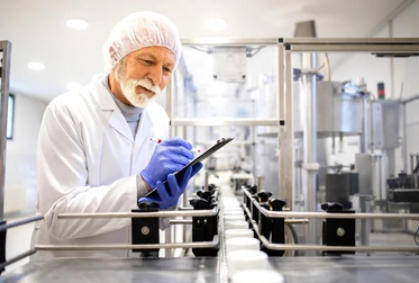
Emulsification is the heart of cream production. Under controlled conditions, one phase is slowly added into the other while agitation and, typically, high‑shear homogenization are applied. The order of addition depends on the formulation and whether the final cream is oil‑in‑water or water‑in‑oil.
High‑shear mixers or inline rotor–stator homogenizers break the oil into fine droplets dispersed in the continuous phase, creating the cream's characteristic smooth texture. The Pharmaceutical Preparation System sets and records homogenizer speed, mixing time, and temperature, enhancing batch‑to‑batch reproducibility.
Managing Temperature And Viscosity
Correct temperature management is critical during emulsification. If the mixture is too hot, emulsifiers or the API may degrade; if too cold, waxes may solidify prematurely and trap large, unstable droplets.
The Pharmaceutical Preparation System therefore controls jacket temperatures and monitors product temperature in real time, adjusting heating or cooling media as needed to keep the emulsion within the defined process window. This approach reduces the risk of phase separation and ensures a robust cream base.
Incorporating The Active Pharmaceutical Ingredient
API Addition Strategy
How and when the API is added depends on its physical and chemical properties. Water‑soluble APIs may be dissolved into the aqueous phase before emulsification, while lipid‑soluble APIs can be dissolved in the oil phase. Poorly soluble or heat‑sensitive APIs are often added after the emulsion has formed and partially cooled.
Process developers may use techniques such as levigation or wet milling to create uniform dispersions with narrow particle size distributions. These operations can be integrated into the Pharmaceutical Preparation System via inline mills or recirculation loops.
Ensuring Content Uniformity
Uniform distribution of API throughout the batch is critical. The Pharmaceutical Preparation System uses suitable agitation, recirculation, and, where necessary, high‑shear mixing to prevent settling or agglomeration once the API is incorporated.
In‑process sampling and analytical testing (for example, assay and content uniformity checks) verify that the API concentration is consistent at multiple points in the vessel. If the process is well designed and the Pharmaceutical Preparation System is correctly controlled, these tests confirm the reliability of the manufacturing method.
Deaeration, Cooling, And Final Homogenization
Removing Entrapped Air
Mixing and homogenization inevitably introduce air into the cream, which can cause oxidation, microbial growth, or filling inaccuracies. To counter this, many systems include vacuum deaeration, in which pressure in the vessel is reduced so that bubbles expand and escape from the product.
Vacuum‑capable vessels and tight seals are therefore important design features of the Pharmaceutical Preparation System for creams, allowing air removal without contamination or product loss.
Controlled Cooling And Texture Formation
After emulsification and API incorporation, the cream is cooled under controlled conditions. Cooling too quickly can lead to phase separation or an uneven crystal network in waxy components; cooling too slowly may impact throughput and energy efficiency.
The Pharmaceutical Preparation System manages jacket temperatures and mixing speed during the cooling phase to allow the cream structure to develop correctly. Rheology targets are often verified using instruments such as viscometers, and results are recorded in batch documentation for ongoing process verification.
Transfer, Holding, And In‑Line Filtration
Hygienic Product Transfer
Once the cream meets in‑process specifications, it is transferred from the main processing vessel to a holding or intermediate tank dedicated to filling. This transfer is usually performed using sanitary pumps and piping that minimize shear, dead legs, and risk of contamination.
The Pharmaceutical Preparation System may include product path automation (valves, flow meters, and pressure sensors) to route the cream correctly and avoid cross‑connections between different products or cleaning media.
In‑Line Filtration And Polishing
Prior to filling, creams are often passed through sanitary filters or screens that can capture large particulates or potential foreign bodies without damaging the emulsion. This stage is sometimes referred to as “polishing” the product.
Integrating filtration into the Pharmaceutical Preparation System ensures that every unit is filled with cream that has passed through the same controlled process steps, simplifying documentation and improving patient safety.
Filling, Sealing, And Packaging
Primary Filling Operations
The final cream is filled into primary containers such as aluminum tubes, laminated tubes, jars, or pump bottles. Volumetric or piston fillers are calibrated to deliver the correct amount of product with very tight tolerances, even at high line speeds.
Because filling equipment is part of the same Pharmaceutical Preparation System, its settings—fill volume, nozzle size, cut‑off control, and container handling—are linked to recipe data. This reduces set‑up errors, shortens changeover times, and supports serialization and traceability.
Sealing, Coding, And Secondary Packaging
After filling, containers are sealed (crimped tubes, induction‑sealed jars, or pump assemblies), and identification markings such as batch numbers and expiry dates are applied. Visual inspection systems can check for correct closure, fill level, and labeling presence.
Secondary packaging includes cartons, inserts, and outer cases suitable for shipping and storage. By designing packaging operations as part of the overall Pharmaceutical Preparation System, manufacturers can balance line speed, flexibility, and regulatory needs such as tamper evidence and serialization.
Cleaning, Sterilization, And Changeover
Cleaning‑In‑Place And Sterilization‑In‑Place
To prevent cross‑contamination between products, equipment surfaces must be thoroughly cleaned and, when necessary, sterilized between batches. Many modern cream kettles and piping systems are designed with Clean‑In‑Place (CIP) and Sterilization‑In‑Place (SIP) capability.
An integrated Pharmaceutical Preparation System automates the cleaning cycle: pre‑rinse, detergent circulation, post‑rinse, and final drying or sterilization. Recipe‑based cleaning minimizes manual handling, improves operator safety, and produces clear records for validation.
Validating Cleaning Procedures
Cleaning procedures must be validated to show that residues of product, detergent, and microorganisms are reduced below defined limits. Swab and rinse samples from critical surfaces are analyzed, and acceptance criteria are documented.
Because this is managed through the same Pharmaceutical Preparation System that controls production, manufacturers can consistently apply validated cleaning cycles, monitor performance, and adjust procedures if a new cream formulation presents additional cleaning challenges.
Quality Control And Regulatory Compliance
Physical, Chemical, And Microbiological Testing
Finished creams are subjected to a comprehensive testing program that covers appearance, odor, pH, viscosity, assay, content uniformity, preservative effectiveness, and microbiological quality. Stability studies under different temperature and humidity conditions confirm that the cream remains within specification throughout its shelf‑life.
Robust sampling plans and validated analytical methods are essential. Data generated before, during, and after production provides evidence that the Pharmaceutical Preparation System and associated processes remain in a state of control.
Documentation And Data Integrity
Regulated markets require full documentation of every step taken in producing each batch of pharmaceutical cream. This includes raw‑material certificates, equipment logs, batch manufacturing records, cleaning records, deviations, and change controls.
An advanced Pharmaceutical Preparation System often uses electronic batch records and automated data capture from instruments and controllers. Proper configuration of these systems supports data integrity principles, including traceable audit trails and secure user access management.
Designing An Integrated Pharmaceutical Preparation System
Utility Integration: Purified Water And Pure Steam
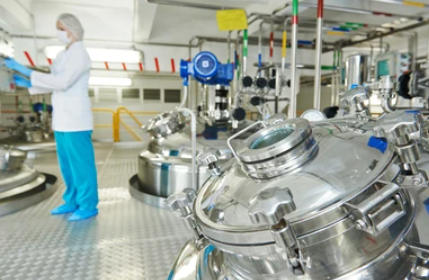
A high‑performance cream line depends on well‑designed utilities. Purified water, pure steam, compressed air, and HVAC systems must all be engineered to meet pharmaceutical standards and to interface seamlessly with production equipment.
A fully integrated Pharmaceutical Preparation System connects utility generation and distribution with process vessels, filling lines, and CIP/SIP skids. This integration simplifies commissioning and validation, while also improving energy efficiency and long‑term operating costs.
Scalability And Flexibility
Topical portfolios can evolve rapidly as new APIs and indications emerge. When designing a Pharmaceutical Preparation System, it is wise to consider future viscosity ranges, batch sizes, and packaging formats.
Modular equipment, flexible piping manifolds, and configurable control systems make it easier to scale up successful creams or introduce new formulations with minimal downtime. This flexibility helps manufacturers respond quickly to market opportunities while maintaining regulatory compliance.
Conclusion
Preparing pharmaceutical cream is far more than a simple mixing task; it is a tightly controlled, multistep journey from raw materials to finished, patient‑ready product. A well‑designed Pharmaceutical Preparation System coordinates purified water generation, oil and water phase preparation, emulsification, API incorporation, deaeration, cooling, transfer, filling, cleaning, and quality control into one coherent, validated process.
By aligning formulation development with engineering design and GMP expectations, manufacturers can build a Pharmaceutical Preparation System that consistently delivers stable, effective, and safe creams, supports efficient changeovers and scale‑up, and meets the stringent regulatory requirements of global markets.
FAQs About Preparing Pharmaceutical Cream
(1) What is the main difference between ointments and pharmaceutical creams?
Ointments are typically greasier, more occlusive preparations with a higher oil content, while pharmaceutical creams are emulsions containing both oil and water, designed for easier spreading and removal. Creams generally offer better cosmetic acceptability and can be formulated as oil‑in‑water or water‑in‑oil systems.
From a processing standpoint, both rely on a robust Pharmaceutical Preparation System, but creams place greater emphasis on precise emulsification and droplet size control.
(2) How does a Pharmaceutical Preparation System improve cream quality?
A Pharmaceutical Preparation System standardizes every critical processing step, from water preparation and phase heating to homogenization, vacuum deaeration, and filling. This standardization reduces batch variability and helps maintain consistent viscosity, API distribution, and microbiological quality.
Integrated controls and monitoring also make it easier to validate the process and quickly detect deviations that could affect cream stability or patient safety.
(3) Can the same Pharmaceutical Preparation System handle multiple cream formulations?
Yes, many manufacturers design a single Pharmaceutical Preparation System to handle multiple cream and ointment products, provided that proper cleaning, changeover, and segregation concepts are in place. CIP/SIP capabilities, validated cleaning procedures, and flexible recipe control are crucial to avoid cross‑contamination.
By building in sufficient mixing power, heating and cooling capacity, and adaptable filling options, the same line can accommodate creams with different viscosities and packaging formats.
(4) What factors most influence the stability of a pharmaceutical cream?
Key factors include the choice and level of emulsifiers, the oil‑to‑water ratio, droplet size distribution, and the presence of appropriate antioxidants and preservatives. Temperature history during processing and storage also strongly affects stability.
A carefully configured Pharmaceutical Preparation System allows precise control of shear, temperature, and cooling rate, which in turn helps maintain a stable emulsion and prevents phase separation, crystallization, or microbial growth.
(5) How early should equipment considerations enter topical cream development?
Equipment should be considered early in development, ideally when transitioning from lab to pilot scale. Ignoring equipment until late stages can lead to scale‑up surprises, such as unexpected viscosity changes or poor API dispersion.
By aligning formulation strategy with the capabilities of the intended Pharmaceutical Preparation System from the start, teams can design processes that transfer smoothly from small‑scale trials to full‑scale commercial production.
Citations:
[1](https://www.silverson.com/us/resource-library/application-reports/production-of-pharmaceutical-cream-and-ointments)
[2](https://pharmanow.live/editors-choice/ointment-cream-manufacturing-guide)
[3](https://www.dowdevelopmentlabs.com/breaking-down-the-topical-drug-product-development-process-a-comprehensive-guide/)
[4](https://www.akums.in/blog/cream-manufacturing-process-a-comprehensive-overview/)
[5](https://www.pharmaguideline.com/2015/01/manufacturing-procedure-of-ointment.html)
[6](https://www.youtube.com/watch?v=dHZ7h4F8fzQ)
[7](https://www.linkedin.com/posts/reinette-pharmatech-private-limitted_what-is-the-manufacturing-process-of-ointments-activity-7372584602764341248-imwB)
[8](https://www.scribd.com/document/837445500/PROCESS-FLOW-CHART-CREAM-MANUFACTURING)
[9](https://fluidhandlingpro.com/pharmaceutical-manufacturing/how-to-manufacture-pharmaceutical-creams-ointments-with-silverson-high-shear-mixers/)


