Content Menu
● Why healthcare is recession‑resilient
● The special role of pharmaceutical equipment
● How recessions change buying behavior
● Essential versus discretionary systems
● Cost pressure and total cost of ownership
● Regulatory pressure does not pause
● Everheal's pharmaceutical equipment portfolio
● Turnkey factory layout and production line design
● Flexibility, modularity and scalability
● Digitalization and data‑driven reliability
● Service, validation and lifecycle support
● Risks and headwinds to consider
● Strategic recommendations for Everheal
● Conclusion
● FAQ
>> 1: Does pharmaceutical equipment demand really stay stable in a recession?
>> 2: Which types of pharmaceutical equipment are most recession‑resistant?
>> 3: How can Everheal help clients control costs when the economy is weak?
>> 4: What risks do manufacturers face if they postpone equipment upgrades?
>> 5: What should buyers look for in recession‑ready pharmaceutical equipment?
● Citations:
Medical and pharmaceutical equipment usually performs better than most industries during a recession, but it is not completely immune to macroeconomic stress. The key is that healthcare demand is essential and non‑discretionary, so buyers keep investing in critical pharmaceutical equipment even when budgets shrink.

Why healthcare is recession‑resilient
Healthcare demand does not fall sharply in a downturn because patients still need diagnosis, treatment and life‑saving medicines. Unlike consumer goods, most therapies and hospital services cannot be postponed for long without serious health risks.
This structural demand means that hospitals, clinics and pharmaceutical manufacturers must keep their core operations running, including the pharmaceutical equipment that underpins safe production. Recessions may change *how* they spend, but they rarely remove the need for compliant, reliable systems.
The special role of pharmaceutical equipment
Pharmaceutical equipment occupies a unique position: it is capital‑intensive, tightly regulated and mission‑critical for public health. Without properly designed systems, manufacturers cannot produce medicines that meet international standards such as GMP, pharmacopoeias and local regulatory requirements.
This includes the full ecosystem of utilities and process equipment: purified water preparation, pure steam generation, distillation, aseptic liquid filling and sealing, sterilization, and integrated process control. Because these assets directly protect product quality and patient safety, they are treated as strategic investments rather than optional upgrades.
How recessions change buying behavior
Although demand for medicines remains relatively stable, a recession usually reshapes capital planning and investment cycles. Management teams become more cautious, extend decision timelines and subject every pharmaceutical equipment project to rigorous financial scrutiny.
Common changes include:
- Delaying or phasing large “nice‑to‑have” projects that are not immediately tied to safety or regulatory requirements.
- Stretching the life of existing pharmaceutical equipment through enhanced maintenance and selective upgrades.
- Reducing the number of parallel initiatives, focusing on a smaller set of high‑impact investments.
However, projects that address compliance gaps, production bottlenecks, or critical reliability risks are still approved because failure would be more costly than the upfront equipment expenditure.
Essential versus discretionary systems
To understand whether pharmaceutical equipment does well during a recession, it helps to distinguish essential from discretionary systems.
Essential pharmaceutical equipment includes:
- Purified water preparation systems used in virtually every dosage form.
- Pure steam generators that support sterilization‑in‑place (SIP) and critical moist‑heat applications.
- Multifunctional distillation water machines that produce water for injections and other high‑purity grades.
- Liquid filling and sealing machines for sterile injectables and other high‑value products.
- Sterilization systems (autoclaves, dry‑heat units, terminal sterilizers) that assure product and component sterility.
These assets are difficult to postpone because they sit at the core of validated production processes. Discretionary items, such as purely cosmetic automation, pilot‑scale test rigs with limited commercial impact, or non‑essential building upgrades, are far more vulnerable to cuts.
Cost pressure and total cost of ownership
Recessions push pharmaceutical companies to look beyond purchase price and examine total cost of ownership (TCO). Instead of simply asking, “What does this pharmaceutical equipment cost today?”, decision‑makers ask, “How much will it save or cost over the next ten or fifteen years?”
For a supplier, this shift opens an opportunity to highlight:
- Energy‑efficient purified water systems that minimize power and water consumption.
- Pure steam generators and distillation units designed for low steam usage and optimized heat recovery.
- Pharmaceutical equipment with low maintenance requirements, robust spare part strategies and long service intervals.
- Automation features that reduce operator time, documentation errors and batch deviations.
When vendors clearly demonstrate lifecycle savings, they can win projects even in a heavily constrained capital environment.
Regulatory pressure does not pause
Regulators do not relax core quality requirements during recessions, which is a key reason pharmaceutical equipment demand remains relatively stable. Facilities must continue to meet stringent standards on water quality, sterility assurance, cross‑contamination control and data integrity.
If inspections uncover major deficiencies—such as microbial risk in purified water loops, unreliable sterilization cycles or poorly documented liquid filling operations—manufacturers may be forced to take urgent corrective actions. In many cases, this means upgrading or replacing aging pharmaceutical equipment regardless of broader economic conditions.
Everheal's pharmaceutical equipment portfolio
For a specialized manufacturer like Everheal, this environment is demanding but also full of opportunity. Everheal's focus on core pharmaceutical equipment aligns closely with the systems that customers are least likely to cut:
- Purified water preparation systems designed for stable, compliant production of PW and other grades.
- Pure steam generators that support SIP and sterile processing.
- Multifunctional distillation water machines that can supply water for injections and high‑purity utilities from a single platform.
- Liquid filling and sealing machines for accurate, hygienic dosing and secure container closure integrity.
- Sterilization systems that deliver reliable, validated cycles for components, equipment and final product.
Because these solutions sit at the heart of GMP‑compliant plants, they remain priorities in capital planning even when other projects are frozen.
Turnkey factory layout and production line design
Recessions often accelerate strategic changes such as reshoring, capacity consolidation or the launch of new therapies. When companies redesign their footprint, they need partners who can deliver more than individual pieces of pharmaceutical equipment.
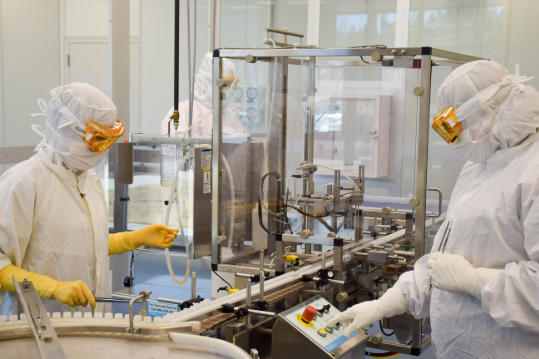
Everheal's ability to provide customized factory layout planning and complete production line solutions helps clients extract more value from every square meter and every investment. By integrating purified water systems, pure steam generators, distillation units, liquid filling machines and sterilization systems into a coherent layout, Everheal can:
- Shorten product flows and reduce material handling.
- Separate clean and unclean areas more effectively, lowering contamination risk.
- Optimize utility routing to reduce pressure drops, energy losses and dead legs in water loops.
This systems‑level approach is particularly attractive when executives are under pressure to deliver both cost savings and quality improvements.
Flexibility, modularity and scalability
In uncertain times, buyers favor pharmaceutical equipment that can adapt as demand changes. Instead of committing to a single large and rigid plant, they may prefer modular capacity that can be expanded or reconfigured as markets evolve.
Everheal can respond by emphasizing:
- Skid‑mounted purified water and pure steam systems that can be installed quickly and relocated if needed.
- Modular distillation water machines that allow staged capacity increases.
- Liquid filling and sealing lines with flexible formats to handle multiple vial, ampoule or bottle sizes.
- Sterilization systems with configurable chamber sizes or loading patterns to balance throughput and energy use.
Flexible pharmaceutical equipment reduces the perceived risk of investment, which is a powerful advantage during a recession.
Digitalization and data‑driven reliability
Another trend intensified by downturns is the push for digital monitoring and predictive maintenance. Unplanned downtime becomes even more painful when margins are tight, so operators want pharmaceutical equipment that can warn them before a problem interrupts production.
Equipment that offers integrated sensors, real‑time monitoring, event logs and connectivity to higher‑level systems enables:
- Better visibility into purified water loop performance, including conductivity, TOC, temperature and microbial trends.
- Continuous tracking of pure steam generator and distillation unit operating parameters.
- Automatic recording of critical filling and sealing data to support data integrity and batch release.
- Traceable sterilization cycles with reliable temperature and pressure profiles for every load.
By building these capabilities into its pharmaceutical equipment, Everheal can present itself as a long‑term performance partner rather than a simple hardware vendor.
Service, validation and lifecycle support
During a recession, many pharmaceutical companies face hiring freezes or staff reductions, which can strain internal engineering and validation resources. Suppliers that offer strong after‑sales support and documentation can therefore become even more valuable.
Key services that reinforce the attractiveness of pharmaceutical equipment include:
- Installation and operational qualification (IQ/OQ) packages tailored to regulatory expectations.
- Standardized validation protocols and test plans to shorten the time from shipment to commercial use.
- Training for operators, maintenance staff and quality personnel.
- Preventive maintenance programs and remote troubleshooting to reduce unplanned downtime.
For Everheal, emphasizing these lifecycle services demonstrates that investing in its pharmaceutical equipment also buys long‑term stability and compliance.
Risks and headwinds to consider
Even though pharmaceutical equipment tends to perform well in recessions, several risks must be acknowledged:
- Capital scarcity: Higher interest rates and cautious lenders can slow large projects, especially for smaller or emerging market manufacturers.
- Pipeline reprioritization: If a company shifts focus away from certain dosage forms or products, related equipment projects may be cancelled.
- Policy changes: Pricing reforms, reimbursement cuts or procurement changes can squeeze margins and reduce appetite for expansion.
Understanding these headwinds helps Everheal tailor its proposals, offering phased implementations, leasing or financing options where appropriate, and designing pharmaceutical equipment that can serve multiple product strategies.
Strategic recommendations for Everheal
To thrive when the macro environment is weak, Everheal can:
- Position its pharmaceutical equipment as essential infrastructure that protects product quality and regulatory compliance.
- Quantify lifecycle savings in energy, water, labor and downtime to justify investment even under tight budgets.
- Highlight modular, flexible designs that allow clients to scale up or adapt capacity over time.
- Strengthen service, validation and engineering support so that Everheal becomes an extension of the client's technical team.
- Communicate clearly how integrated factory layout and production line planning reduce project risk and accelerate time to market.
By following these strategies, Everheal can not only survive an economic downturn but emerge with stronger customer relationships and a more differentiated pharmaceutical equipment brand.
Conclusion
Medical and pharmaceutical equipment generally performs significantly better than most industries during a recession because it supports essential healthcare services and life‑saving medicines. While some discretionary projects may be postponed, core pharmaceutical equipment—especially purified water systems, pure steam generators, multifunctional distillation machines, liquid filling and sealing equipment, and sterilization systems—remains central to regulatory compliance and uninterrupted production. For Everheal, the key is to emphasize reliability, total cost of ownership, modularity and strong engineering support, positioning its pharmaceutical equipment and turnkey factory layout solutions as strategic tools for resilience in any economic cycle.
FAQ
1: Does pharmaceutical equipment demand really stay stable in a recession?
In many downturns, overall healthcare and pharmaceutical consumption remains relatively steady, so essential pharmaceutical equipment spending also holds up better than average. Companies may delay non‑critical upgrades, but they still invest in equipment that protects GMP compliance, sterility assurance and production continuity.
2: Which types of pharmaceutical equipment are most recession‑resistant?
Systems that directly affect product quality and patient safety are the most recession‑resistant. This includes purified water preparation units, pure steam generators, multifunctional distillation water machines, liquid filling and sealing lines for sterile injectables, and sterilization equipment used to validate aseptic and terminally sterilized products.
3: How can Everheal help clients control costs when the economy is weak?
Everheal can design pharmaceutical equipment solutions that reduce energy and water usage, simplify cleaning and sterilization, and minimize batch failures. By combining advanced equipment with optimized factory layouts and lifecycle support, Everheal helps clients lower total operating costs while maintaining or improving regulatory compliance.
4: What risks do manufacturers face if they postpone equipment upgrades?
Postponing replacement of aging purified water systems, pure steam generators or sterilizers can increase contamination risks, raise the probability of deviations and prolong unplanned downtime. Emergency breakdowns are usually more expensive and disruptive than planned projects, and they can also damage a company's regulatory standing and customer trust.
5: What should buyers look for in recession‑ready pharmaceutical equipment?
Buyers should prioritize pharmaceutical equipment with proven reliability, robust documentation and clear compliance with major regulatory standards. They should also look for modular designs, strong service and validation support, and data‑rich monitoring capabilities that enable predictive maintenance and smarter decision‑making over the full equipment lifecycle.
Citations:
[1](https://www.ipmcinc.com/insights/is-tech-envy-behind-the-big-pharma-recession/)
[2](https://www.datadynamicsinc.com/blog-is-the-pharmaceutical-industry-really-recession-proof/)
[3](https://www.csis.org/analysis/rebuilding-resilience-us-pharmaceutical-manufacturing)
[4](https://www.mckinsey.com/industries/life-sciences/our-insights/resilience-in-life-sciences-emerging-stronger-from-the-downturn)
[5](https://www.emjreviews.com/emj-gold/article/is-pharma-recession-proof/)
[6](https://www.parnassus.com/insights/article/life_sciences_tools_services_sector)
[7](https://essentialfsi.com/why-healthcare-is-recession-proof/)
[8](https://www.researchnester.com/resilience-amid-global-crisis/pharmaceuticals-industry)
[9](https://www.nasdaq.com/articles/are-healthcare-stocks-recession-proof)
[10](https://www.ey.com/en_us/insights/strategy/life-sciences-companies-can-thrive-amid-inflation-and-a-downturn)


