Content Menu
● Understanding Distilled Water in Pharma
● Distilled Water vs Purified Water
● How a Multi Function Distillation Water Machine Works
● Technical Features That Add Value
● Capacity and Scalability Considerations
● Quality, Compliance and Patient Safety
● Economic Perspective: Investment vs Lifecycle Cost
● When Distilled Water Machines Are Clearly Worth It
● Situations Where Distillation May Be Optional
● Comparing Multi Function Distillation and Membrane Systems
● Practical Implementation and Integration
● Long‑Term Reliability and Maintenance
● Are Distilled Water Machines Worth It?
● Conclusion
● FAQ
>> 1: What is a Multi Function Distillation Water Machine?
>> 2: Why do pharma plants prefer distillation for WFI?
>> 3: Is a Multi Function Distillation Water Machine energy‑efficient?
>> 4: How should a facility decide whether to invest in distillation?
>> 5: Can membrane systems replace a Multi Function Distillation Water Machine?
● Citations:
Distilled water machines are usually worth the investment for pharmaceutical, biotech and healthcare facilities that require reliable Water for Injection (WFI) and high‑purity utilities for sterile production. When properly specified and integrated, a Multi Function Distillation Water Machine delivers consistent quality, strong regulatory acceptance, and competitive lifecycle costs compared with many alternatives.[1][10]
Understanding Distilled Water in Pharma
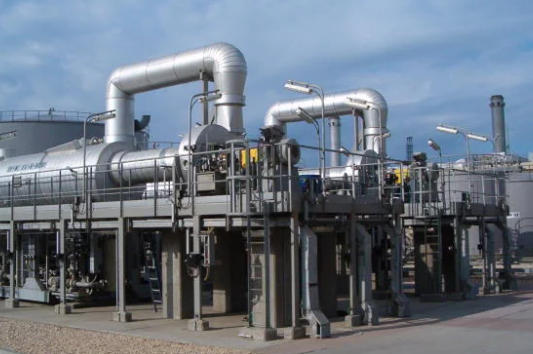
Distilled water is produced by boiling water and then condensing the steam, which removes most dissolved solids, organic impurities and microorganisms to create a highly purified product. In pharmaceutical operations, distilled water is used when the strictest quality is required, particularly for injectable products, ophthalmic formulations and sensitive medical device processes.[11][12][13]
For regulated applications, high‑purity distilled water is typically classified as Water for Injection (WFI), which must meet very tight limits on conductivity, total organic carbon (TOC), microbial counts and endotoxins according to pharmacopoeial standards. A modern Multi Function Distillation Water Machine is designed precisely to generate WFI that complies with Chinese, US and European pharmacopoeias, supporting global market access.[14][15][1]
Distilled Water vs Purified Water
“Purified water” is widely used in pharmaceutical plants for non‑sterile dosage forms, intermediate washing and general process needs, as long as it satisfies defined chemical and microbiological specifications. By contrast, distilled WFI reaches an even higher level of purity and is mandated for injections and other applications where the product comes into direct contact with the bloodstream or sterile body sites.[13][11][14]
Regulators increasingly recognize that WFI may be produced both by distillation and, in some regions, by advanced membrane‑based systems, provided they meet equivalent standards. Even so, distillation remains the most established and broadly accepted WFI technology worldwide, which is why many manufacturers still prefer a Multi Function Distillation Water Machine as the backbone of their high‑purity water system.[10][15][16][1]
How a Multi Function Distillation Water Machine Works
A Multi Function Distillation Water Machine generally uses multi‑effect distillation (MED) or vapor‑compression distillation to generate WFI and, frequently, pure steam for sterilization processes. In multi‑effect designs, steam heats the first effect, producing vapor that then serves as the heat source for subsequent effects, significantly improving thermal efficiency.[17][18][1]
This cascading process enables considerable energy savings compared with single‑effect units, often reducing utility demand by 30–40% while delivering stable output over a wide capacity range. The Multi Function Distillation Water Machine typically integrates sensors for conductivity, TOC, temperature and flow, together with programmable logic control (PLC) and data logging suitable for 21 CFR Part 11–style electronic records and audit trails.[19][1][10]
Technical Features That Add Value
Well‑designed Multi Function Distillation Water Machine solutions incorporate several advanced features that directly impact reliability and total cost of ownership. These commonly include:[1][10]
- Multi‑effect columns with optimized pressure differentials to ensure stable evaporation and condensation while minimizing steam and cooling‑water consumption.[5][1]
- High‑performance demisters and double‑tubesheet condensers that prevent droplet carryover and cross‑contamination between heating media and product water.[5][1]
- TOC‑degradation zones in high‑temperature sections to break down organic contaminants and help maintain pharmacopoeial TOC limits.[1]
- Integrated 0.22 μm hydrophobic vent filters and sanitary sampling points to maintain microbiological integrity and facilitate routine monitoring.[10][1]
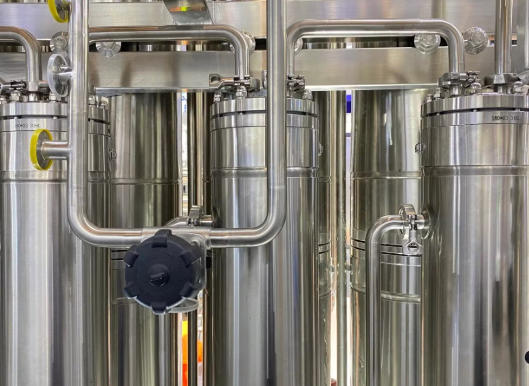
Materials of construction, such as 316L stainless steel with electropolished internal surfaces, and hygienic, drainable piping layouts further reduce the risk of biofilm formation and particulates. Together, these elements make a Multi Function Distillation Water Machine a robust and auditable utility asset for GMP facilities.[15][10][1]
Capacity and Scalability Considerations
Industrial and pharmaceutical Multi Function Distillation Water Machine systems are available in capacities ranging from tens of liters per hour to several thousand kilograms per hour of distilled water, covering small laboratories up to large vaccine and biologics plants. Manufacturers often supply modular designs that can be scaled by adding effects, columns or storage and distribution loops without replacing the entire system.[5][1]
Typical models can deliver from 50 L/h to over 10,000 L/h of WFI, allowing new facilities to start with a moderate Multi Function Distillation Water Machine and then expand as product pipelines grow. Correct sizing based on peak and average demand, redundancy needs and future expansion plans is crucial to maximize return on investment and avoid under‑ or over‑capacity.[19][10][1][5]
Quality, Compliance and Patient Safety
From a quality perspective, distillation provides a powerful physical separation method that removes non‑volatile contaminants, microorganisms and endotoxins much more effectively than many single‑stage purification methods. The high operating temperatures in a Multi Function Distillation Water Machine have an inherent sanitizing effect, greatly reducing the load on downstream storage and distribution systems.[14][17][10][1]
Regulators consider water a critical utility, and inspection findings frequently reference deficiencies in design, monitoring and maintenance of water systems. Implementing a well‑documented Multi Function Distillation Water Machine, complete with validated performance, electronic records and alarm management, can significantly reduce regulatory risk and support successful GMP inspections.[15][10][14][1]
Economic Perspective: Investment vs Lifecycle Cost
The main objection to distilled water machines is often the higher capital cost compared with simpler purified‑water skids or small laboratory units. Multi‑effect vessels, high‑grade stainless‑steel components and sophisticated control systems naturally raise the initial expenditure for a Multi Function Distillation Water Machine.[3][17][1][5]
However, economic evaluation should focus on lifecycle cost rather than only purchase price. Multi‑effect designs and vapor‑compression options can lower steam, cooling‑water and electricity consumption per liter of WFI, especially for large, continuous loads. At the same time, reduced batch failures, fewer deviations related to water quality and less frequent major modifications all contribute to long‑term savings that often outweigh the initial investment.[17][19][1]
When Distilled Water Machines Are Clearly Worth It
In many scenarios, a Multi Function Distillation Water Machine is not just “worth it,” but strategically essential. Typical examples include:[13][1]
- Production of large‑volume parenterals, vaccines, blood products and biologics, where WFI is mandatory for formulation and cleaning.[13][14]
- Sterile ophthalmic products and irrigation solutions, where strict endotoxin and particulate limits must be consistently met.[11][13]
- Facilities relying heavily on pure steam for sterilization of equipment, piping and containers, where a Multi Function Distillation Water Machine can provide both WFI and pure steam from one integrated system.[10][1]
In these cases, WFI availability and reliability directly impact plant throughput, product quality and regulatory compliance, making the robust performance of a Multi Function Distillation Water Machine a core business requirement rather than an optional upgrade.[1][10]
Situations Where Distillation May Be Optional
There are also scenarios where a full‑scale Multi Function Distillation Water Machine may not be necessary and other technologies or strategies could be more appropriate.[16][13]
- Sites focused exclusively on non‑sterile oral solids, topical preparations or low‑risk products may operate successfully with high‑quality purified water systems that do not produce WFI.[15][13]
- Very small laboratories or clinics with low, intermittent demand might rely on packaged WFI or small bench‑top distillers rather than investing in a large industrial Multi Function Distillation Water Machine.[3][11]
- In jurisdictions where cold‑WFI systems using advanced membrane treatment are fully accepted and energy prices are high, membrane‑based systems can sometimes offer a more economical option if properly designed and validated.[16][19]
Even in these cases, a thorough user requirement specification (URS), risk assessment and lifecycle cost analysis is necessary before ruling out distillation completely.[13][15]
Comparing Multi Function Distillation and Membrane Systems
For many engineering and quality teams, the key decision is not whether WFI is needed, but which technology best fits the plant's strategy. Multi Function Distillation Water Machine systems and membrane‑based WFI systems each have strengths.[16][1]
Distillation offers a thermally driven, self‑sanitizing process, global regulatory familiarity, and built‑in robustness against microbial and endotoxin challenges. Membrane‑based systems can provide lower thermal energy use and compact footprints but require rigorous biofilm control, chemical sanitization and careful validation to demonstrate equivalence.[17][15][16][1]
In practice, many modern facilities adopt a hybrid approach, using membrane‑based pretreatment followed by a Multi Function Distillation Water Machine to balance efficiency, water quality and long‑term regulatory confidence.[16][1]
Practical Implementation and Integration
Successful implementation of a Multi Function Distillation Water Machine depends on how well it is integrated into the wider water treatment and distribution architecture. Important aspects include:[10][1]
- Feed‑water conditioning (softening, filtration, RO) to protect the Multi Function Distillation Water Machine from scaling and corrosion while maintaining reliable throughput.[7][1]
- Appropriately sized WFI storage tanks with hygienic design and thermal or chemical sanitization strategies to preserve water quality between production and use points.[15][10]
- Circulating distribution loops that maintain defined velocities, temperatures and return points, ensuring that high‑quality WFI from the Multi Function Distillation Water Machine reaches all consumers with minimal degradation.[14][10]
Careful design of instrumentation and control logic, along with clear operating procedures and training, ensures that the distillation system supports continuous production rather than becoming a bottleneck.[1][10]
Long‑Term Reliability and Maintenance
Like all critical utilities, a Multi Function Distillation Water Machine requires preventive maintenance and periodic inspection to ensure long‑term reliability. Typical activities include:[9][1]
- Routine inspection of heat‑exchange surfaces, demisters and gaskets to detect scaling, fouling or mechanical wear.[5][1]
- Calibration and verification of sensors and transmitters that measure conductivity, TOC, pressure, level and temperature.[10][1]
- Scheduled testing and replacement of vent filters, valves and sealing elements according to manufacturer recommendations and site SOPs.[9][1]
When properly maintained, high‑quality multi‑effect distilled water machines can operate for many years, supporting successive product generations and regulatory re‑inspections.[9][1]
Are Distilled Water Machines Worth It?
For facilities that must reliably produce WFI and pure steam for sterile manufacturing, a Multi Function Distillation Water Machine is generally worth the investment and often the most future‑proof option. Although the initial cost is higher than simpler purified‑water systems, the benefits in quality, compliance, patient safety and long‑term operational stability typically justify the expenditure.[19][17][13][1]
Where product portfolios are low‑risk, WFI demand is minimal, or advanced membrane‑based WFI systems are fully accepted and economically favorable, a distilled water machine may be optional rather than essential. The final decision should combine regulatory expectations, quality objectives, lifecycle cost analysis and the strategic growth plans of the pharmaceutical or biotech facility.[19][13][15][16]
Conclusion
Distilled water machines play a central role in modern pharmaceutical and biotech utilities, providing high‑purity WFI and, in many designs, pure steam from a single integrated platform. A well‑engineered Multi Function Distillation Water Machine offers strong microbial and endotoxin control, high energy efficiency through multi‑effect designs, and broad regulatory acceptance across major markets.[17][1][10]
When matched correctly to capacity needs and integrated with appropriate pretreatment, storage and distribution, such systems can reduce batch failures, simplify audits and support expansion for years to come. For plants producing sterile injectables, vaccines and other high‑risk products, a Multi Function Distillation Water Machine is usually not just “worth it,” but fundamental to safe, compliant, and scalable manufacturing.[13][17][19][1]
FAQ
1: What is a Multi Function Distillation Water Machine?
A Multi Function Distillation Water Machine is a multi‑effect or vapor‑compression distillation system that continuously produces WFI‑grade distilled water and often pure steam, using several stages of evaporation and condensation to improve energy efficiency. It is designed to meet pharmacopoeial specifications for injectable water and is widely used in GMP pharmaceutical and biotech facilities.[17][1][10]
2: Why do pharma plants prefer distillation for WFI?
Pharmaceutical plants often prefer distillation because it provides a robust thermal barrier against microorganisms, endotoxins and many dissolved impurities, while operating at self‑sanitizing temperatures. Distillation has a long history of regulatory acceptance, making a Multi Function Distillation Water Machine a conservative but reliable choice for WFI generation.[14][15][1]
3: Is a Multi Function Distillation Water Machine energy‑efficient?
Yes, modern Multi Function Distillation Water Machine designs are engineered for energy efficiency through multi‑effect arrangements and heat‑recovery schemes that reuse vapor energy across several stages. Compared with traditional single‑effect units, they can significantly reduce steam and cooling‑water consumption per liter of WFI produced.[18][19][1]
4: How should a facility decide whether to invest in distillation?
Facilities should base the decision on product risk profiles, regulatory expectations, required water grades, current and future WFI demand and full lifecycle cost analysis. If sterile injectables, biologics or other high‑risk products are a major focus, a Multi Function Distillation Water Machine is usually the most secure long‑term solution.[15][19][1][13]
5: Can membrane systems replace a Multi Function Distillation Water Machine?
Advanced membrane systems can produce WFI in some regions if they meet equivalent standards and are carefully designed, validated and maintained. However, many manufacturers still favor a Multi Function Distillation Water Machine because of its strong track record, inherent thermal sanitization and widespread global acceptance.[16][1][10][15]
Citations:
[1](https://www.molewater.com/pharmaceutical-multi-effect-distilled-water-generatorwfi-system)
[2](https://www.medicalexpo.com/medical-manufacturer/water-distiller-pharmaceutical-industry-60099.html)
[3](https://www.newater.com/distilled-water-system-laboratory-purifier/)
[4](https://www.labtron.com/stainless-steel-water-distillers/lswd-a23)
[5](https://www.spm.so/product/ld-multi-effect-distilled-water-machine/)
[6](https://www.purewaterinc.com/product/c-50-commercial-water-distiller/)
[7](https://jndwater.com/product/industrial-distilled-water-machine/)
[8](https://watertreatment.en.made-in-china.com/product/xqGEiUwKHvku/China-cGMP-Requirements-Electric-Heated-Distilled-Water-Machine-for-Pharmaceutical-Use-WFI.html)
[9](http://pharm-equipment.com/2-2-water-distiller.html)
[10](https://www.meco.com/an-end-users-guide-to-water-for-injection/)
[11](https://www.newater.com/purified-water-vs-distilled-water/)
[12](https://atlas-scientific.com/blog/is-purified-water-the-same-as-distilled-water/)
[13](https://www.molewater.com/which-pharmaceutical-water-type-is-right-for-your-application)
[14](https://www.fda.gov/inspections-compliance-enforcement-and-criminal-investigations/inspection-technical-guides/water-pharmaceutical-use)
[15](https://www.ema.europa.eu/en/documents/scientific-guideline/guideline-quality-water-pharmaceutical-use_en.pdf)
[16](https://blog.veoliawatertech.com/en-us/revolutionizing-pharmaceutical-water-the-advantages-of-membrane-systems-for-producing-water-for-injection)
[17](https://www.meco.com/vapor-compression-vs-multiple-effect-distillation/)
[18](https://www.wemacpharma.com/application/multi-effect-water-distiller-and-wfi-storage)
[19](https://www.fortunebusinessinsights.com/multiple-effect-distillation-market-113522)


