Content Menu
● Tajikistan pharma and water treatment landscape
● Why water treatment matters in pharmaceutical manufacturing
● Core roles of Pharmaceutical Water Trearment Equipment Manufacturers And Suppliers
● Main types of pharmaceutical water and utility equipment
● Everheal: profile of a specialized supplier
● Everheal purified water preparation systems
● Multifunctional distilled water and WFI generation
● Pure steam generators and sterilization systems
● Storage, distribution and control of pharmaceutical water
● Integrated factory layout planning for Tajikistan pharma plants
● Cooperation models in Tajikistan
● Design and validation considerations for Tajikistan projects
● Lifecycle service and operation support
● How Tajikistan companies can select the right partners
● Future outlook for pharmaceutical water treatment in Tajikistan
● Conclusion
● FAQ
>> 1. How important is purified water quality for Tajikistan pharmaceutical plants?
>> 2. What is the difference between purified water and water for injection (WFI)?
>> 3. Can Everheal support turnkey projects in Tajikistan, from design to installation?
>> 4. How do pure steam generators and sterilizers work together in a pharma plant?
>> 5. What should Tajikistan buyers check when comparing Pharmaceutical Water Trearment Equipment Manufacturers And Suppliers?
● Citations:
Everheal is a China-based specialist in pharmaceutical equipment that works closely with Pharmaceutical Water Trearment Equipment Manufacturers And Suppliers and end users in emerging markets such as Tajikistan. This article explains the Tajikistan market context, key equipment types, how global Pharmaceutical Water Trearment Equipment Manufacturers And Suppliers support local pharma plants, and how Everheal can partner with Tajik customers on complete plant layouts and production lines.[9][10]

Tajikistan pharma and water treatment landscape
Tajikistan's pharmaceutical sector is still relatively small and depends heavily on imported medicines, process technologies, and critical utilities such as purified water and pure steam systems. At the same time, the country is investing in water, sanitation and hygiene (WASH) in healthcare facilities, which encourages hospitals and drug manufacturers to upgrade their water and sterilization infrastructure.[10][11]
Local manufacturers must cope with variable raw water quality, aging municipal networks and regional differences in hardness and contamination. To meet international expectations, they need support from experienced Pharmaceutical Water Trearment Equipment Manufacturers And Suppliers that can design and deliver complete, compliant water and clean utility systems.[9][12][13]
Why water treatment matters in pharmaceutical manufacturing
Water is one of the most widely used materials in pharmaceutical production, serving as an ingredient, a cleaning agent and a critical utility for steam and temperature control. Poorly treated water can introduce chemical, particulate or microbiological contamination, leading to batch failures, product recalls and regulatory issues.[1][13]
Regulators require pharmaceutical plants to control the full water cycle, including treatment, storage, distribution, monitoring and periodic qualification. Pharmaceutical Water Trearment Equipment Manufacturers And Suppliers therefore design systems to meet strict pharmacopeial standards for Purified Water, Water for Injection (WFI) and sometimes special grades for laboratory or diagnostic uses.[6][13][14]
Core roles of Pharmaceutical Water Trearment Equipment Manufacturers And Suppliers
Global Pharmaceutical Water Trearment Equipment Manufacturers And Suppliers provide more than standalone machines; they supply engineered solutions with documentation and lifecycle services. Their scope usually includes process design, equipment selection, automation, factory testing, site installation support, qualification assistance and long-term service.[2][5][6]
For markets like Tajikistan, these suppliers must also adapt to local water conditions, infrastructure constraints and regulatory expectations when exporting systems or cooperating with regional partners. Companies with strong engineering experience can help Tajik investors reduce project risks and avoid under-sized or non-compliant water systems.[7][2][6][9]
Main types of pharmaceutical water and utility equipment
Leading Pharmaceutical Water Trearment Equipment Manufacturers And Suppliers typically offer a complete portfolio of purified water, WFI and clean steam solutions. Everheal focuses on these core systems when serving global customers, including Tajikistan pharma projects.[5][6]
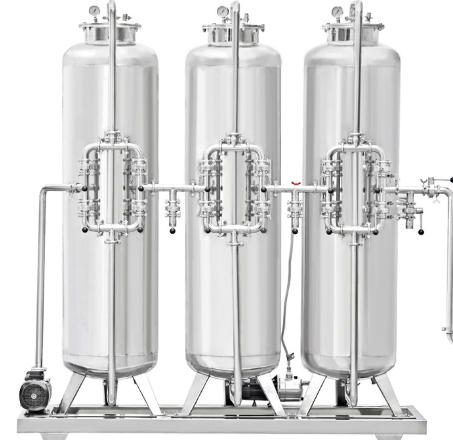
- Purified water preparation systems: Integrated pretreatment, reverse osmosis and polishing units that produce Purified Water for manufacturing and cleaning.[13][1]
- WFI and multifunctional distilled water machines: Distillation or advanced membrane-based systems that generate WFI-quality water for injectables and other high-risk applications.[3][6]
- Pure steam generators: Systems that transform high-quality feed water into clean steam suitable for sterilization and SIP processes.[6]
- Storage and distribution systems: Hygienic tanks and sanitary loops that maintain water quality through controlled circulation, temperature, velocity and sampling.[5][6]
- Utilities for filling and sterilization lines: Liquid filling and sealing machines, sterilizers and autoclaves that depend on stable pure water and steam utilities.[15][6]
These elements work together to form an integrated clean utility backbone that Tajikistan pharmaceutical plants can source from experienced Pharmaceutical Water Trearment Equipment Manufacturers And Suppliers.[5][6]
Everheal: profile of a specialized supplier
Everheal is a Chinese company focusing on pharmaceutical equipment, supplying purified water preparation systems, pure steam generators, multifunctional distilled water machines, liquid filling and sealing machines, and sterilization systems. The company also provides customized factory layout planning and complete production line construction services for global customers, including those in Central Asia.[2]
By combining R&D, equipment manufacturing and engineering support, Everheal can act as a turnkey partner rather than just a component vendor. For Tajikistan clients, this integrated approach reduces coordination work between multiple Pharmaceutical Water Trearment Equipment Manufacturers And Suppliers and helps ensure that the final plant operates as one coherent system.[2][6][5]
Everheal purified water preparation systems
Everheal's purified water preparation systems are designed to handle a wide variety of raw water conditions while consistently delivering pharmacopeia-compliant Purified Water. Typical configurations combine pretreatment (such as media filtration, carbon filtration and softening) with reverse osmosis and polishing technologies like continuous electrodeionization or ion exchange.[1][6]
For Tajikistan pharmaceutical facilities, these systems can be adapted to the specific conductivity, hardness and microbiological profile of local water sources. Pharmaceutical Water Trearment Equipment Manufacturers And Suppliers such as Everheal can perform water analyses and propose process flows that balance capital cost, operating cost and regulatory safety.[9][1][6]
Multifunctional distilled water and WFI generation
Multifunctional distilled water machines are used to produce WFI-quality water, which must meet stringent limits for microorganisms and endotoxins. Technologies such as multi-effect distillation, vapor compression distillation and membrane-based WFI generation are commonly used by Pharmaceutical Water Trearment Equipment Manufacturers And Suppliers.[3][6][5]
Everheal designs these systems to integrate seamlessly with upstream pretreatment and purified water units, ensuring reliable feed water quality and stable WFI output. For Tajikistan plants, properly engineered WFI systems are essential for injectable products, ophthalmics and other high-risk formulations intended for export markets.[11][6]
Pure steam generators and sterilization systems
Pure steam is required for sterilization-in-place and autoclave processes because traditional boiler steam may contain additives that cannot contact pharmaceutical equipment surfaces. Pharmaceutical Water Trearment Equipment Manufacturers And Suppliers therefore supply pure steam generators that use high-purity feed water and are built from hygienic materials.[6][5]
Everheal supports Tajikistan clients with pure steam generators and sterilization equipment designed for reliable temperature, pressure and steam quality control. Integrated design of the pure steam system and sterilizers reduces compatibility issues and simplifies qualification of critical sterilization processes.[14][6]
Storage, distribution and control of pharmaceutical water
Even when generation systems are properly designed, poor storage and distribution can compromise water quality. Pharmaceutical Water Trearment Equipment Manufacturers And Suppliers therefore pay close attention to tank design, loop materials, slope, velocity and temperature control.[5][6]
Everheal can offer hygienic storage tanks and distribution loops fabricated in appropriate stainless steel grades with orbital welding and high-quality surface finishes. Automation systems provide monitoring of key parameters such as conductivity, TOC, temperature and flow, which is essential for GMP compliance and long-term reliability.[14][6][5]
Integrated factory layout planning for Tajikistan pharma plants
One of Everheal's strengths compared with many other Pharmaceutical Water Trearment Equipment Manufacturers And Suppliers is the ability to provide overall factory layout planning and cleanroom zoning. For Tajikistan investors, this means a single partner can consider process flows, utility rooms, technical corridors, equipment placement and maintenance access from the beginning.[7][2]
By coordinating production areas with purified water, WFI and pure steam routes, Everheal helps reduce cross-contamination risk and improve operational efficiency. This integrated planning is particularly valuable in emerging markets, where local design experience with complex pharmaceutical plants may be limited.[11][2][7]
Cooperation models in Tajikistan
In Tajikistan, pharmaceutical projects often involve a mix of local and international stakeholders, including investors, engineering firms and equipment suppliers. Pharmaceutical Water Trearment Equipment Manufacturers And Suppliers must therefore adopt flexible cooperation models that fit local capabilities and regulations.[2][7][9][11]
Everheal can act as a process leader that coordinates with Tajik civil contractors and installation companies while supplying core water and utility systems from China. This model allows local partners to handle construction and basic utilities, while specialized Pharmaceutical Water Trearment Equipment Manufacturers And Suppliers deliver the high-purity systems and technical know-how.[2][5]
Design and validation considerations for Tajikistan projects
High-purity water systems must not only perform technically but also satisfy regulatory expectations for documentation and validation. Pharmaceutical Water Trearment Equipment Manufacturers And Suppliers typically provide design documents, material certificates, functional descriptions, test records and operation manuals as part of a validation-ready package.[13][14][6][5]
Everheal can support Tajikistan clients with user requirement specifications, design qualification support and guidance on installation and operational qualification for water, WFI and pure steam systems. This support makes it easier for local companies to demonstrate compliance during inspections by national authorities and international partners.[11][14]
Lifecycle service and operation support
Water systems require continuous attention over their operating life to maintain performance and compliance. Pharmaceutical Water Trearment Equipment Manufacturers And Suppliers therefore offer preventive maintenance, spare parts, upgrades and remote monitoring services.[8][2][6]
Everheal can help Tajikistan customers structure maintenance plans, periodic sanitization procedures and performance checks for key components like membranes, resin beds, distillation columns and storage tanks. This lifecycle approach helps minimize unplanned downtime and extends the useful life of high-value Pharmaceutical Water Trearment Equipment Manufacturers And Suppliers assets in the plant.[8][6]
How Tajikistan companies can select the right partners
When Tajikistan pharmaceutical and healthcare companies look for Pharmaceutical Water Trearment Equipment Manufacturers And Suppliers, they should consider several key criteria. First, regulatory and GMP experience in pharmaceutical projects is critical because water systems must meet strict quality and documentation requirements.[7][13][14][2]
Second, buyers should review technical capabilities in purified water, WFI, pure steam and wastewater treatment, as many sites need an integrated solution rather than isolated machines. Third, they should evaluate service and training support, especially for markets where local technical expertise in high-purity water systems is still developing. Everheal's combination of equipment supply, engineering design and long-term support makes it a strong candidate for Tajikistan projects.[8][2][6][7]
Future outlook for pharmaceutical water treatment in Tajikistan
As Tajikistan continues to improve its healthcare infrastructure and encourage local medicine production, demand for high-quality water treatment equipment will grow. Global and regional Pharmaceutical Water Trearment Equipment Manufacturers And Suppliers are likely to play a key role by supplying advanced technologies, training and project experience.[10][2][6][11]
Everheal aims to expand cooperation with Tajikistan partners by offering tailored purified water, WFI, pure steam and sterilization solutions that match local needs and investment budgets. With ongoing regulatory tightening worldwide, early investment in robust Pharmaceutical Water Trearment Equipment Manufacturers And Suppliers systems will help Tajik producers compete in export markets and secure long-term growth.[13][2][6]
Conclusion
Tajikistan's pharmaceutical sector is developing and remains dependent on imported technology for high-purity water, WFI and pure steam systems. Working with experienced Pharmaceutical Water Trearment Equipment Manufacturers And Suppliers allows local plants to overcome raw water challenges, meet international pharmacopeial standards and support national healthcare improvements.[9][10][2][11]
Everheal offers Tajikistan customers a comprehensive package covering purified water preparation systems, pure steam generators, multifunctional distilled water machines, liquid filling and sealing machines, sterilization systems and complete plant layout planning. By combining engineering design, equipment manufacturing and lifecycle support, Everheal positions itself as a reliable partner for Pharmaceutical Water Trearment Equipment Manufacturers And Suppliers projects in Tajikistan and the wider Central Asian region.[2][5]
FAQ
1. How important is purified water quality for Tajikistan pharmaceutical plants?
Purified water quality directly affects product safety, equipment cleanliness and regulatory compliance, especially for oral liquids, syrups and non-sterile formulations. In Tajikistan, where incoming water quality can fluctuate, properly engineered systems from reliable Pharmaceutical Water Trearment Equipment Manufacturers And Suppliers are essential to maintain stable, pharmacopeia-compliant purified water.[1][9][13]
2. What is the difference between purified water and water for injection (WFI)?
Purified water is used for many formulations and cleaning tasks, while WFI must meet stricter limits for microbial and endotoxin content and is typically used for injectable products and other high-risk applications. WFI is usually produced by distillation or advanced membrane technologies, and Pharmaceutical Water Trearment Equipment Manufacturers And Suppliers provide validated generation and distribution systems to maintain its quality.[3][6][13][5]
3. Can Everheal support turnkey projects in Tajikistan, from design to installation?
Everheal provides not only water treatment equipment but also customized factory layout planning, utility design and full production line construction for global clients, which is well suited to Tajikistan projects. The company can coordinate design, manufacturing, delivery, installation guidance, commissioning and qualification support to ensure that purified water, WFI and pure steam systems operate as one integrated solution.[2][5]
4. How do pure steam generators and sterilizers work together in a pharma plant?
Pure steam generators convert purified water or WFI into clean steam without boiler additives, and this steam feeds autoclaves and SIP systems for sterilizing equipment and piping. Sterilizers rely on stable steam pressure, temperature and quality, so Pharmaceutical Water Trearment Equipment Manufacturers And Suppliers design pure steam and sterilization systems as one coordinated package for reliable operation and validation.[14][6]
5. What should Tajikistan buyers check when comparing Pharmaceutical Water Trearment Equipment Manufacturers And Suppliers?
Buyers should assess suppliers' pharma references, GMP and validation know-how, technical capabilities in purified water, WFI and pure steam, and their ability to deliver integrated solutions and long-term service. It is also important to confirm that proposed systems are adapted to Tajikistan's raw water characteristics and infrastructure, with robust pretreatment, automation and lifecycle support to ensure sustainable performance.[6][8][9][2]
Citations:
[1](https://www.watertechnologies.com/industries/pharmaceuticals)
[2](https://www.veoliawatertech.com/en/expertise/industries-we-serve/pharmaceuticals-cosmetics)
[3](https://www.ngk-insulators.com/en/product/cm-medical-water.html)
[4](https://www.appliedmembranes.com/pages/pharmaceutical-water)
[5](https://www.pharmaceutical-technology.com/uncategorized/gdn-water-treatment/)
[6](https://www.meco.com/industries/biopharmaceutical-2/)
[7](https://www.reynoldsculligan.com/water-treatment-healthcare-pharmaceuticals/)
[8](https://eaiwater.com/pharmaceutical-water-treatment/)
[9](https://pureaqua.com/reverse-osmosis-water-treatment-in-tajikistan/)
[10](https://www.washinhcf.org/wp-content/uploads/2023/12/national-investment-case-on-WASH-in-HCF-in-Tajikistan.pdf)
[11](https://timesca.com/tajikistans-pharmaceutical-sector-remains-heavily-dependent-on-imports/)
[12](https://www.meco.com/purified-water-for-pharmaceuticals/)
[13](https://www.alfalaval.us/industries/biotech-and-pharmaceuticals/pharmaceutical-production/pharmaceutical-water-systems/)
[14](https://www.qbdgroup.com/en/services/qualification-validation/utility-qualification)
[15](https://www.propacktechnologies.com)


