Content Menu
● Pharmaceutical Water Quality Requirements
● Kazakhstan's Water and Industrial Context
● Everheal's Role in Pharmaceutical Water Trearment
● Core Pharmaceutical Water Trearment Technologies
>> Purified Water Preparation Systems
>> Multi‑Effect Distilled Water Machines and WFI
>> Pure Steam Generators
>> Storage and Distribution Systems
● Other Critical Systems for Pharma Utilities
● Cooperation Models for Kazakhstan Projects
>> Direct Supply to End‑Users
>> OEM Partnerships with Local Engineers
● Key Selection Criteria for Pharmaceutical Water Trearment Equipment Manufacturers And Suppliers
● Implementation Roadmap for Kazakhstan Pharma Plants
● Long‑Term Benefits for Kazakhstan's Pharma Sector
● Conclusion
● FAQ
>> 1. What kinds of water systems do Kazakhstan pharma plants need most?
>> 2. How do Pharmaceutical Water Trearment Equipment Manufacturers And Suppliers help reduce compliance risk?
>> 3. Why is Everheal suitable for Kazakhstan projects?
>> 4. Can systems be customized for Kazakhstan's local water and climate?
>> 5. What support is available after commissioning?
● Citations:
Kazakhstan's fast‑growing pharmaceutical and biotech sectors are driving strong demand for high‑purity water, clean steam, and integrated utility systems that meet international GMP standards. Pharmaceutical Water Trearment Equipment Manufacturers And Suppliers that understand local water conditions and global regulatory requirements can create a powerful foundation for sterile and non‑sterile production in this market. For Kazakhstan buyers, working with specialized partners such as Everheal in China offers a cost‑effective way to deploy compliant purified water, WFI, and pure steam systems backed by professional engineering support.[1][4][6]
Pharmaceutical Water Quality Requirements
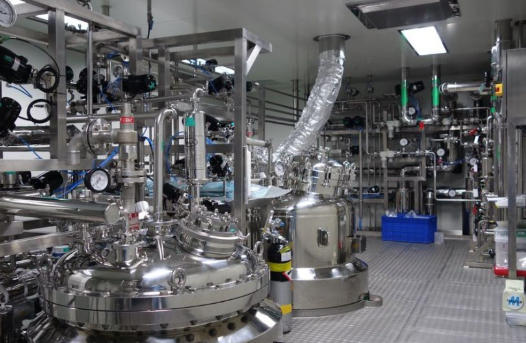
Pharmaceutical products in Kazakhstan must comply with requirements for Purified Water, Water for Injection (WFI), and pure steam that align with leading pharmacopeias and global GMP expectations. These utilities directly impact product safety, shelf life, and the ability to export medicines into highly regulated markets, making properly designed water systems a strategic investment rather than a simple utility.[2][4][6][8][1]
Pharmaceutical Water Trearment Equipment Manufacturers And Suppliers serving Kazakhstan typically design systems around parameters such as conductivity, TOC, microbiological counts, and endotoxin control. By integrating these criteria into both generation and distribution stages, plants can maintain consistent quality at every point of use.[4][6][2]
Kazakhstan's Water and Industrial Context
Kazakhstan relies on mixed water sources, including rivers, lakes, groundwater, and in some regions relatively high mineral content or brackish water that require advanced pretreatment. Industrial water specialists in the country already design and implement large‑scale treatment solutions for municipal, oil and gas, mining, and food industries, providing a service infrastructure that pharma can leverage.[3][5][1][4]
For Pharmaceutical Water Trearment Equipment Manufacturers And Suppliers, this means that collaboration with local engineering firms is often the most efficient route. Local partners can manage civil works, pipe installation, and routine service, while international pharma‑grade suppliers deliver key equipment skids, control systems, and validation documentation.[6][1][4]
Everheal's Role in Pharmaceutical Water Trearment
Everheal, a Chinese company focused on pharmaceutical equipment, provides purified water preparation systems, pure steam generators, multi‑effect distilled water machines, liquid filling‑sealing machines, and sterilization systems to global customers. Everheal also offers customized factory layout planning and full production line design, positioning itself as a turnkey partner for complete plants.[9][10][11][12]
For Kazakhstan, Everheal can act as a dedicated Pharmaceutical Water Trearment Equipment Manufacturers And Suppliers partner by combining its core equipment portfolio with engineering support tailored to local conditions. This includes adapting process design to feed‑water characteristics, climate, energy pricing, and the specific regulatory path of each project.[10][11][12][9]
Core Pharmaceutical Water Trearment Technologies
Purified Water Preparation Systems
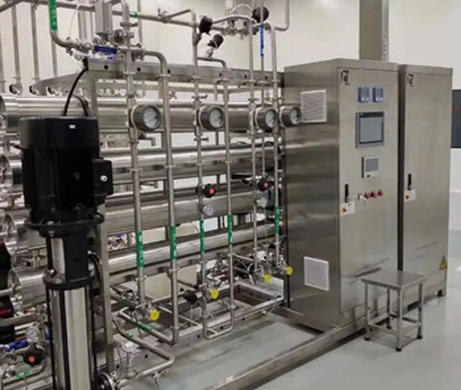
Purified water systems for pharma in Kazakhstan typically start with pretreatment steps such as multimedia filtration, softening or antiscalant dosing, and activated carbon, followed by fine filtration and reverse osmosis. For higher quality, modules like electrodeionization (EDI) or mixed‑bed polishing are added. Pharmaceutical Water Trearment Equipment Manufacturers And Suppliers design these systems to achieve stable low conductivity, suitable TOC, and robust microbial control, while maintaining practical operating costs.[1][4][6]
Everheal's purified water systems are built as modular skids, integrating mechanical, electrical, and automation components on compact frames. This reduces on‑site installation time and simplifies logistics when shipping to Kazakhstan from abroad. Such systems can be configured for hot water sanitization or chemical sanitization depending on client preference and utility availability.[11][12][9][10]
Multi‑Effect Distilled Water Machines and WFI
For injectable and other sterile products, Kazakhstan manufacturers need Water for Injection that meets stringent requirements for endotoxins and microbiological purity. Multi‑effect distillation and related technologies are commonly used to produce WFI from purified water feed. Pharmaceutical Water Trearment Equipment Manufacturers And Suppliers must balance steam consumption, heat recovery, and reliability while delivering consistent WFI quality.[8][2][6]
Everheal's multi‑effect distilled water machines and associated WFI distribution systems can be scaled for both medium and large facilities. Integration with pretreatment and purified water units simplifies overall control and validation, helping Kazakhstan plants achieve seamless utility management from raw water intake to WFI points of use.[12][9][10][11]
Pure Steam Generators
Pure steam is required for sterilizing tanks, pipelines, filters, and process equipment that come into contact with drug products. In Kazakhstan's expanding biopharma and hospital sectors, high‑quality pure steam supports SIP (steam‑in‑place) cycles and sterilization of components such as filling needles, manifolds, and lyophilizer chambers.[2][6][8]
Properly designed pure steam generators from Pharmaceutical Water Trearment Equipment Manufacturers And Suppliers must control non‑condensable gases, dryness fraction, and superheat to meet relevant standards. Everheal's pure steam solutions are intended to integrate with WFI and purified water systems, ensuring that all critical utilities maintain consistent quality and documentation.[9][10][11][12]
Storage and Distribution Systems
Generation alone is not enough; storage and distribution systems determine whether quality is preserved at every point of use. Kazakhstan plants often choose hot recirculation loops to minimize microbial growth or ambient loops with continuous disinfection through ozone or UV, depending on the risk assessment and cost factors.[4][8][2]
Pharmaceutical Water Trearment Equipment Manufacturers And Suppliers design loops with sanitary pumps, sloped piping, and minimal dead‑legs, sometimes using orbital welded stainless‑steel tubing and hygienic valves. Everheal supports loop sizing, velocities, and valve selection, helping Kazakhstan facilities avoid stagnation and ensuring that validated quality reaches production rooms, washing machines, and filling lines.[10][11][12][9]
Other Critical Systems for Pharma Utilities
Beyond core water and steam systems, Kazakhstan pharma facilities benefit from additional equipment that links directly into water treatment and utility architecture. Cleaning‑in‑place (CIP) skids, sterilization systems, and liquid filling‑sealing machines all depend on reliable pharmaceutical water supplies for preparation, rinsing, and final product integrity.[6][8]
Everheal's broader product portfolio includes liquid filling‑sealing machines and sterilization equipment, allowing utilities to be designed in harmony with process equipment. This unified approach helps Kazakhstan clients reduce interface problems between different suppliers and simplifies commissioning and validation workflows.[11][12][9][10]
Cooperation Models for Kazakhstan Projects
Direct Supply to End‑Users
In some cases, Kazakhstan manufacturers or investors directly contract Pharmaceutical Water Trearment Equipment Manufacturers And Suppliers for design, production, and supervision of installation. This approach gives end‑users strong control over technical specifications and vendor selection, which can be important for high‑visibility GMP projects.[2][4][6]
Everheal can work directly with such clients, receiving user requirement specifications (URS), water analyses, and layout data to design tailored purified water, WFI, and pure steam systems. Clear communication and shared design milestones support transparent project management and predictable costs.[12][9][10][11]
OEM Partnerships with Local Engineers
A second route involves OEM or ODM cooperation where Everheal supplies core pharmaceutical water trearment skids while local Kazakhstan engineering firms take the lead on project integration. This model leverages local capabilities for piping, civil works, electrical installation, and routine maintenance, while retaining the advantages of specialized equipment manufacturing.[4][6]
For local integrators, having a reliable Pharmaceutical Water Trearment Equipment Manufacturers And Suppliers partner allows them to offer higher‑value projects without investing in their own fabrication infrastructure. Everheal supports these relationships through documentation, training, and flexible branding options.[9][10][11][12]
Key Selection Criteria for Pharmaceutical Water Trearment Equipment Manufacturers And Suppliers
When Kazakhstan companies assess potential partners, several critical criteria help differentiate stronger suppliers from generic industrial vendors:[8][2][4]
- Regulatory and pharmacopeial understanding for PW, WFI, and pure steam.
- Proven project references in pharmaceutical and biotech sectors.
- Ability to supply complete documentation sets for DQ, IQ, OQ, PQ, and change control.
- Automation and monitoring capabilities, including data integrity features and alarm management.
- Lifecycle services such as operator training, maintenance support, and upgrade planning.
Everheal addresses these points by focusing specifically on pharmaceutical applications, offering end‑to‑end solutions from purified water generation to packaging lines. This helps Kazakhstan clients reduce the risk of non‑compliance and operational disruption.[10][11][12][9]
Implementation Roadmap for Kazakhstan Pharma Plants
A structured implementation roadmap makes it easier for Kazakhstan manufacturers to deploy new pharmaceutical water systems successfully:[1][6][8][4]
1. Define user requirements, including capacities, redundancy levels, target regulations, and product portfolio (sterile, oral, API).
2. Shortlist several Pharmaceutical Water Trearment Equipment Manufacturers And Suppliers and compare technologies, references, and lifecycle costs.
3. Develop detailed designs, agree on P&IDs and layout drawings, and carry out factory acceptance tests (FAT).
4. Coordinate shipping, on‑site installation, commissioning, and site acceptance tests (SAT) with local contractors.
5. Complete qualification and validation activities, train operators, and establish long‑term maintenance and monitoring plans.
Everheal supports these steps with engineering, documentation, and project management assistance, enabling Kazakhstan clients to move from concept to validated operation efficiently.[11][12][9][10]
Long‑Term Benefits for Kazakhstan's Pharma Sector
Investing in robust purified water, WFI, and pure steam systems brings long‑term benefits for Kazakhstan's pharmaceutical and biotech industries. Plants can increase batch consistency, pass regulatory inspections with fewer observations, and build a reputation for quality among local and international stakeholders.[6][8][2][4]
By partnering with experienced Pharmaceutical Water Trearment Equipment Manufacturers And Suppliers, Kazakhstan companies also position themselves for future expansion. Modular system design, scalable capacity, and flexible control platforms make it easier to add new lines, new dosage forms, or higher volumes as demand grows.[4][6]
Conclusion
As Kazakhstan's pharmaceutical industry develops, high‑purity water and steam utilities become central to both compliance and competitiveness. Reliable purified water, WFI, and pure steam systems allow local manufacturers to meet international standards and pursue export opportunities while protecting patient safety and product integrity.[8][1][2][6][4]
Choosing the right Pharmaceutical Water Trearment Equipment Manufacturers And Suppliers is therefore a strategic decision. Everheal offers purified water preparation systems, multi‑effect distilled water machines, pure steam generators, liquid filling‑sealing machines, and sterilization systems, combined with customized factory layout planning and turnkey line design. For Kazakhstan investors and manufacturers, this integrated approach can simplify project execution, reduce risk, and support sustainable growth in a rapidly evolving market.[12][9][10][11]
FAQ
1. What kinds of water systems do Kazakhstan pharma plants need most?
Most Kazakhstan pharmaceutical plants require at least a purified water system for solution preparation and equipment washing, plus WFI generation and pure steam for sterile dosage forms. The exact mix depends on the product portfolio, but purified water, WFI, and pure steam are the three core systems for modern facilities.[1][2][6][4]
2. How do Pharmaceutical Water Trearment Equipment Manufacturers And Suppliers help reduce compliance risk?
Specialized suppliers design systems according to recognized pharmacopeias and GMP expectations and provide complete documentation and validation support. This helps Kazakhstan manufacturers demonstrate control over critical utilities during inspections, reducing the risk of observations related to water or steam quality.[2][6][8][4]
3. Why is Everheal suitable for Kazakhstan projects?
Everheal focuses on pharmaceutical equipment, combining purified water systems, multi‑effect distilled water machines, pure steam generators, liquid filling‑sealing machines, and sterilization solutions with plant layout services. This makes it a convenient Pharmaceutical Water Trearment Equipment Manufacturers And Suppliers partner for Kazakhstan projects that want integrated utilities and production equipment from a single source.[9][10][11][12]
4. Can systems be customized for Kazakhstan's local water and climate?
Yes. Pharmaceutical Water Trearment Equipment Manufacturers And Suppliers such as Everheal can design pretreatment, RO, and polishing stages based on local water analysis and site conditions. By optimizing process configuration, Kazakhstan plants can maintain stable water quality while managing operating costs and adapting to seasonal or regional variations.[3][6][1][4]
5. What support is available after commissioning?
After commissioning, qualified suppliers typically offer training, preventive maintenance guidance, spare parts, and remote technical support. Everheal can cooperate with local Kazakhstan engineering firms to provide on‑site services backed by factory expertise, ensuring that purified water, WFI, and pure steam systems continue to operate reliably throughout their lifecycle.[6][11][12][2][4][9]
Citations:
[1](https://pureaqua.com/reverse-osmosis-water-treatment-in-kazakhstan/)
[2](https://www.bwt-pharma.com/en/)
[3](https://enviro-t.com/envirotech-kazakhstan-supply-500m3-per-day-mmf-ro-plants/)
[4](https://neoaqua.kz/en)
[5](https://www.san-lan.com/faq/top-10-wastewater-treatment-plant-suppliers-manufacturers-wholesalers-and-traders-in-kazakhstan.html)
[6](https://www.meco.com/industries/biopharmaceutical-2/)
[7](https://mcpur.com)
[8](https://www.alfalaval.us/industries/biotech-and-pharmaceuticals/pharmaceutical-production/)
[9](http://www.everhealgroup.com/pharmaceutical-water-trearment-equipment.html)
[10](https://www.everhealgroup.com)
[11](https://www.everhealgroup.com/products/Industrial-Distilled-Water-Machine.html)
[12](https://www.linkedin.com/company/everheal-medical)


