Content Menu
● Indonesia's evolving pharma water landscape
● Why pharmaceutical water quality is critical
● Core system types used in Indonesia
>> Purified water generation systems
>> Water for Injection and multi‑effect distillation
>> Pure steam generators and sterilization utilities
>> Storage and distribution systems
● Indonesian and global players in pharma water
● Everheal: a specialized partner for pharma utilities
● Everheal's purified water and WFI technologies
● Pure steam, sterilization, and process integration
● Custom factory layout and line design for Indonesia
● Integration with liquid filling, sealing, and downstream equipment
● Compliance, validation, and life‑cycle documentation
● Digital monitoring, data integrity, and remote support
● Sustainability and cost optimization in utility design
● Collaboration model: Everheal and Indonesian partners
● How to choose the right pharma water partner
● Conclusion
● FAQ
>> (1) How do Pharmaceutical Water Trearment Equipment Manufacturers And Suppliers support GMP compliance in Indonesia?
>> (2) What advantages does Everheal bring to Indonesian pharmaceutical water projects?
>> (3) Can Everheal work with existing Indonesian water systems instead of replacing them completely?
>> (4) What should buyers prioritize when comparing Pharmaceutical Water Trearment Equipment Manufacturers And Suppliers?
>> (5) How early should pharma companies involve Everheal in a new Indonesian factory project?
● Citations:
Everheal is a China-based expert in pharmaceutical utilities and process equipment, actively working with leading Pharmaceutical Water Trearment Equipment Manufacturers And Suppliers in Indonesia to support high‑purity, GMP‑compliant drug production facilities. The Indonesian market's rapid pharma growth makes reliable partners for purified water, WFI, pure steam, and sterilization systems more important than ever.
Indonesia's evolving pharma water landscape
Indonesia's pharmaceutical industry is expanding on the back of rising domestic healthcare demand, government support, and contract manufacturing opportunities in the ASEAN region. As factories move from basic production toward regulated generics, injectables, and even biologics, the need for robust Pharmaceutical Water Trearment Equipment Manufacturers And Suppliers has intensified.
Alongside growth, regulators and multinational clients are insisting on alignment with international standards such as USP, EP, WHO GMP, and local BPOM expectations. This drives investment in purified water preparation, multi‑effect distillation for WFI, pure steam networks, validated distribution loops, and integrated sterilization systems.
Why pharmaceutical water quality is critical
Pharmaceutical water is more than just a utility; it is a key raw material that directly influences product safety, stability, and efficacy. Poorly designed systems or inadequate monitoring can lead to microbial growth, endotoxin excursions, and non‑conformities that trigger costly batch rejections or product recalls.
Different grades—Purified Water, Highly Purified Water, and Water for Injection—must meet strict limits for conductivity, total organic carbon (TOC), microbial counts, and endotoxins. To achieve this, modern Pharmaceutical Water Trearment Equipment Manufacturers And Suppliers combine pre‑treatment, advanced membrane technologies, distillation, and hygienic distribution engineering.
Core system types used in Indonesia
Purified water generation systems
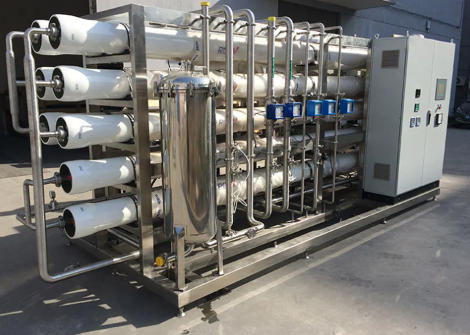
Purified water (PW) systems in Indonesia often start from groundwater, municipal water, or surface water, which may contain variable levels of hardness, organics, and microbiological contaminants. A typical solution includes multimedia filtration, activated carbon, water softening, cartridge filtration, reverse osmosis, and frequently EDI to reach pharmacopeial limits.
High‑end Pharmaceutical Water Trearment Equipment Manufacturers And Suppliers design these systems as compact skids with automated controls for flow, pressure, and conductivity, plus hot‑water or chemical sanitization routines. This approach supports stable quality, simplified operation, and traceable records for audits and regulatory inspections.
Water for Injection and multi‑effect distillation
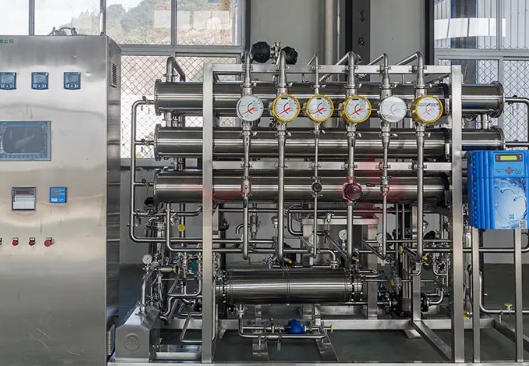
Water for Injection (WFI) is essential for parenteral products, ophthalmics, and some high‑risk oral dosage forms, demanding even tighter control over microbes and endotoxins. Multi‑effect distillation (MED) and vapor compression technologies are widely adopted because they offer robust separation mechanisms and predictable quality.
Well‑designed WFI packages often include feedwater conditioning, multi‑effect distillers, hot storage tanks, and continuously circulating distribution loops. Pharmaceutical Water Trearment Equipment Manufacturers And Suppliers size and configure these systems according to batch sizes, filling line speeds, and sterilization loads, balancing capital expenditure with long‑term energy costs.
Pure steam generators and sterilization utilities
Pure steam is used to sterilize piping, tanks, and process equipment in injectable and biotech operations, as well as in some oral and topical facilities with high hygienic requirements. Pure steam generators convert WFI‑grade feed into steam whose condensate meets WFI specifications, ensuring that sterilized surfaces remain free of chemical or biological contaminants.
In Indonesia, pure steam generators are commonly integrated with sterilization autoclaves, superheated water sterilizers, and steam‑in‑place (SIP) systems. Advanced Pharmaceutical Water Trearment Equipment Manufacturers And Suppliers pay particular attention to steam quality, including dryness fraction, superheat, and non‑condensable gases, because these parameters strongly affect sterilization efficacy.
Storage and distribution systems
Even the best generation equipment cannot compensate for poor storage or distribution design. Hygienic storage vessels, typically in stainless steel with internal spray balls and hydrophobic vent filters, are used to hold PW or WFI at elevated temperatures or under controlled conditions to discourage microbial growth.
Distribution loops are designed to maintain turbulent flow, continuous circulation, and minimal dead legs. Pharmaceutical Water Trearment Equipment Manufacturers And Suppliers employ orbital‑welded stainless‑steel piping, sloped lines for complete drainage, and strategically placed sample points. Automation systems log conductivity, temperature, and flow data to prove ongoing control during audits.
Indonesian and global players in pharma water
Indonesia hosts a growing group of engineering firms and integrators that specialize in high‑purity water, clean utilities, and hygienic process piping for life‑science customers. These local experts understand regional raw‑water challenges, energy costs, and regulatory expectations, and they provide installation, welding, and ongoing service.
Global providers of Pharmaceutical Water Trearment Equipment Manufacturers And Suppliers bring sophisticated RO‑EDI skids, multi‑effect distillers, pure steam generators, and validated control architectures. Together with Indonesian partners, they deliver turnkey solutions that meet multinational clients' standards while remaining competitive in cost and delivery time.
Everheal: a specialized partner for pharma utilities
Everheal is a Chinese company focusing on R&D, manufacturing, and integration of pharmaceutical water and sterilization technologies. Its portfolio covers purified water preparation systems, pure steam generators, multi‑effect distillation machines, liquid filling and sealing equipment, and various sterilization systems designed for regulated pharma environments.
For projects in Indonesia, Everheal acts as a technology partner to local Pharmaceutical Water Trearment Equipment Manufacturers And Suppliers and EPC contractors. By combining Everheal's process know‑how and equipment with local project management, construction, and long‑term service, pharma companies receive globally benchmarked solutions tailored to Indonesian conditions.
Everheal's purified water and WFI technologies
Everheal purified water systems are built around modular filtration, softening, reverse osmosis, and EDI configurations. Each project begins with a detailed raw‑water analysis, followed by a customized pre‑treatment design that protects downstream membranes and ensures consistent output quality.
For WFI, Everheal supplies multi‑effect distillation units and associated storage and distribution packages. These systems emphasize low energy consumption through heat‑recovery schemes and intelligent control, while maintaining stable WFI quality that supports parenteral and biotech manufacturing. Designs follow hygienic engineering guidelines, including smooth internal surfaces, minimized dead legs, and validated sanitization protocols.
Pure steam, sterilization, and process integration
Everheal pure steam generators are designed to provide high‑quality steam for sterilization‑in‑place (SIP), autoclaves, and other critical utilities. The company pays close attention to separator design, control of non‑condensable gases, and reliable condensate quality, helping customers achieve repeatable sterilization results.
Crucially, Everheal does not treat utilities in isolation. Its engineering teams integrate pure steam systems with sterilization equipment, such as autoclaves and superheated water sterilizers, and with CIP/SIP modules for reactors, vessels, and pipelines. This holistic view ensures that Pharmaceutical Water Trearment Equipment Manufacturers And Suppliers infrastructure and sterilization processes work together seamlessly.
Custom factory layout and line design for Indonesia
Every plant in Indonesia faces unique constraints: plot shape, raw‑water characteristics, local climate, seismic requirements, and utility availability. Everheal supports customers by providing concept layouts and detailed 2D/3D models that position purified water, WFI, and pure steam systems for optimal pipe routing and operational access.
The company also designs process and packaging lines, particularly where liquid filling and sealing machines depend on a stable supply of PW or WFI. By addressing flow paths, operator movement, and material handling early in the design, Everheal helps minimize cross‑contamination risks and streamline validation.
Integration with liquid filling, sealing, and downstream equipment
Everheal's experience in liquid filling and sealing machines provides an extra layer of value in planning pharmaceutical factories. Production lines for vials, ampoules, bottles, and bags all require consistent water and steam conditions to avoid downtime, rejects, and sterility failures.
By integrating Pharmaceutical Water Trearment Equipment Manufacturers And Suppliers infrastructure with filling, capping, leak‑testing, and inspection equipment, Everheal helps ensure that utility capacity, loop volumes, and sterilization cycles are aligned with production schedules. This reduces the risk that utilities become a bottleneck as demand increases.
Compliance, validation, and life‑cycle documentation
Regulators and global clients expect detailed documentation across the entire lifecycle of pharmaceutical water and steam systems. This includes user requirement specifications (URS), design qualification (DQ), installation qualification (IQ), operational qualification (OQ), performance qualification (PQ), and ongoing change‑control and requalification records.
Everheal supports these expectations with structured documentation packages and collaboration with local validation teams. The company's systems are designed with traceable materials, documented welds, instrument calibration records, and clear operating procedures, all of which reduce the burden on clients during inspections and audits.
Digital monitoring, data integrity, and remote support
Digitalization is becoming standard for Pharmaceutical Water Trearment Equipment Manufacturers And Suppliers, especially when serving multinational clients. Plants in Indonesia increasingly require centralized control systems that track conductivity, TOC, temperature, pressure, and flow in real time, with secure data storage to meet data‑integrity guidelines.
Everheal utilities can be integrated with plant‑wide supervisory systems to provide dashboards, alarm management, and historical trending. Remote diagnostics and performance reviews enable predictive maintenance, optimization of sanitization cycles, and continuous improvement of energy and water consumption.
Sustainability and cost optimization in utility design
Indonesia's diverse geography and infrastructure mean that energy and water costs can vary significantly between locations. Efficient system design is therefore essential to keep operating expenses under control while meeting strict quality targets.
Pharmaceutical Water Trearment Equipment Manufacturers And Suppliers are increasingly incorporating heat‑recovery, variable‑frequency drives, and intelligent operating modes into their systems. Everheal applies these strategies to reduce steam demand in distillers, optimize RO‑EDI operation, and limit waste streams, allowing plants to balance environmental goals with strong financial performance.
Collaboration model: Everheal and Indonesian partners
Instead of replacing local expertise, Everheal aims to collaborate with Indonesian Pharmaceutical Water Trearment Equipment Manufacturers And Suppliers, system integrators, and EPC contractors. Local partners handle civil works, utilities outside the clean boundary, installation, and day‑to‑day servicing, while Everheal supplies high‑value process and utility equipment plus technical training.
For end users, this model delivers the best of both worlds: global‑standard pharmaceutical water and sterilization solutions with responsive local support. It also simplifies communication with authorities and certification bodies, as local teams understand national codes and administrative procedures.
How to choose the right pharma water partner
Selecting Pharmaceutical Water Trearment Equipment Manufacturers And Suppliers in Indonesia is a long‑term strategic decision. Buyers should look beyond initial quotations and evaluate each candidate's technical depth, project experience, and lifecycle support capabilities.
Essential selection criteria include proven references in regulated pharma or biotech, mastery of PW, WFI, and pure steam systems, robust automation and data‑integrity solutions, and a track record of successful validations. Everheal can support clients by reviewing design concepts, assessing total cost of ownership, and coordinating with multiple local partners to assemble a complete project team.
Conclusion
Indonesia is emerging as a vital hub for pharmaceutical manufacturing, and robust high‑purity water and steam systems sit at the centre of this transformation. Pharmaceutical Water Trearment Equipment Manufacturers And Suppliers in Indonesia, supported by global technology partners, now provide sophisticated PW, WFI, and pure steam solutions that match stringent international standards.
Everheal strengthens this ecosystem by delivering advanced purified water preparation equipment, multi‑effect distillation units, pure steam generators, liquid filling and sealing systems, and sterilization technologies, all backed by engineering, layout planning, and validation support. By partnering with Everheal and capable Indonesian providers, global pharma companies can build efficient, compliant, and scalable facilities to serve both local and international markets.
FAQ
(1) How do Pharmaceutical Water Trearment Equipment Manufacturers And Suppliers support GMP compliance in Indonesia?
They design systems that meet pharmacopeial limits, use hygienic materials and welding practices, and provide validation documentation and automation that support data integrity. This combination helps Indonesian plants demonstrate consistent control of critical utilities during audits and inspections.
(2) What advantages does Everheal bring to Indonesian pharmaceutical water projects?
Everheal offers integrated solutions that cover purified water, WFI, pure steam, sterilization, and liquid filling, along with factory layout and process design services. Its experience with regulated markets allows Indonesian projects to adopt proven technologies and documentation standards from the outset.
(3) Can Everheal work with existing Indonesian water systems instead of replacing them completely?
Yes. Everheal can evaluate the condition and performance of existing purified water or WFI systems and then propose partial upgrades such as new RO‑EDI skids, additional distillation capacity, loop modifications, or enhanced instrumentation. This approach reduces downtime and capital expenditure while improving quality.
(4) What should buyers prioritize when comparing Pharmaceutical Water Trearment Equipment Manufacturers And Suppliers?
Buyers should prioritize compliance track record, depth of engineering, flexibility in customization, quality of automation and monitoring, and strength of local service. Long‑term availability of spare parts, training capabilities, and openness to collaboration with other vendors are equally important.
(5) How early should pharma companies involve Everheal in a new Indonesian factory project?
Ideally, Everheal should be involved from the concept or feasibility stage, when utility demand, room layouts, and production flows are still flexible. Early engagement allows the team to right‑size purified water, WFI, and pure steam systems, avoid layout clashes, and design a cost‑effective, fully integrated plant from day one.
Citations:
[1](https://cryogas.id)
[2](https://aweco.co.id/pharmaceutical/)
[3](https://www.oc-jakarta.com/water_treatment/)
[4](https://ciptaanekaair.co.id/news/reliable-pharmaceutical-water-treatment-by-pt-cipta-aneka-air)
[5](https://pureaqua.com/reverse-osmosis-water-treatment-in-indonesia/)
[6](https://www.wemacpharma.com/application/pharmaceutical-water-treatment-equipment)
[7](https://www.amritaenviro.com/service/water-treatment-plant)
[8](https://nira-water.com/water-solutions/industrial-water/)
[9](https://www.chemaqua.com/en-gb/industries/manufacturing/pharmaceuticals-biotechnology/)


